China’s acceleration intensifies competition with US, sharpens strategic choices for Korea
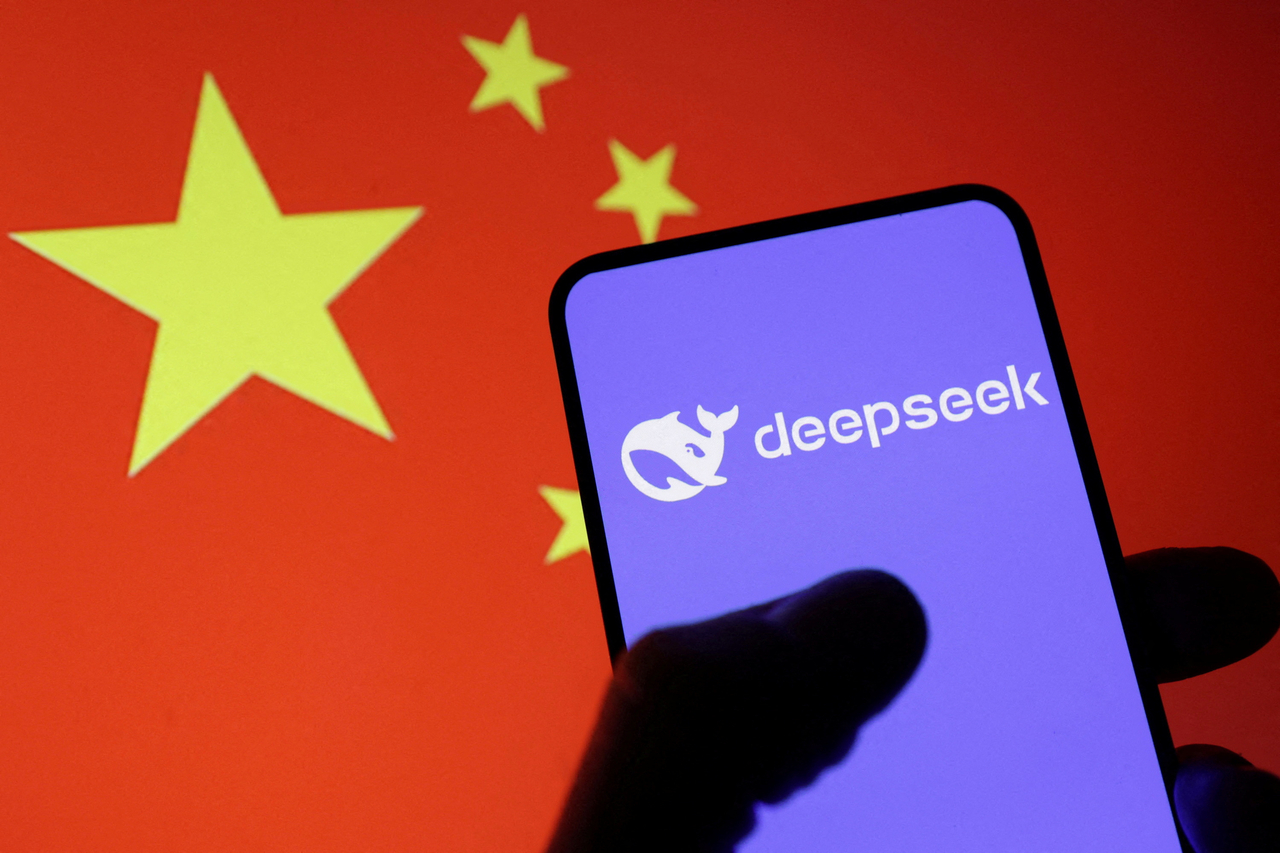
One year after DeepSeek unsettled the global AI landscape and signaled that China had narrowed the gap with the US in generative artificial intelligence, the question is no longer whether China can compete. It is whether China is beginning to define the architecture of the next AI order.
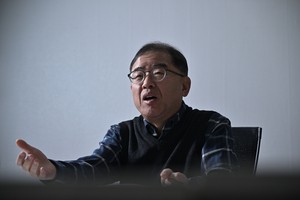
“The difference between adopting AI and defining its architecture is huge,” said Ahn Jun-mo, a professor of public administration at Korea University. “Countries that set the standards have the power to shape ecosystems, while others must operate within them.”
Symbolic breakthrough to sustained momentum
What initially appeared to be a symbolic breakthrough has solidified into structural momentum. Over the past year, Chinese developers have accelerated model release cycles, expanded open-weight ecosystems and shifted competition away from leaderboard scores toward scale, deployment and influence.
When DeepSeek debuted, it was widely interpreted as a geopolitical signal — evidence that China had found a viable path forward despite tightening US semiconductor restrictions. By leveraging widely used research components — including Google’s SigLIP vision encoder, OpenAI’s Triton framework and Stanford’s FlashAttention — Chinese teams reduced development time while conserving computing resources. Reinforcement learning was integrated deeper into model reasoning, improving efficiency under hardware constraints.
Major models are now updated every one to two months. Moonshot AI’s Kimi K2.5 employs distributed reasoning agents. Alibaba’s Qwen3-Max-Thinking performs strongly on complex reasoning benchmarks. Zhipu AI’s GLM-4.7-Flash surpassed 1 million downloads on AI research community Hugging Face within two weeks. Baidu’s Ernie 5.0 reports more than 200 million monthly users.
Performance gap narrows, but leadership differs
Even US leaders acknowledge the shift. Google DeepMind CEO Demis Hassabis recently said Chinese frontier models are much closer to US systems than many expected, with performance gaps measured in months rather than years.
Shin Jin-woo, ICT endowed chair professor at KAIST, offered a similar assessment. “Based on the time required to absorb and reproduce publicly released technologies, the difference is closer to half a year,” he said, referring to performance convergence. But he stressed that ecosystem leadership is a separate issue. “China already has the technological power to lead parts of the industry. That’s different from simply matching benchmarks.”
Structural advantages still favor the US in GPU clusters, alignment research and global cloud infrastructure. Yet the contest is shifting.
“The competition is moving away from isolated benchmark scores toward ecosystem control,” an industry expert noted. “Scale and capital mobilization will matter more than marginal performance gains.”
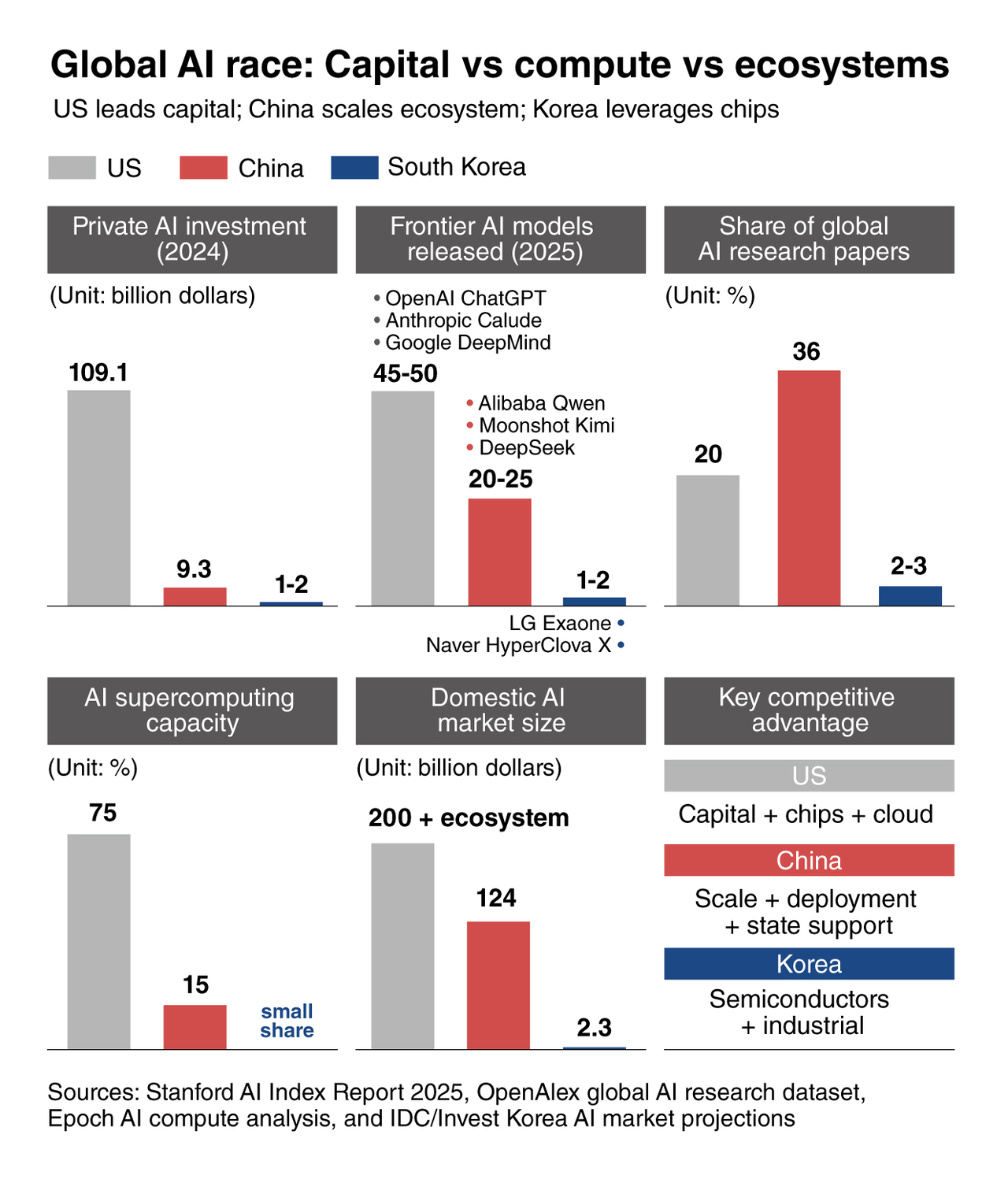
Scale as strategy
The numbers reflect that transition. Downloads of Chinese open-weight models on Hugging Face surged from roughly 1 million in January 2024 to over 818 million by January 2025.
A report released in November by Massachusetts Institute of Technology and Hugging Face found that Chinese-developed models accounted for 17 percent of newly generated open-model downloads on the platform over the past year, edging past the 15.8 percent share recorded by US-developed models — marking the first time Chinese models have overtaken their American counterparts in this category.
China’s AI market was valued at around 900 billion yuan ($131 billion), with projections suggesting it will reach up to $1.4 trillion by 2030. Alibaba has pledged 380 billion yuan in AI and cloud infrastructure investment over three years. China also leads global AI patent filings, particularly in computer vision, natural language processing and speech technologies.
These developments align with long-term state planning. AI was designated by China as a strategic industry in 2016, followed by 2017's Next Generation Artificial Intelligence Development Plan, which set a target of global leadership by 2030.
Korea at crossroads
For South Korea, China’s acceleration goes beyond regional development: It is a structural signal.
While Korea maintains strengths in semiconductors, telecommunications and applied AI services, it does not currently operate a globally dominant foundation model capable of shaping open ecosystems. According to International Data Corp. and Invest Korea, the domestic AI market was projected at 3.4 trillion won ($2.31 billion) in 2025 — a fraction of China’s scale.
“The difference between adopting AI and defining its architecture is huge,” Ahn reiterated. “Countries that set the standards have the power to shape ecosystems.”
The question for Korea is therefore not whether it can use AI effectively, but whether it intends to shape any part of its foundational architecture — or operate within standards set elsewhere.
A year ago, DeepSeek was viewed as an unexpected challenger.
Today, China’s AI expansion appears less episodic and more systemic — anchored in scale, policy alignment and ecosystem reach.
The race is no longer defined primarily by benchmark supremacy. It is increasingly about which models become embedded first, which ecosystems attract developers and which infrastructures evolve into default standards.
yeeun@heraldcorp.com