Lack of EUV, low yields and limited customer trust keep China behind, says veteran DRAM pioneer
As China’s rapid advance in memory chips fuels concerns over a potential challenge to market leaders such as Samsung Electronics and SK hynix, a veteran DRAM expert says the technology gap remains far wider than commonly perceived — and may be growing rather than narrowing.
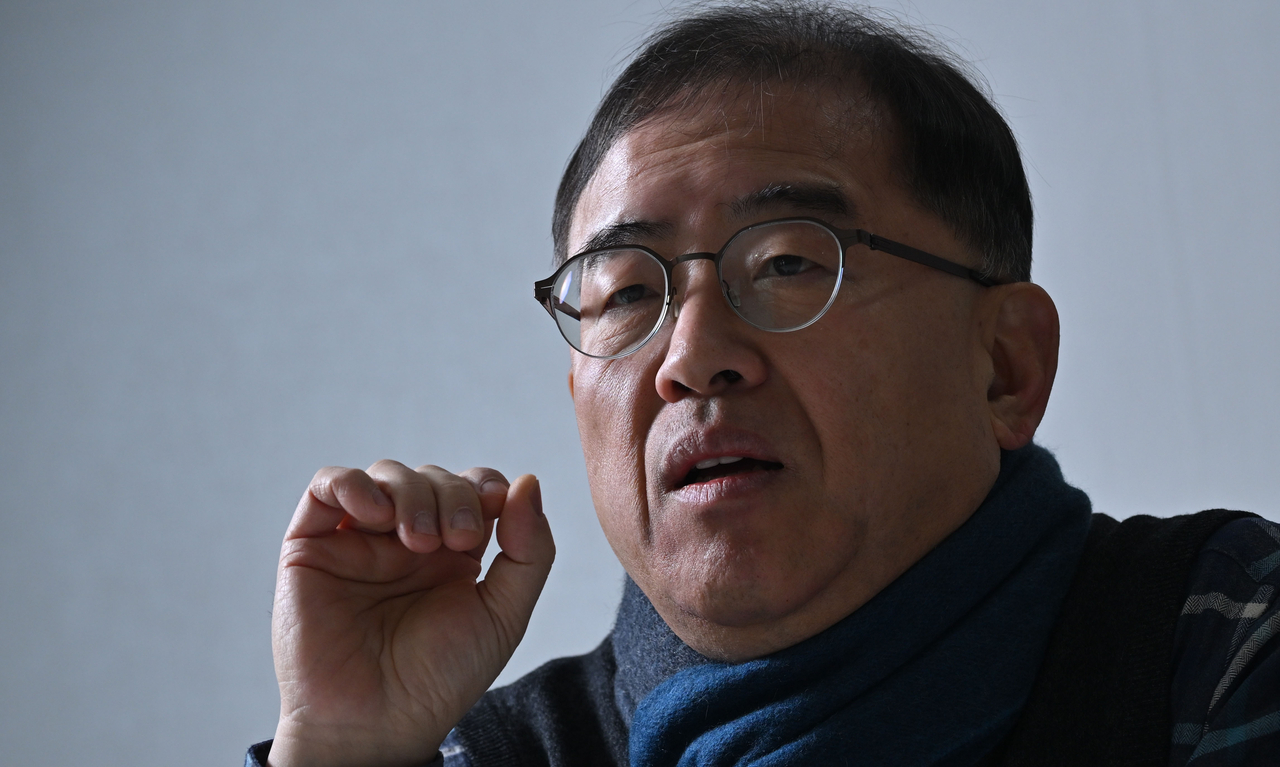
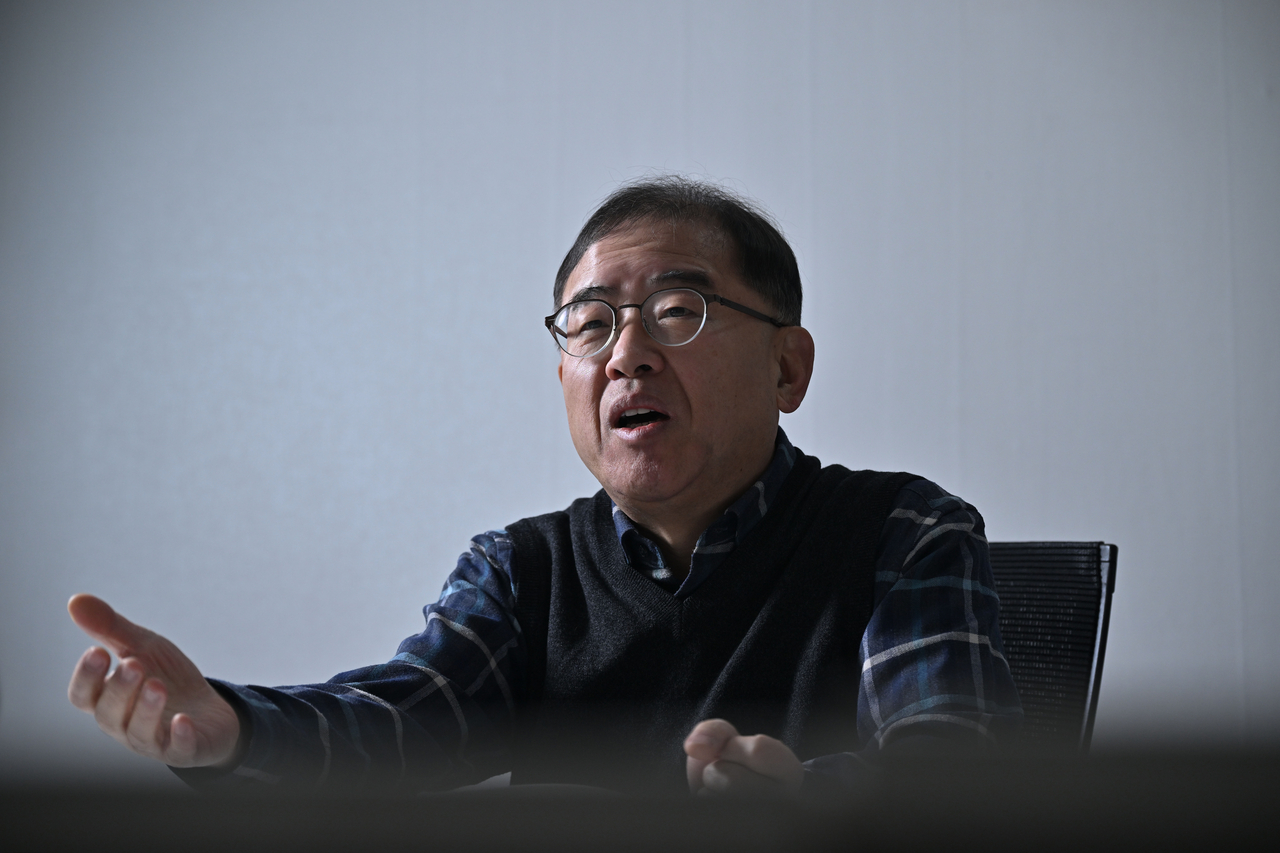
“The gap is not two or three years. In my view, it is more than five,” said Shim Dae-yong, an electrical engineering professor at Dong-A University, in an interview with The Korea Herald. “In DRAM, especially advanced memory, China is more likely to fall further behind than catch up.”
Shim spent 26 years at SK hynix, where he oversaw core DRAM technologies and played a central role in the early development of high-bandwidth memory, the specialized DRAM now indispensable for artificial intelligence computing. He left the company in 2021 as a vice president.
“From the outside, China’s progress makes for striking headlines,” Shim said. “Inside the industry, the assessment is far more grounded.”
Structural limits: No EUV, no shortcut
According to Shim, China faces a fundamental constraint in advanced DRAM manufacturing: lack of access to extreme ultraviolet (EUV) lithography, which has become indispensable beyond early 10-nanometer-class nodes.
DRAM process generations typically progress from 1x, 1y and 1z — broadly sub-20-nanometer nodes — to more advanced 1a, 1b and 1c nodes in the 10-nanometer class.
“Multipatterning can stretch legacy tools to a point — Micron managed it at 1a,” Shim said. “But from 1b onward, EUV is effectively unavoidable. Without EUV, Chinese players are structurally limited.”
China has been cut off from EUV tools since 2019 under US-led export controls that prevent ASML, the world’s sole EUV supplier, from selling the equipment to Chinese firms.
Against that backdrop, Shim said ChangXin Memory Technologies’ announcement in November that it had begun mass production of DDR5 memory also highlights the limits of China’s progress.
The DDR5 chips are believed to be manufactured using a fourth-generation DRAM process (1a) and are reportedly larger than those produced by Samsung and SK hynix — comparable to Korean firms’ early DDR5 products shipped around 2021.
More importantly, CXMT’s reported yield of around 50 percent falls well short of the 80–90 percent typically required for commercial viability, pushing up costs and easing concerns that Chinese manufacturers could flood the market with low-priced DDR5 chips.
HBM, harder than it looks
China’s most realistic workaround, Shim said, lies not in further node shrinkage but in advanced 3D stacking — the foundation of HBM technology.
“As planar scaling slows, stacking density becomes just as important,” he said. “In theory, China could narrow part of the gap by pushing vertical integration without EUV.”
In practice, however, the bottleneck simply moves elsewhere — to materials and packaging.
Key inputs for HBM, including underfill and epoxy molding compounds, are dominated by Japanese suppliers such as Resonac and Namics. Optimizing these materials for each process node is critical for yield, thermal stability and long-term reliability — and remains a challenge even for Korean chipmakers after years of localization efforts.
“Without stable access to optimized underfill and EMC, 3D stacking becomes a yield nightmare,” Shim said. “That is not something you fix with capital expenditure alone.”
The real gap: experience and trust
More fundamentally, Shim argued, Chinese manufacturers lack the collaborative experience that global memory leaders have accumulated over decades with major technology firms such as Microsoft, Google, Apple and Nvidia.
“Global tech giants do not simply ‘use’ memory,” he said. “They co-develop it. They debug it. They validate it across entirely new architectures. Those experiences cannot be replicated overnight.”
Defects are inevitable when memory chips are deployed in cutting-edge products, Shim said. What matters is whether a supplier can identify the root cause and resolve it fast without disrupting customers’ product roadmaps.
He recalled an incident about eight years ago, when SK hynix supplied low-power DRAM for Apple’s Mac computers — one of the first attempts to adapt mobile memory for desktop systems.
Just before launch, a critical defect emerged that could have exposed SK hynix to compensation claims exceeding 2 trillion won and forced Apple to recall a year’s worth of shipments.
As the executive overseeing the project, Shim coordinated across device physics, process engineering and system-level design to identify the flaw and resolve it within a week.
“Being able to make the chip is only one part of the business,” he said. “The real challenge is raising yields, proving reliability and earning customers’ trust as a stable, long-term supplier.”
“For now,” Shim added, “it is highly unlikely that major technology firms will adopt CXMT’s chips, given the availability of proven suppliers such as Samsung and SK hynix — and China’s lack of a track record in quality assurance and defect resolution.”
herim@heraldcorp.com