Government challenges court order to pay sex slavery victim's family from funds provided by Japan
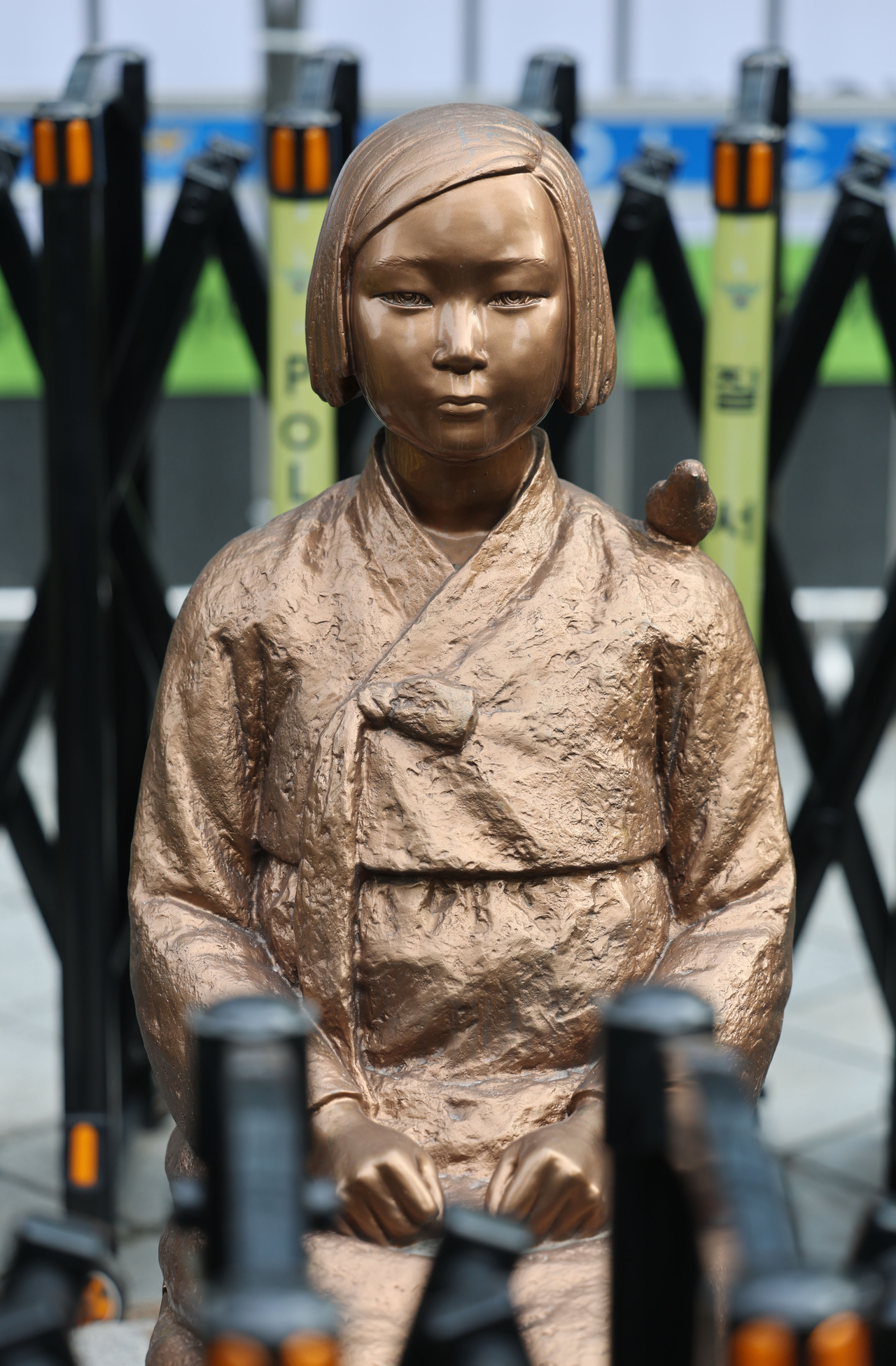
A legal dispute has emerged over whether the remaining funds from the 2015 bilateral agreement on Japan's wartime sexual slavery can be used to compensate a victim’s family, after the South Korean government filed an objection to a court decision ordering payment.
According to the Ministry of Gender Equality and Family and legal officials on Friday, the Reconciliation and Healing Foundation submitted an objection on March 3 to a compulsory mediation decision by the Seoul Central District Court. The court had ordered the foundation to pay 100 million won ($67,000) to the son of a deceased victim, surnamed Kim, using part of the contribution fund provided by the Japanese government.
A ministry official said the objection was filed on grounds that the foundation “has no obligation to preserve Kim’s claim on behalf of Japan,” adding that the creditor subrogation claim does not apply.
The foundation was established in July 2016 under the ministry with 10 billion yen ($63 million) funded by the Japanese government under the 2015 bilateral agreement aimed at supporting the women subjected to sexual slavery by the Japanese military during World War II.
The deal immediately drew intense backlash from surviving victims and civic groups, who demanded the return of the funds and dissolution of the foundation. The Moon Jae-in administration later decided to dismantle it in November 2018.
After spending 4.6 billion won on payments to victims and 1 billion won on operational costs, approximately 6.1 billion won remains. With the foundation effectively frozen for more than seven years due to disagreements over how to dispose of the unused funds, the balance has remained intact.
Kim, who earlier won a separate damages suit against Japan recognizing a 100 million won compensation claim, filed a garnishment request to collect the amount from the foundation’s remaining assets.
Kim argued that since the South Korean government had overturned the 2015 agreement by the previous administration and dissolved the foundation, Japan has grounds to demand the return of its contribution, claiming the funds are effectively Japanese property. The court accepted this reasoning and issued a compulsory mediation order on March 9.
Kim's case marks the first attempt by a victim’s family to seize the Japanese government’s contribution funds as compensation. Previously, victims who won similar damages suits sought to identify Japanese state assets in Korea through property disclosure requests, but the proceedings were dismissed after Japan repeatedly refused to receive court documents.
The foundation declined to comply with the court's repayment order, disputing the premise that Japan holds a restitution claim over the funds.
Kim subsequently filed a separate lawsuit seeking the release of the compensation funds. After one mediation session, the court ruled that the foundation must pay the full 100 million won unless an objection is filed.
Under compulsory mediation, the court issues a recommended settlement when a voluntary compromise appears unlikely. If no objection is raised, the decision becomes final and carries the same effect as a judicial ruling. The deadline for the foundation’s objection is April 5.
Whether the Ministry of Gender Equality and Family will accept the mediation remains uncertain. “Japan has never requested the return of the contribution, and we strongly question the validity of the argument that the dissolution of the foundation creates a debt obligation to Japan,” a ministry official said. “We are reviewing how to respond.”
The government has yet to decide how to handle the leftover funds amid criticism from Japan, which insists they be used according to the original agreement, and from civic groups that oppose their use without an official apology. The ministry said various options, including reverting the funds to the national treasury, require prior consultation with Japan.
jychoi@heraldcorp.com