An Indonesian historical novel exploring love, family and social change across generations has been introduced to Korean readers, marking another step in literary exchange between Southeast Asia and Korea.
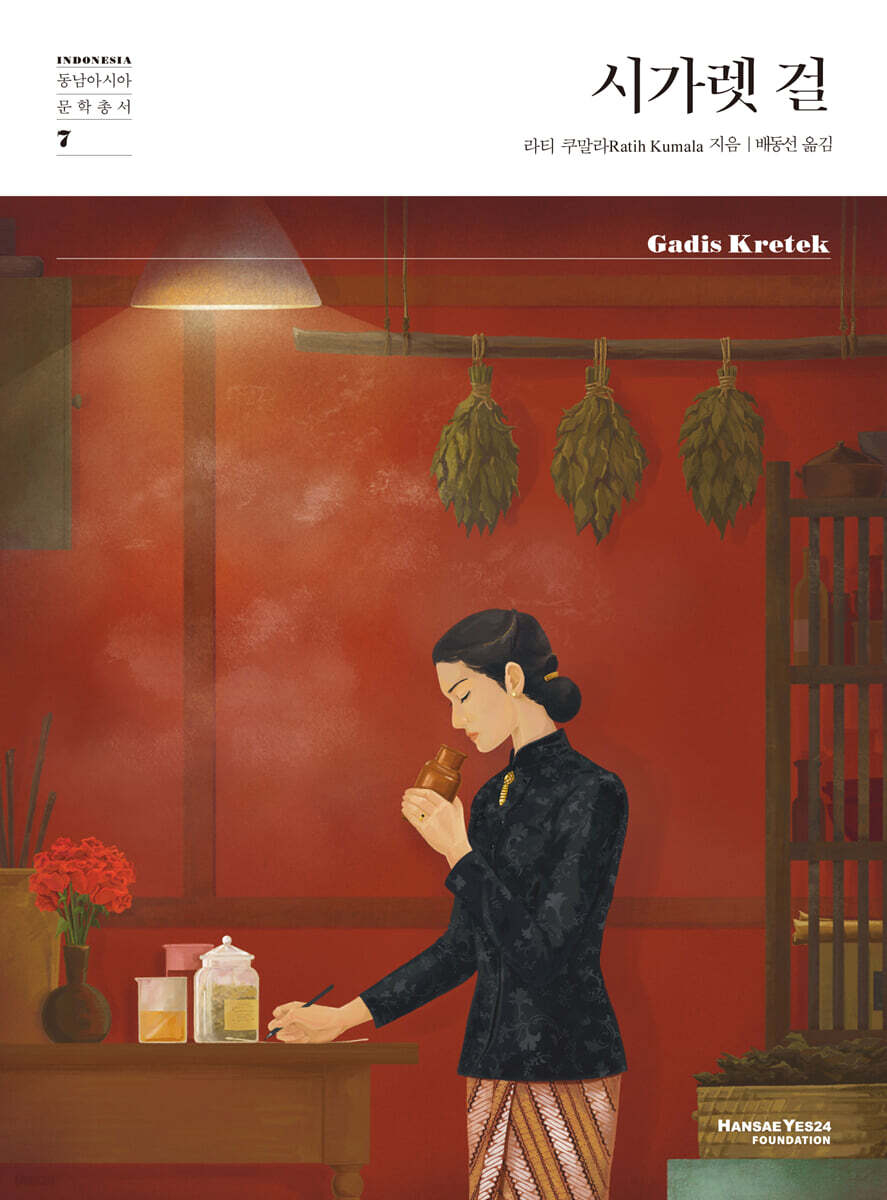
“Cigarette Girl,” written by Indonesian author Ratih Kumala, was recently published in Korean through the Hansae Yes24 Foundation’s Southeast Asian Literature Series, a program dedicated to introducing major works from the region to Korean audiences.
Kumala said the Korean publication of her book marks more than a personal achievement.
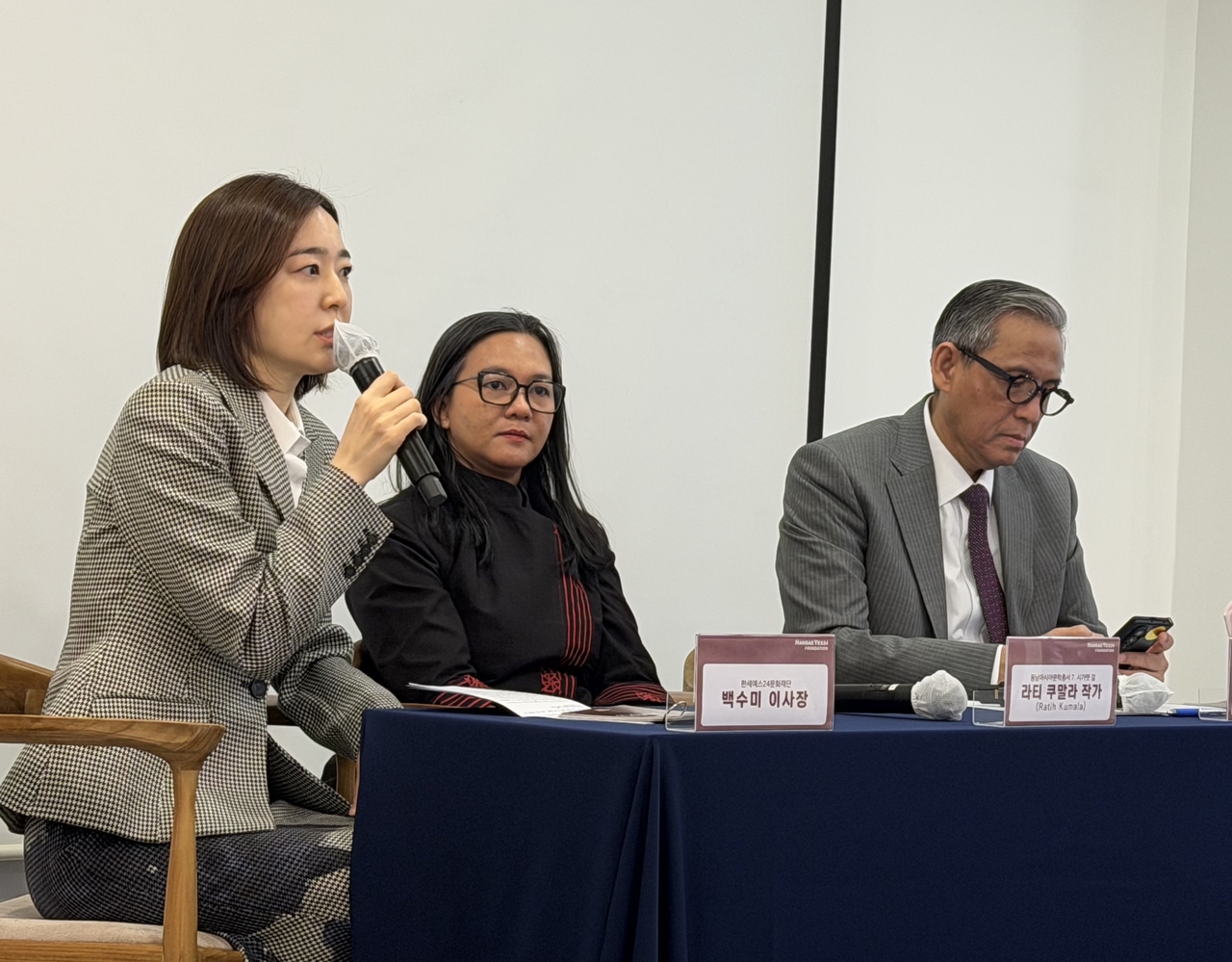
“I understand that not many Indonesian literary works are translated into Korean, but my husband’s book 'Man Tiger' was published in Korean a few years ago,” Kumala said during a press conference in Seoul on Friday. “So this is also a kind of achievement for our family.”
Her husband, novelist Eka Kurniawan, became the first Indonesian writer to be nominated for the Man Booker International Prize in 2016, the same year Han Kang became the first Korean author to win the award with "The Vegetarian."
Originally published in Indonesia in 2012, "Cigarette Girl" spans three generations and intertwines personal stories with pivotal moments in Indonesian history, including the country’s independence movement in the 1940s and political upheavals in the 1960s. The story is set largely in Java and centers on a family involved in Indonesia’s traditional clove cigarette, or "kretek," industry.
The novel was adapted into a Netflix series in 2023, with Kumala herself participating in the scriptwriting process.


Kumala explained that historical fiction requires carefully weaving characters into real historical contexts.
“When you create historical fiction, you must decide which real era you want to portray and place your characters inside the actual events,” Kumala said during a book event in Seoul on Friday. “You need to understand the official history first, and from there you can find the uniqueness of the story.”
At the event, Lee Eun-ok, director at the ASEAN-Korea Center's Information and Data Unit, said the novel reminded her of landmark works in Korean literature that depict sweeping historical transformations through personal narratives.
“It made me think of major works like Park Kyong-ni’s 'Toji' ('Land') or Min Jin Lee’s 'Pachinko,'” Lee said. “In a similar way, this novel reveals how Indonesia went through its own dynamic history and development.”
“Without a work like ‘Cigarette Girl,’ it would have been difficult for someone like me living in Korea to grasp Indonesia’s history in such a vivid and layered way,” she added.
The publication also highlights the growing cultural dialogue between Korea and Indonesia. Indonesian Ambassador to Korea Cecep Herawan said literature can play a vital role in deepening mutual understanding between societies.
“Korean culture is widely appreciated in Indonesia, especially among young people,” the ambassador said. “The publication of ‘Cigarette Girl’ in Korea represents a step forward toward more balanced and reciprocal cultural exchange between our two countries.”
Indonesia’s cultural diversity makes such literary introductions particularly meaningful, he added.
“We are a country of more than 17,000 islands, with hundreds of ethnic groups and over 700 local languages,” he said. “Through literature like this novel, readers can gain insight into Indonesian history, traditions and social change.”
The Korean edition was published as part of the Hansae Yes24 Foundation’s ongoing project to introduce lesser-known Southeast Asian literary works to Korea.
Baek Soo-mi, chairperson of the Hansae Yes24 Foundation, said the program seeks to discover important works that Korean publishers might hesitate to introduce on their own.
“Our goal is to find outstanding literary works from Southeast Asia and bring them to Korean readers,” Baek said. “We hope that these books will not only be read widely but eventually be recognized as classics of world literature.”
While the foundation usually publishes one book each year through the series, it sometimes expands to two or three titles depending on the availability of significant works and reader interest.
The initiative reflects a broader effort to expand literary exchange between Korea and Southeast Asia, with future projects expected to include additional translations and potential collaborations between writers, publishers and cultural institutions in both regions.
gypark@heraldcorp.com