Sixteen years after his debut, Hanwha’s heir-apparent faces a defining test: global expansion and succession
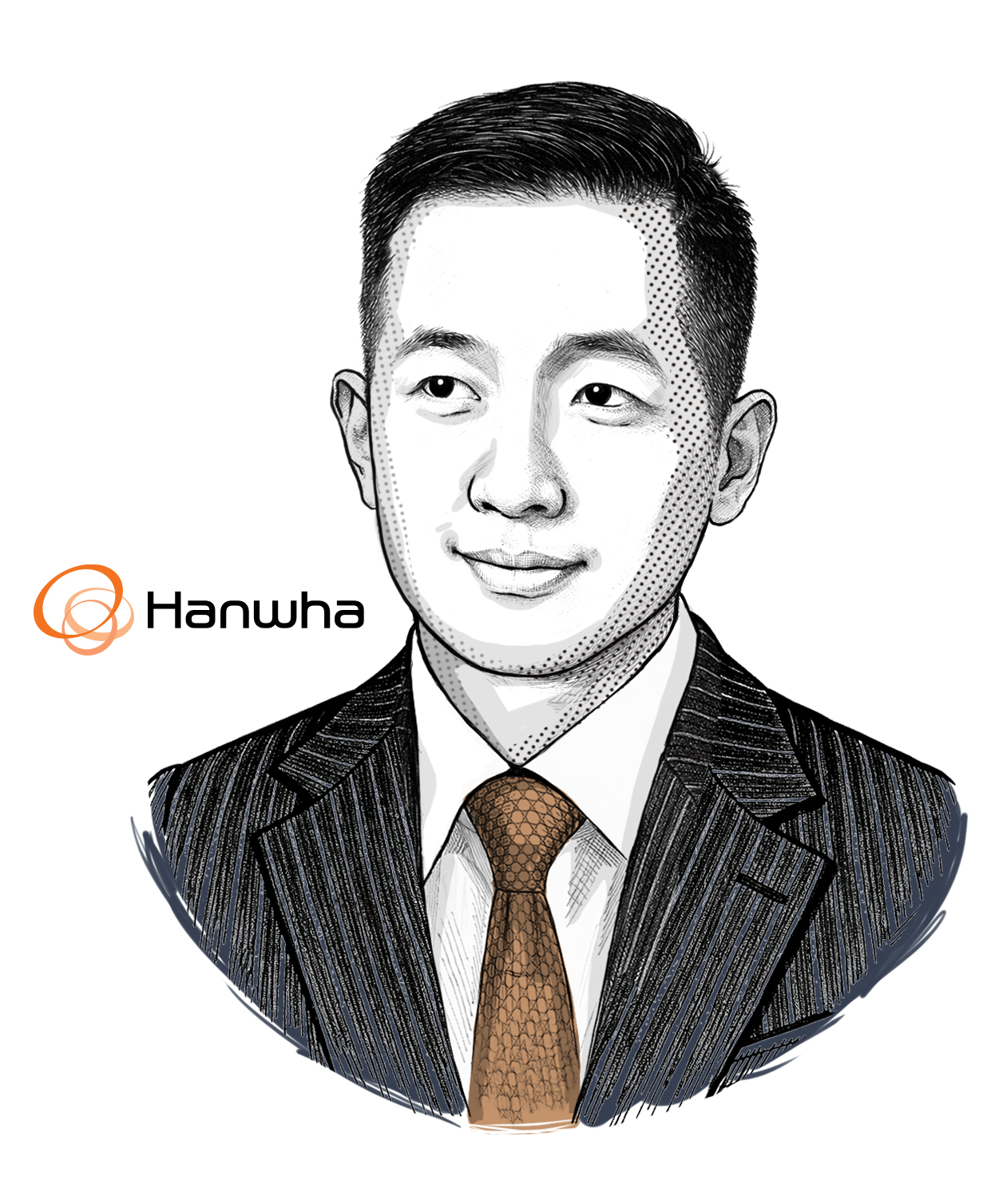
Succession Watch profiles the next generation of leaders shaping Korea's key industries — from chaebol heirs to self-made entrepreneurs — spotlighting the new forces driving the nation's growth. — Ed.
Ever since Kim Dong-kwan formally debuted at Hanwha Group in 2010, his every move has been under watchful eyes. Industry analysts have long questioned whether the young heir is merely another silver-spoon scion or a leader capable of steering the 70-year-old defense-to-energy giant into its next chapter.
Kim, the eldest son of Hanwha Group Chair Kim Seung-youn, spent the past 16 years beating back industry-wide cynicism through performance. Since stepping into a managerial role at Hanwha at age 27, he has navigated both setbacks and breakthroughs, from steering the group’s struggling solar business to consolidating its defense units and driving rapid growth in aerospace and shipbuilding.
Fast forward to 2026, and Kim’s business acumen and leadership have helped quell doubts about his readiness to lead the nation’s seventh-largest conglomerate. Promoted to vice chair in 2022, the 43-year-old is widely regarded as the standard-bearer of Hanwha’s future.
With the group aspiring to become a global defense force spanning land, sea and air — dubbed the “Korean Lockheed Martin" — the responsibility falls increasingly on Kim, who oversees the group’s core sectors of defense and shipbuilding. What lies ahead for Kim is a defining test: whether he can transform inherited industrial might into a true global powerhouse reaching from space to the seabed.
Bridging Seoul and Washington
Kim's global outlook was cultivated early on. He was educated at the prestigious St. Paul’s School in New Hampshire before going on to study political science at Harvard University. There, he developed key relationships and cultural fluency that would later underpin Hanwha’s international expansion.
Those early connections, coupled with Hanwha’s longstanding ties to US political circles — particularly the Republican Party dating back to his father’s tenure — are gaining fresh relevance under President Donald Trump’s second administration.
For Kim, this presents a timely opportunity to strengthen the group’s presence in the world’s largest defense market.
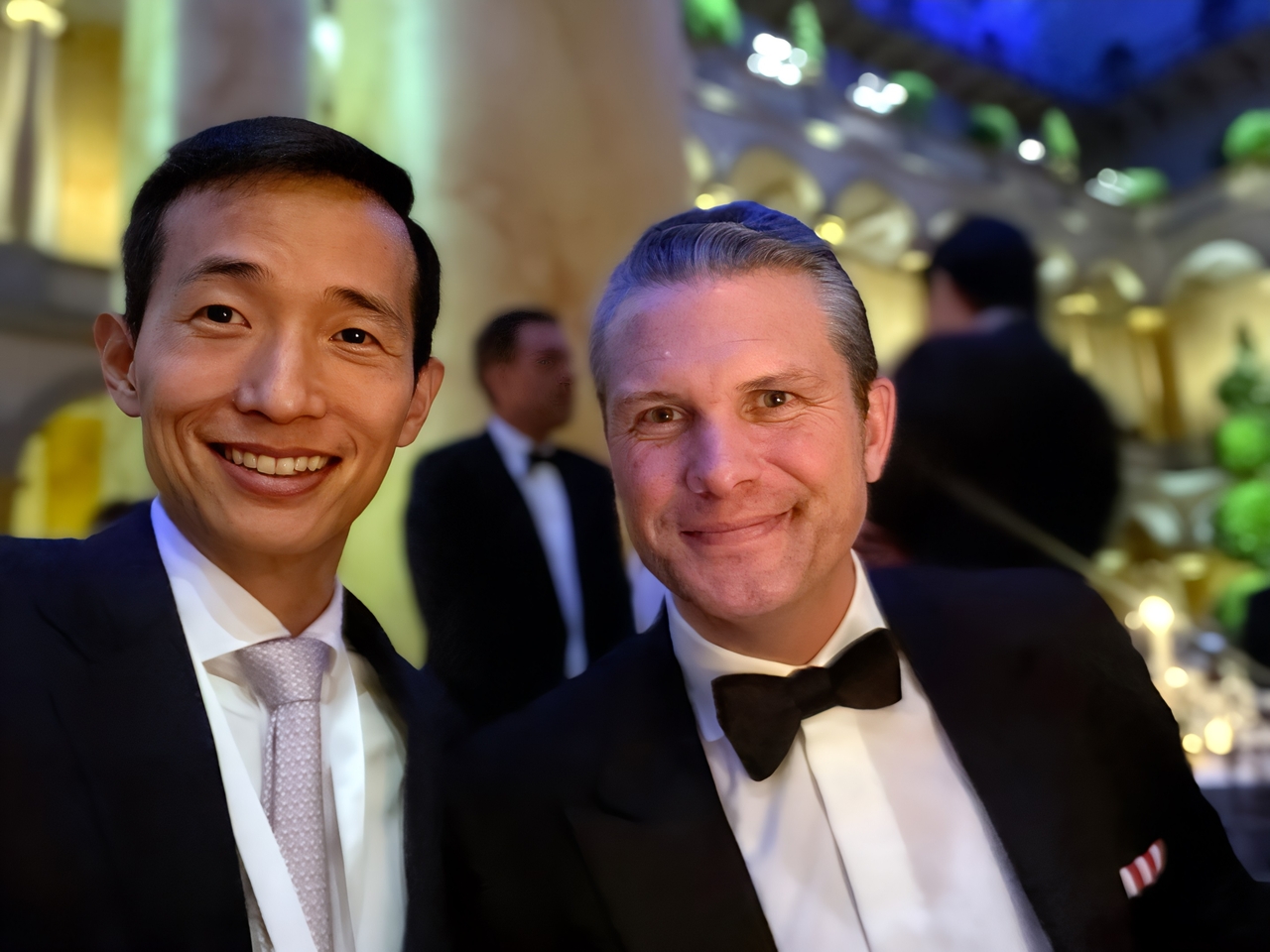
Kim was one of the few business leaders from South Korea who attended Trump’s second inauguration ceremony in January 2025, where he met key members of the Cabinet, including Secretary of State Marco Rubio, Secretary of Defense Pete Hegseth and the interior secretary and Trump’s energy czar, Doug Burgum.
His US push gained momentum following Hanwha’s acquisition of Daewoo Shipbuilding & Marine Engineering in 2023, which became Hanwha Ocean — a transaction broadly regarded as the final piece of the group’s defense portfolio.
Kim was central to the takeover from start to finish, serving as the chief architect of the acquisition team. The deal also held a deeper personal significance, fulfilling a long-held ambition of his father, Kim Seung-youn, who had attempted but failed to acquire the shipbuilder in 2008. By bringing Daewoo Shipbuilding into the fold, the junior Kim not only bolstered Hanwha’s defense ecosystem spanning land, sea and aerospace, but also cemented his reputation as a bold, strategic leader capable of pulling off a consequential deal.
With Hanwha Ocean, Kim quickly turned his attention to the American market, securing maintenance, repair and overhaul contracts from the US Navy, marking the first such deals awarded to a South Korean shipbuilder. In December 2024, he took a larger bet by acquiring the Philly Shipyard in Philadelphia for $100 million, establishing a local base that could eventually expand to building naval vessels and specialized liquefied natural gas tankers.
Riding the MASGA wave
The timing could not have been better. With Trump’s second term, and the revival of US shipbuilding and domestic manufacturing at the heart of his agenda, Hanwha quickly found itself in the spotlight.
Hanwha’s profile rose further when it played a pivotal role in the stalled tariff negotiations between Seoul and Washington last year. A $150 billion Korean investment pledge in the US shipbuilding sector — packaged under the banner of “Make American Shipbuilding Great Again" — was instrumental in securing a tariff reduction deal, with Hanwha Ocean emerging as both the face and driving force behind the agreement.
It was Kim who took senior Trump administration officials, including Navy Secretary John Phelan and White House budget chief Russell Vought, on a personal tour of Hanwha’s Philly Shipyard, just hours before the two countries announced a trade deal. According to sources, Kim used the visit to showcase Hanwha’s capabilities in shipbuilding and maintenance, repair and operations in the US, which led the way for Trump to green-light the tariff deal.
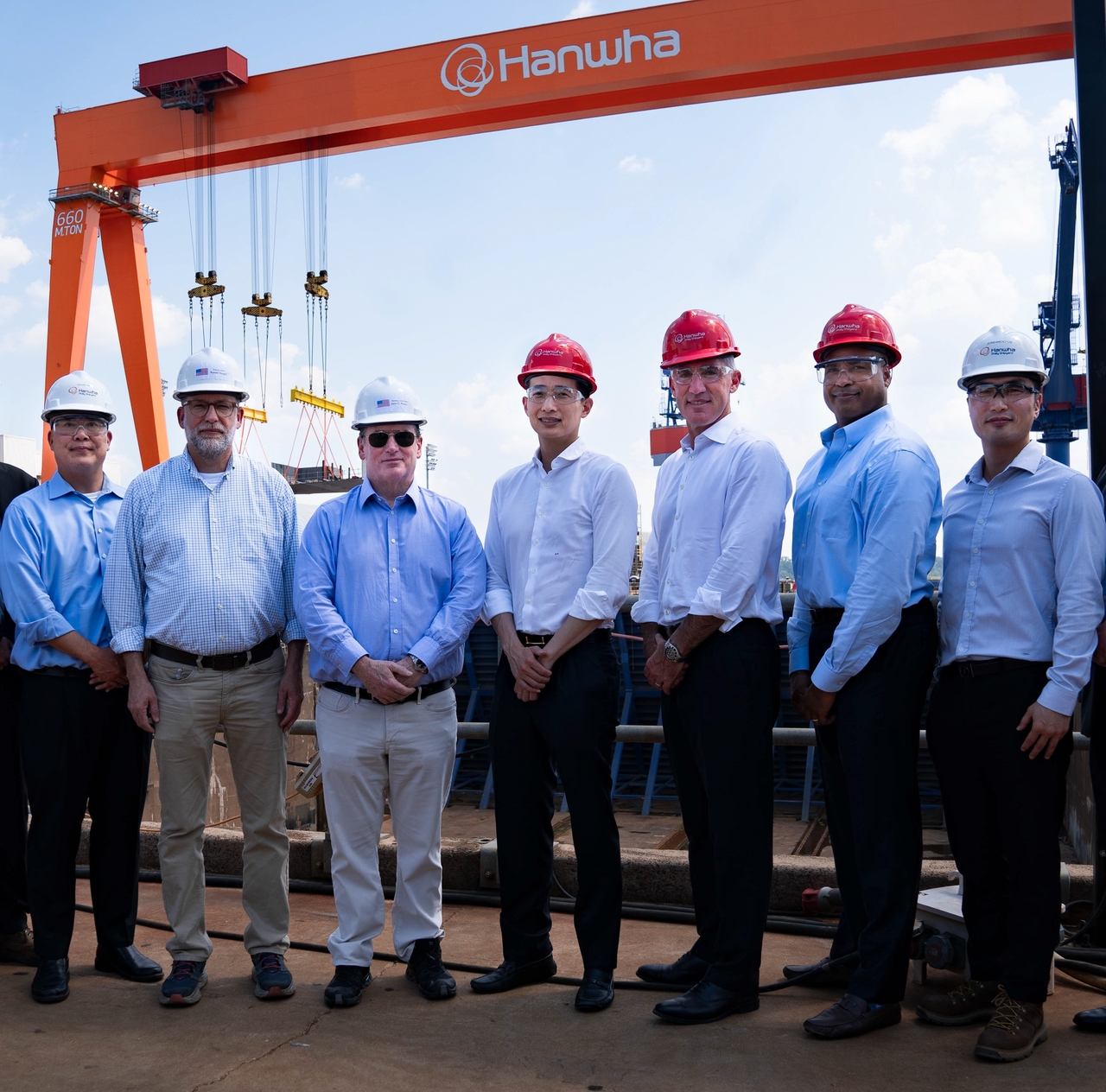
In December, Trump publicly called Hanwha a “good company” and said the firm would work with the US Navy for the construction of new frigates as part of plans to revitalize the country’s maritime industry.
Kim's latest strategic focus is securing the Canadian Patrol Submarine Project — a Royal Canadian Navy procurement of up to 12 diesel-powered submarines. With a Hanwha Ocean-led consortium shortlisted as the final contender against Germany's Thyssenkrupp Marine Systems, the deal, valued at around 60 billion Canadian dollars ($44 billion), would mark the company's most significant overseas defense win and a major step in its global submarine ambitions.
Industry watchers say Kim’s visible, hands-on involvement in these initiatives has helped solidify his reputation within the business community.
“Despite his relatively young age, Kim Dong-kwan seems to have a strong business instinct,” said Oh Il-sun, head of the Korea CXO Institute, a Seoul-based corporate tracker. “His decision to take an active and visible role in the recent MASGA project has helped to positively elevate his public profile. Within the company, his grip on the organization and internal standing among employees also seem solid."
Oh added that Kim has also avoided controversies that have plagued some heirs at other conglomerates.
“Among third- and fourth-generation chaebol leaders, he stands out as someone who has managed to stay clear of major controversies. That stability itself is considered an important strength.”
The ownership puzzle
With much of Kim’s business acumen now proven, the last, and perhaps most critical piece of Kim’s succession lies in cementing his control over Hanwha’s ownership structure, particularly through Hanwha Energy, the privately held entity that sits at the very top of the group’s sprawling hierarchy.
“Looking at the broader picture, the recent share transfer and corporate restructuring at Hanwha can be seen as part of the succession process centered on Kim Dong-kwan,” said Oh. “The overall direction has largely been set, and the group now appears to be working through the finer details.”
Last April, Kim Seung-youn transferred half of his stake, or 11.32 percent, in Hanwha Corp., the group’s holding firm that controls key affiliates including Hanwha Aerospace, Hanwha Solutions and Hanwha Life Insurance, to his three sons. The largest portion of 4.86 percent went to Dong-kwan, and 3.23 percent each to the second and third sons, Hanwha Life Insurance President Dong-won and Hanwha Galleria Vice President Dong-seon.
Following the transfer, Hanwha Corp.’s largest shareholder is Hanwha Energy with 22.16 percent, followed by Seung-youn with 11.32 percent, Dong-kwan with 9.77 percent, and Dong-won and Dong-seon holding 5.38 percent each.
With Dong-kwan holding a 50 percent stake in Hanwha Energy, his effective stake in Hanwha Corp. now exceeds that of his father.
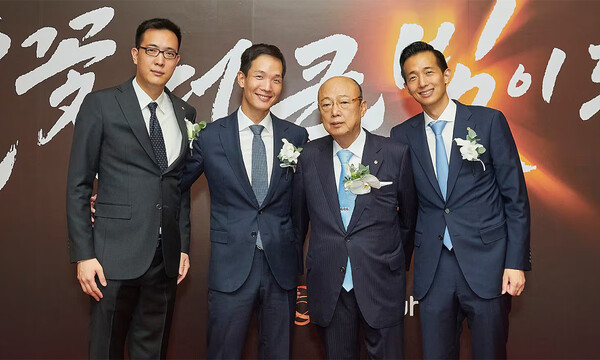
But for the complete handover to happen, tasks remain. They include the massive inheritance tax, management split among the brothers, and streamlining the holding structure.
As of early 2026, the three sons face an estimated tax bill of over 220 billion won ($147.99 million) for their father Kim Seung-youn’s 2025 gift of the stakes, which is expected to be paid over five years.
The group is also undergoing a major corporate spinoff, separating its core defense, shipbuilding, energy and finance businesses to form a new holding company for its technology and lifestyle business, led by the youngest son, Dong-seon.
Under the plan, Dong-kwan’s key businesses, including Hanwha Aerospace, Hanwha Ocean and Hanwha Solutions, along with Dong-won’s financial arm Hanwha Life Insurance, will stay within the existing Hanwha Corp. Meanwhile, Dong-seon’s businesses, such as Hanwha Vision, Hanwha Hotel & Resort, Hanwha Galleria and food service operator Ourhome, will be placed under a new holding entity, Hanwha Machinery & Services Holdings, expected to be completed in July.
As Hanwha seeks a leadership transition, analysts say several options remain on the table. One scenario is a potential merger between Hanwha Energy — where Dong-kwan holds the largest stake — and Hanwha Corp., which could position Kim as the largest shareholder of the combined entity without injecting new capital, though such a move could face resistance from shareholders and regulators.
A more likely path could be an initial public offering of Hanwha Energy, which sources say the group has been preparing. Listing the privately held energy unit could give Kim substantial capital through share sales or dividends, which could then be used to acquire additional shares in Hanwha Corp. or finance the eventual inheritance of his father’s stake. But this route, too, could face scrutiny, given the Lee Jae Myung administration’s firm stance against the duplicate listing of conglomerate subsidiaries.
sahn@heraldcorp.com