Spring comes in many forms: cherry blossoms, pale pastel outfits appearing after months of winter drab, or the first green shoots on the dinner table. In a fishing town of Gijang, Busan, however, the season announces itself with a far more pungent sign: the salty, briny smell of fresh anchovies.
Dae-byeon Village and its bustling namesake port account for about 60 percent of South Korea’s anchovy catch, harvested using drift-net fishing. Anchovies, which live for only one year, are caught primarily in spring and autumn, either as tiny juveniles or fully grown adults. The spring harvest, with fish measuring 7 to 15 centimeters, is especially sought after for its richer flavor and larger size.
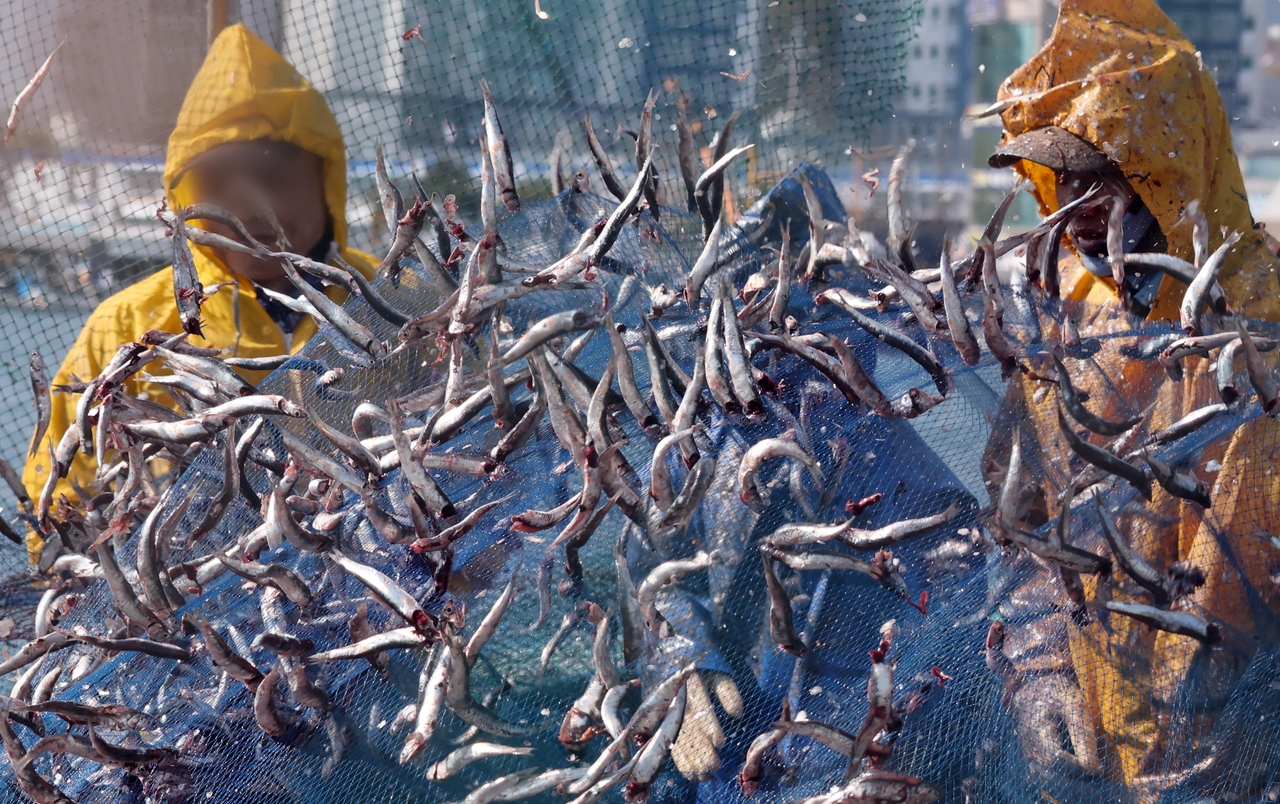
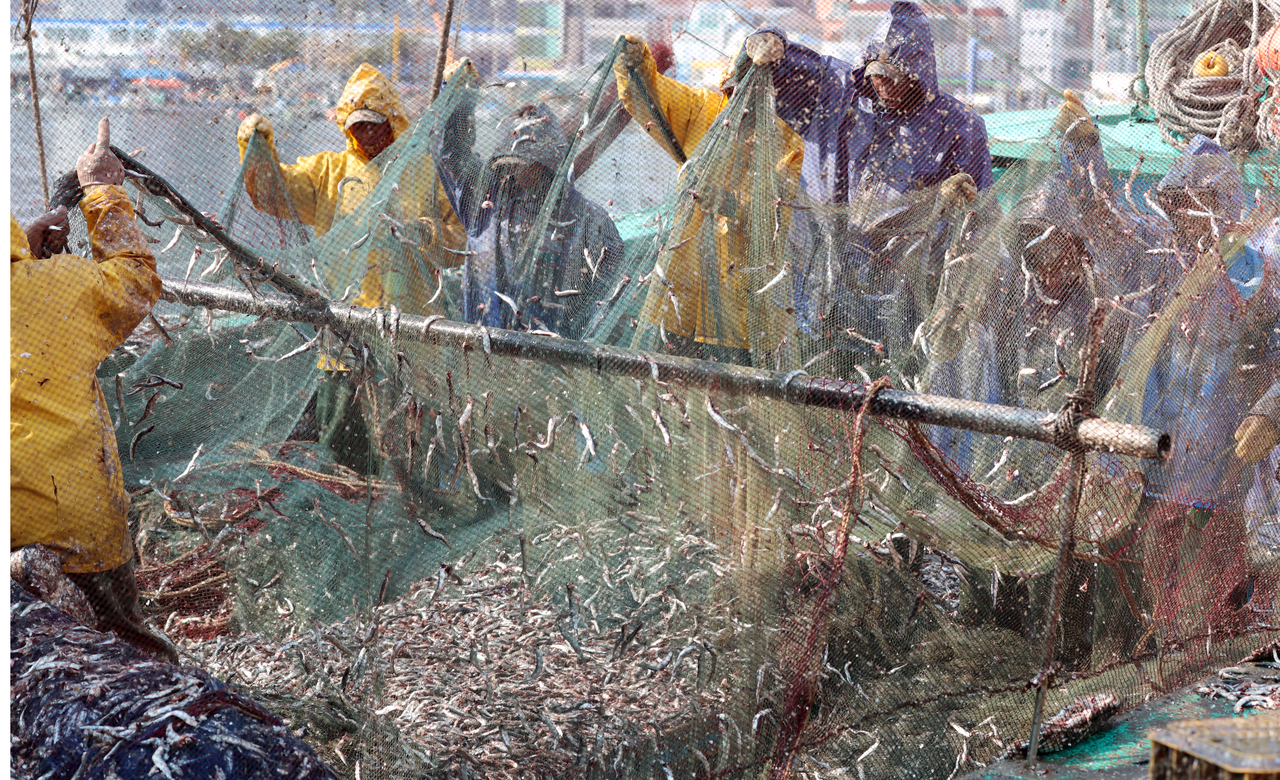
Because anchovies travel in schools, large numbers can be caught at once. Fishers use vertical drift nets, which are set in the water so that passing fish become trapped in the mesh. The nets are then lifted and shaken to release the catch, a process known locally as “anchovy shaking," which has become one of Gijang’s signature spring scenes.
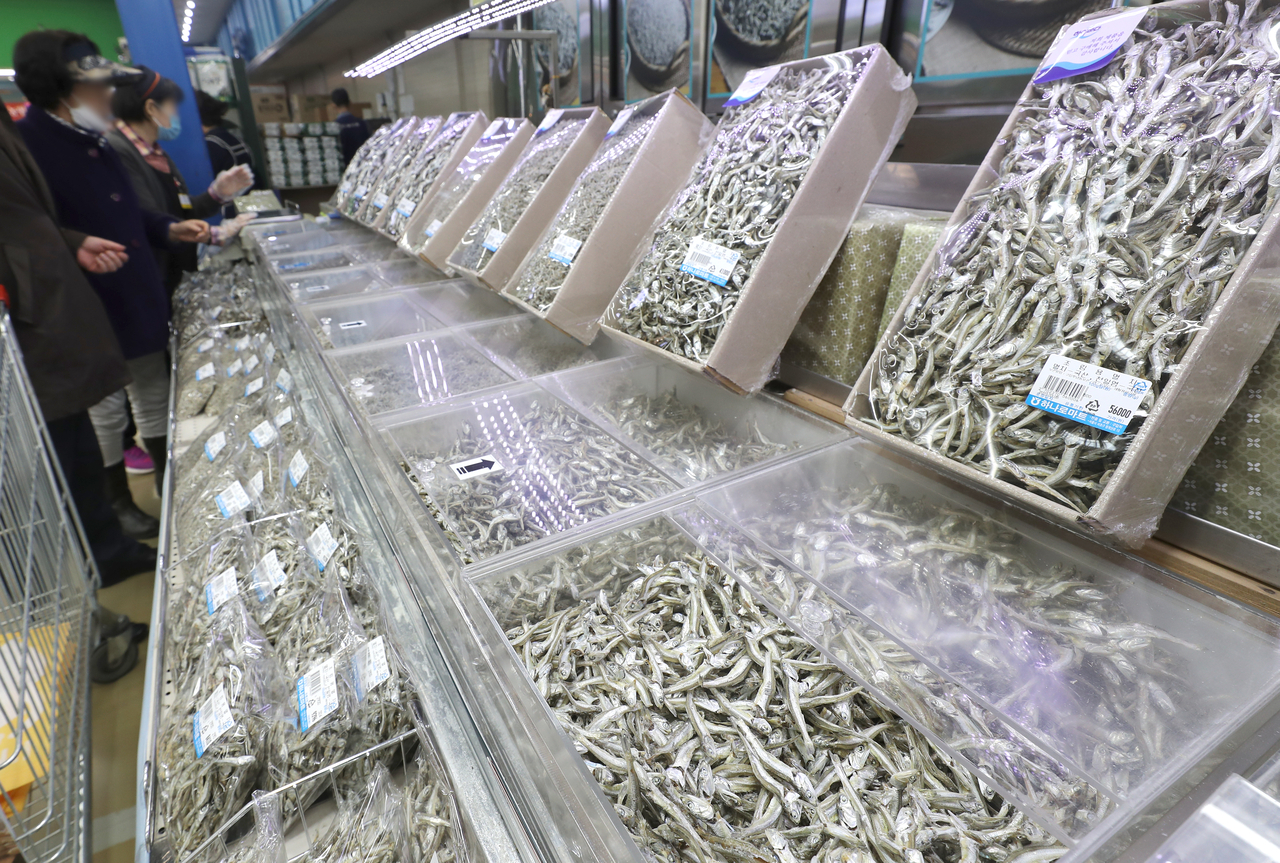
Anchovies are a familiar ingredient in Korean cuisine.
While they are often used in limited ways overseas, such as on pasta, pizza or salads, in Korea they are consumed in a far wider variety of forms depending on size. Small anchovies are commonly stir-fried for side dishes, while larger ones are used for broth. They can also be dried and fermented to add umami flavor to other dishes.
In Gijang, spring anchovies take center stage, starring in dishes such as anchovy sashimi, grilled anchovies and anchovy stew.
Experts say anchovies are rich in calcium, protein, essential amino acids, DHA and EPA, making them a nutritious food for both children and adults.
ylee221@heraldcorp.com