Pop music concerts generated largest share, followed by musicals, dance
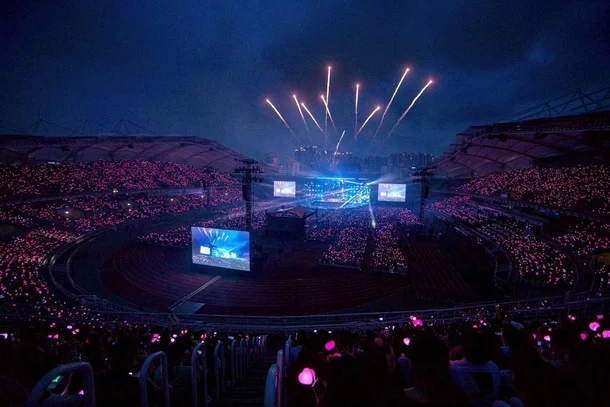
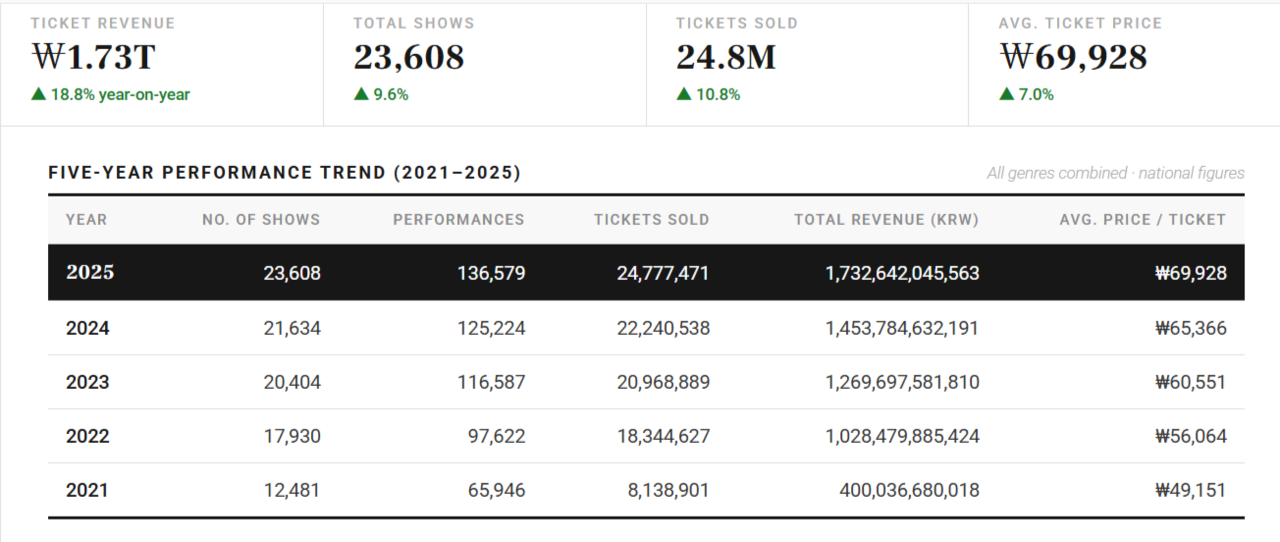
South Korea’s performing arts market surpassed 1.73 trillion won ($1.3 billion) in ticket sales in 2025, marking strong growth across concerts, musicals and dance performances, according to government data released Wednesday.
The Ministry of Culture, Sports and Tourism published a report analyzing ticket reservation data from the Korea Performing Arts Box Office Information System, compiled with the Korea Arts Management Service.
The report showed that total ticket sales in the domestic performing arts market reached 1.732 trillion won in 2025, an 18.8 percent increase from 1.458 trillion won the previous year.
The number of productions rose 9.6 percent to 23,608, while the number of performances increased 11.3 percent to 136,579. Total ticket reservations climbed 10.8 percent to 24.78 million. The average ticket price also increased by about 5,000 won from the previous year to roughly 70,000 won per seat.
Pop music concerts generated the largest share of ticket sales, reaching 981.7 billion won, up 29 percent from a year earlier. The number of concerts increased 17 percent and ticket reservations rose 19.9 percent, a trend attributed partly to the rise in large-scale performances with audiences exceeding 10,000 people, including concerts by IU, Lim Young-woong, Seventeen, Blackpink and international acts such as Coldplay.
The musical theater sector recorded ticket sales of 498.9 billion won, up 7.2 percent from the previous year. The number of productions grew 13.9 percent, performance runs rose 14.6 percent and ticket reservations increased 8.9 percent. The report said the opening of several widely recognized productions continued to draw strong audiences.
The dance sector also saw notable growth. Ticket sales rose 29.5 percent to 26.7 billion won, while the number of productions, performances and ticket reservations increased 18.3 percent, 24.9 percent and 17 percent, respectively. Touring performances of well-known international contemporary dance works were cited as one of the factors behind the increase.
The capital region — Seoul, Gyeonggi Province and Incheon — continued to dominate the market, accounting for 76.4 percent of total ticket reservations and 82.7 percent of ticket sales nationwide.
However, the data also indicated a gradual shift within the capital region. Seoul’s share of total ticket sales fell from 65.1 percent in 2024 to 60.6 percent in 2025, while Gyeonggi Province’s share rose from 8.7 percent to 14.5 percent and Incheon’s increased from 5.2 percent to 7.6 percent. The change was attributed to expanded performance infrastructure and an increase in large-scale productions in the surrounding metropolitan area, such as Goyang Aram Nuri Arts Center and the Arts Center Incheon, which have increasingly hosted major concerts and touring musicals.
Outside the capital region, Daegu hosted the largest number of performances with 1,422 productions, followed by Busan with 1,381. Ticket sales in Busan rose 23 percent to 101.7 billion won, while Daegu recorded 56.6 billion won in ticket sales, up 0.1 percent from the previous year. Daegu Opera House has remained a key hub for opera and musical productions in the region, while Busan Concert Hall opened last year as the city’s first dedicated classical music venue and is expected to further expand the region’s performing arts ecosystem.
gypark@heraldcorp.com