Jethro Compton on bringing Seoul -- and Sillim-dong -- to a British stage
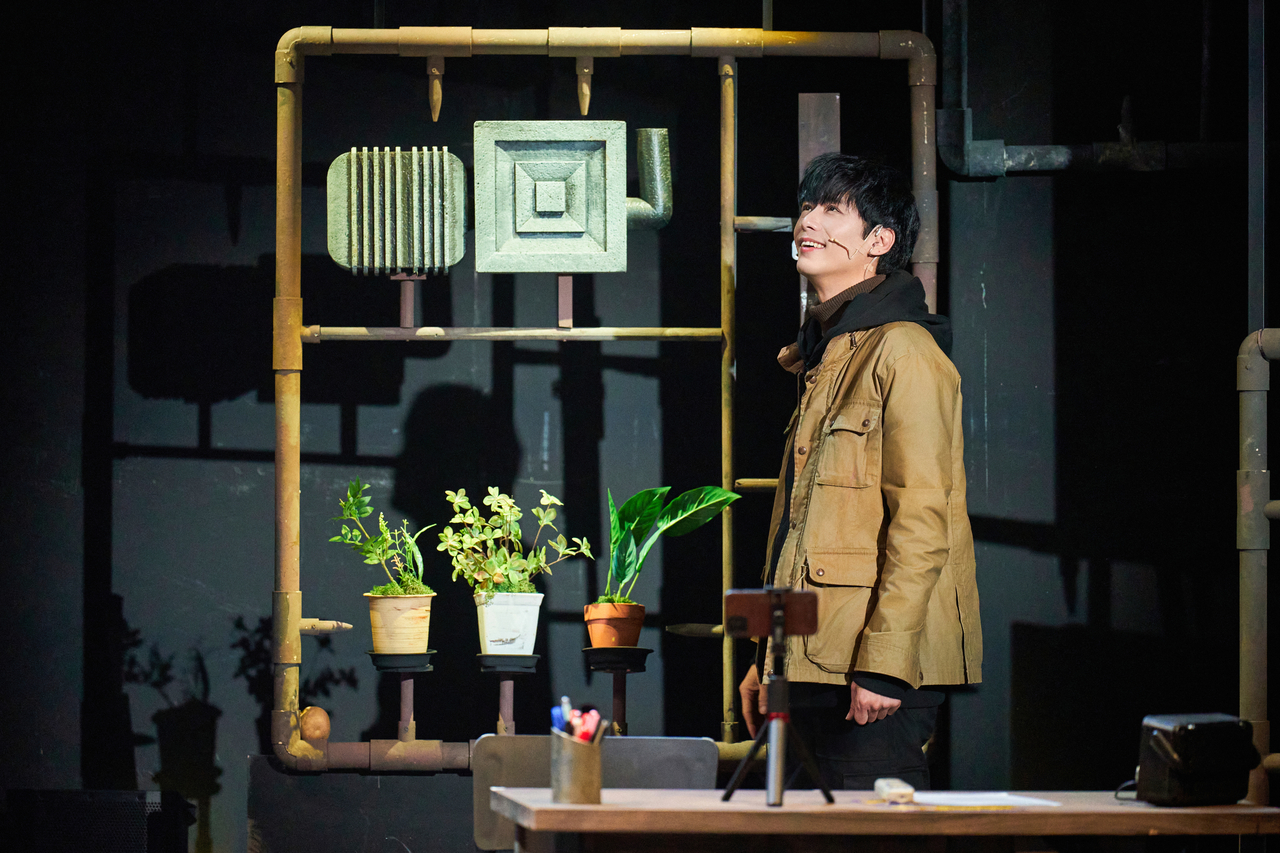
In a cramped studio in Sillim-dong — a neighborhood where young Koreans gather to study for exams that can shape the rest of their lives — a young man prepares for a test he may never take. Outside, the city has collapsed. Inside, he may be the last person alive.
It is the premise of a one-man Korean musical that British playwright and dramaturg Jethro Compton is now bringing to the British stage.
Compton is serving as dramaturg for the UK premiere of "The Last Man," a Korean one-person rock musical that opens at Southwark Playhouse's Elephant venue in London on May 8. Originally premiered in Korea in 2021, the show — written by Kim Ji-shik and composed by Kwon Seung-yeon — follows a lone survivor isolated in a bunker amid a zombie apocalypse, with each production taking on a different emotional shape depending on who is cast.
For Compton, who won the 2025 Laurence Olivier Award for Best New Musical for his work on "The Curious Case of Benjamin Button," this marks a reversal of a decadelong creative relationship with Korean theater. His works — including "The Bunker Trilogy" and "The Capone Trilogy" — have traveled to Seoul repeatedly over the years. Now, for the first time, he is working in the opposite direction.
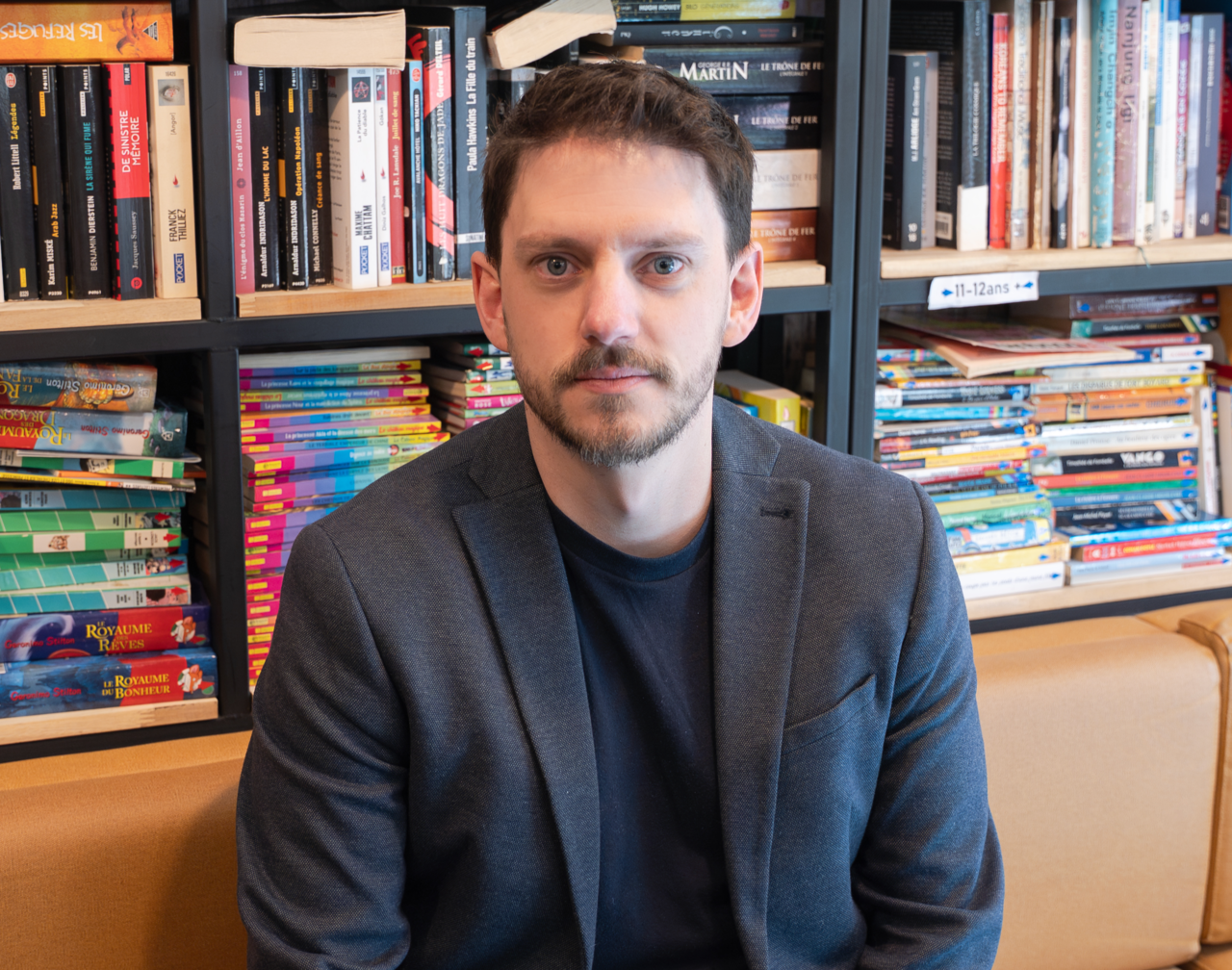
Compton was brought to the project through a web of long-standing relationships. Southwark Playhouse — the venue hosting the UK premiere — recommended him to producer Lee Hyun-jae of Neo, a Korean production company whose original musicals — including "Elegy of Death" and "Vanishing" — have already found audiences in Shanghai and Hong Kong.
"I resonated with the concept of needing to self-isolate from the world sometimes," he said during an interview in Seoul last month. "I identified with the character, I suppose."
The first thing Compton is clear about: the show is not being transplanted. The setting remains Korea, the characters remain Korean, the story remains Korean. This was not a negotiable point for the production, and it is not one Compton would have wanted to change.
"Something like jeong is such a Korean sentiment," he said, referencing the untranslatable concept of deep emotional bonds. "To change the location, or to try and make the show British, that is such a key part of the heart of the show. It just wouldn't work without it remaining a Korean show."
In fact, Compton said he would like the production to lean further into its Korean identity in marketing, not less. As a show arriving in London without the "K-musical" label, it has a chance to let its distinctiveness speak for itself — but that distinctiveness, he argues, should be named.
"It's different from anything I've seen in the UK at the moment," he said. "I think we should shout more about it."
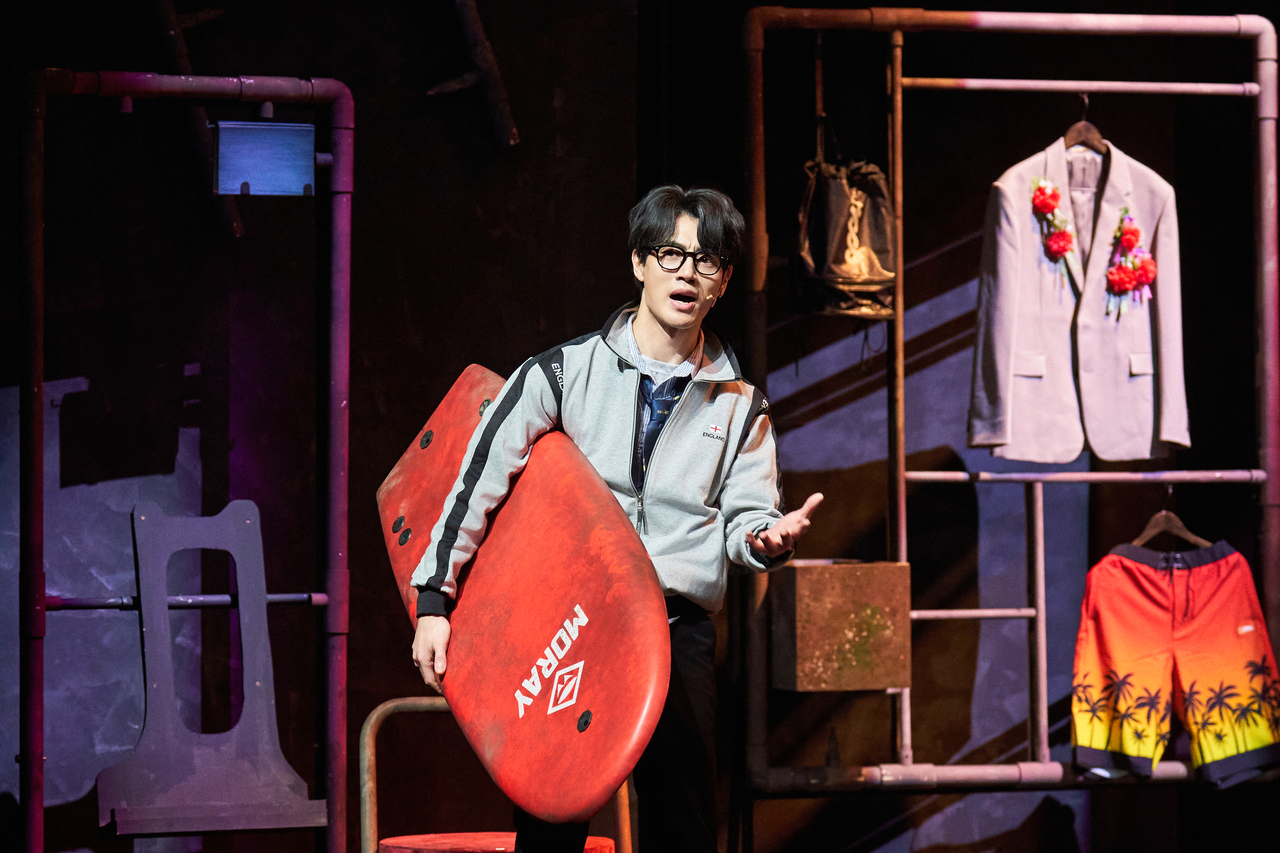
The dramaturgical work, Compton explains, is less about changing the story and more about recalibrating how it lands. British theatrical sensibility, in his observation, runs on indirectness — audiences want to feel they have discovered the meaning themselves rather than having it delivered to them.
"In Korean theater, I get the sense that characters are very direct — they will say what they think and feel quite clearly. In British theater, we prefer the characters to hide their thoughts and feelings beneath the words they say. It's not as much about what they say as what they don't say."
He offers a concrete example: a scene in which the survivor celebrates their birthday alone in the bunker, eating a Choco Pie and thinking of the friends they cannot share it with. In the Korean version, the loneliness is stated plainly. In the version Compton is shaping for London, the character circles around the feeling — observing, a little wryly, that even if you don't really care about your birthday, something still feels off when you can't celebrate it.
"The audience understands they are feeling lonely without them saying directly: 'I am feeling lonely,'" he said.
One thing still eludes him. He only understood it fully after visiting Sillim-dong last week — the slogans on the hagwons, the aspirational names of student housing blocks, the success stories of former residents displayed everywhere.
"It felt almost like marketing propaganda," he said. "You come here, you will succeed. And I thought — if you're living here and not doing well in your studies, that must feel really difficult." How to convey that to a British audience without it becoming a TED talk about Korean society, he admits, he hasn't yet worked out. "So if you have any ideas, do share."
The themes of isolation and societal pressure, Compton noted, are not uniquely Korean. Young people withdrawing from society is also a growing concern in the UK. He points to young men building much of their social world through online gaming, sometimes absorbing harmful ideas in unmonitored spaces.
Yet his instinct as a dramaturg is to resist flattening the story into something universal. The more personal and specific it remains, he said, the more powerfully it can resonate with audiences everywhere.
Asked why he chose this project now — when the Olivier Award for The Curious Case of Benjamin Button has opened many new opportunities — Compton is characteristically direct. He even signed with a Hollywood management team after the awards.
“I need my heart to connect with something,” he said. “Right now, this feels very exciting to me.”
"The Last Man" runs at Southwark Playhouse Elephant, London, from May 8 to June 6. Its third Korean season opens March 24 at Link Art Center in Daehangno, Seoul.

gypark@heraldcorp.com




![[인터뷰] 구글 지도 반출 19년 교착…"막힌 건 안보가 아니라 수익성"](https://wimg.heraldcorp.com/news/cms/2026/02/13/news-p.v1.20260212.a1df6a111ac343629a0e9335485a7a2f_T1.jpeg?type=h&h=240)