Korea's biggest film in 2 years is drawing unusual wave of recognition from top officials, including President Lee
The culture minister delivered cake and flowers to the director in person. The head of the national heritage agency posted guides on social media to the film's real-life locations. The president put up his own congratulations on X.
"The King's Warden" had already broken records before any of that happened, but the wave of official recognition that followed the film's run has been remarkable in its own right.
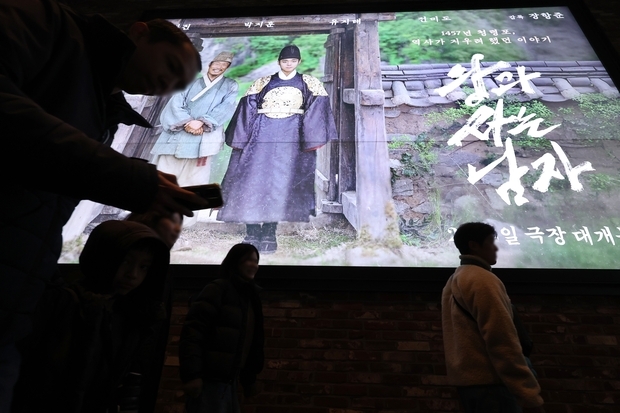
The film crossed 10 million admissions on Friday, 31 days after its Feb. 4 opening. In Korea, where box office performance is measured by ticket sales rather than gross revenue, 10 million is the line that separates a hit from a phenomenon.
No film, domestic or foreign, had cleared it in two years. The last to do so were the supernatural thriller "Exhuma" (11.9 million) and the crime actioner "The Roundup: Punishment" (11.5 million), both in 2024.
Over the weekend, the ticket count reached 11.5 million, faster than either of those films had taken to pass the same mark.
Directed by Jang Hang-jun, the period drama centers on the unlikely bond between a village chief, Eom Heung-do (Yoo Hae-jin), and the young King Danjong (Park Ji-hoon). Danjong was a real figure — the sixth king of the Joseon dynasty, deposed by his uncle at 15 and killed in exile at 16 — and the film draws on the historical record surrounding the final months of his life.
Visitors have been flocking to Yeongwol, the county in Gangwon Province where Danjong was historically exiled, with the main sites associated with the king drawing more visitors in two months than they would normally see in half a year.
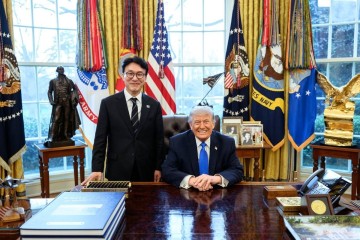
The higher-ups were quick to weigh in as the film's popularity took off. Culture Minister Chae Hwi-young met director Jang on Friday evening, hours after the 10 million count was reached, and presented him with a cake and a bouquet.

Posting photos from the visit on social media the next day, Chae described the film as "a ray of hope and a warm blessing" for an industry that had been frozen stiff.
Heo Min, director of the Korea Heritage Service, the government agency that oversees the country's historic sites and cultural assets, posted his own tribute Sunday. He wrote that the film had brought national attention to a painful chapter of Korean history, adding that the agency was planning cultural events to draw audiences to heritage sites related to Danjong.
Then there was the president himself. President Lee Jae Myung posted his congratulations on Saturday, calling the achievement "the valuable result created together by the filmmakers' outstanding imagination, power of storytelling and the generous support of the public."
His office had earlier confirmed he had watched the film with first lady Kim Hea Kyung at a local cinema during the Lunar New Year holiday in February.
It is rare for a single film to attract this kind of response from officials, but this time there was plenty of reason to pay attention. Korean cinema has been in a prolonged slump since the COVID-19 pandemic; in 2025, total admissions stood at roughly halfof prepandemic numbers, and not a single film cleared the 10-million mark all year.
Hopes are high that "The King's Warden" will be the kind of breakout that brings audiences back to the multiplexes, one that could prove the big screen still matters at a time when streaming has made staying home the easier choice.
Since Lee took office in June 2025 following the ouster of former President Yoon Suk Yeol, reviving the film industry has been a stated priority for his administration.
In July 2025, the Culture Ministry and the Korean Film Council jointly launched a ticket discount program, cutting up to 6,000 won off ticket prices at the country's major multiplex chains. That September, the government raised its annual budget for film industry support by more than 80 percent, with plans for a new 140-billion-won production fund and a virtual studio in Busan.
At cabinet meetings in January, Lee signaled he was prepared to go further, asking the culture ministry to look into additional support for film and the arts through a supplementary budget.
The president's efforts to shore up the industry have sometimes moved into more contested territory. At the New Year's press conference on Jan. 21, Lee raised the idea of legislating what the local industry calls "holdback" — a mandatory waiting period before a theatrically released film can appear on streaming platforms.
Two bills pending in the National Assembly would impose a minimum six-month window between theatrical and online release. Experts and industry officials remain divided on whether such a measure would actually bring audiences back to theaters.
moonkihoon@heraldcorp.com