Japanese-German violinist talks about his double life between classical stage and pop studio in Seoul
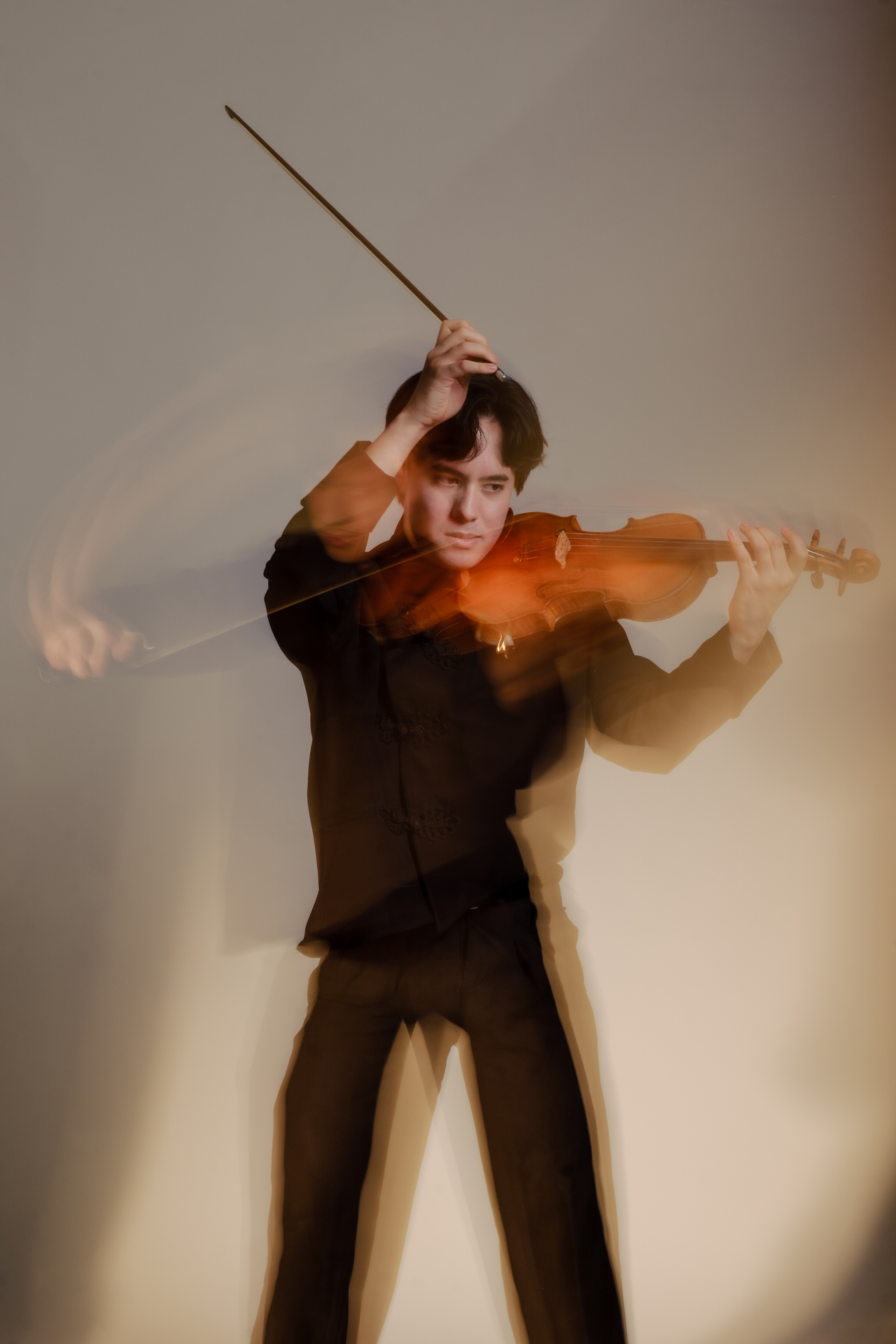
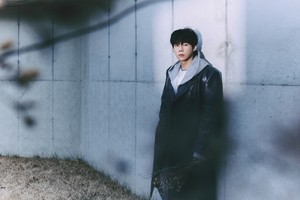
Violinist Takashi Lorenz Waschkau was shaped by more than one inheritance. Born in Berlin in 2001 to a German father and a Japanese mother, and later drawn to Seoul, the violinist embodies a generation of musicians whose identities are formed across continents.
Waschkau began violin at 4 and piano at 6.
His mother, a pianist and vocal coach who studied at the New England Conservatory, raised him in a household where music was both a language and a discipline. “She was a mom, but also a trainer,” he recalls. “She wanted to give me, until a certain age, all the abilities like music theory, piano, violin.”
By 14, he was already enrolled as a young student at Berlin’s University of the Arts. The schedule was relentless: two school systems, regular academic study, sports and daily practice. It was only later, he said, that his mother shifted from strict coaching to something closer to trust.
He tested that freedom briefly after high school, debating whether to pursue medicine or music. To find out what he truly wanted, he stopped playing violin, intending to quit for a month. The experiment lasted one week.
“After one week, I was already like, ‘Okay, no. I’m going to do music,’” he said, adding, “It was not possible.”

Waschkau's path to Seoul began less with long-held fascination than with timing, curiosity and a desire to push beyond his comfort zone. In Berlin, he studied alongside many Korean students, including several from Korea National University of Arts (K-Arts). When he mentioned wanting to study abroad in Asia, Korea became the obvious suggestion -- especially because he felt Japan was too familiar.
In 2023, he arrived in Seoul with almost no Korean language ability and little prior knowledge of the country. The first months were harder than expected. Basic tasks — dorm contracts, school rules, administrative procedures -- were often Korean-only, and the cultural logic behind the rules felt unfamiliar.
“In Germany you just tell your professor, ‘I’m going to Japan for concerts for a week,’” he said. “In Korea you have to apply, send flyers, say where it is, when it is -- it’s so detailed. It took so much time.”
For a young musician already performing internationally, the bureaucracy could feel constraining. “Concerts are what performers do later in life,” he added. “Maybe schools should be more open to that.”
Yet the same system also impressed him. He described the training environment at K-Arts as intense, competitive and technique-driven. “There is a lot of fire here,” he said. “It’s very competitive, but the basis is really good. You get technique, you get discipline, and you learn how to pursue your creativity.”
Under violin professor Kim Hyun-mi, who, he noted, had studied in the United States and understood international students’ struggles, he entered his first competition in Asia. The format surprised him: fast, continuous, almost industrial in rhythm. But he won, and the experience left him grateful -- and thoughtful.
While Waschkau was building credibility in Korea’s classical ecosystem, he was also living another life -- one he initially kept carefully separate.
The turning point came during the COVID-19 years in Berlin. Concert life slowed. Isolation created long stretches of time. Waschkau began learning pop production -- partly out of curiosity, partly because he wanted to create music rather than only interpret it.
“In classical music, the composer gives you the piece and you are the interpreter,” he said. “I can do my own music, but in its range, I feel like it's more inside and pop music is really outside. You can build the whole world.”
Although he had strong music theory, he sought formal training in production tools and workflow. Over time, he began working with industry networks in Japan and Korea. He estimates he has written or produced around 10 to 12 tracks that have been released — often without credit.
In Korea, songwriting attribution often depends on company policy, and tracks may be purchased outright without listing every contributor. At the time, he accepted the arrangement. Pop production was not yet his primary career focus, and he was navigating the conservative expectations of a classical institution.
Maintaining that separation, however, proved exhausting. During his K-Arts period, his schedule became relentless: Korean language study, violin practice, competition preparation -- layered with vocal and dance training.
Even more difficult was the psychological pressure. He avoided telling his classical mentors because he did not want a ready-made excuse.
“If one day I don’t play so well, I don’t want people to say, ‘Oh it’s because he’s doing K-pop,’” he noted. “I hate excuses.”
Eventually, he told them. His German professors were supportive. His mother -- initially skeptical, describing herself as “very classical” -- warmed to K-pop after he introduced her to artists and tracks he considered musically strong. “Now she is very open,” he said.
The violinist's interest in crossover is not a marketing pose; it is built into how he trains. In Korea, he took part in dance and vocal instruction — not because he wanted to become an idol, but because he believes musicians benefit from broader physical and expressive awareness.
“Singing helps phrasing because it’s natural — it’s an organ,” he said. “Dance is good for your body awareness. As a violinist, you’re aware up here,” he gestured toward his shoulders and arms, “but not down here.”
For now, he continues living a double life: classical violinist onstage, pop producer behind the scenes, exchange student turned cultural translator, Berlin native shaped by Seoul’s pressure cooker.
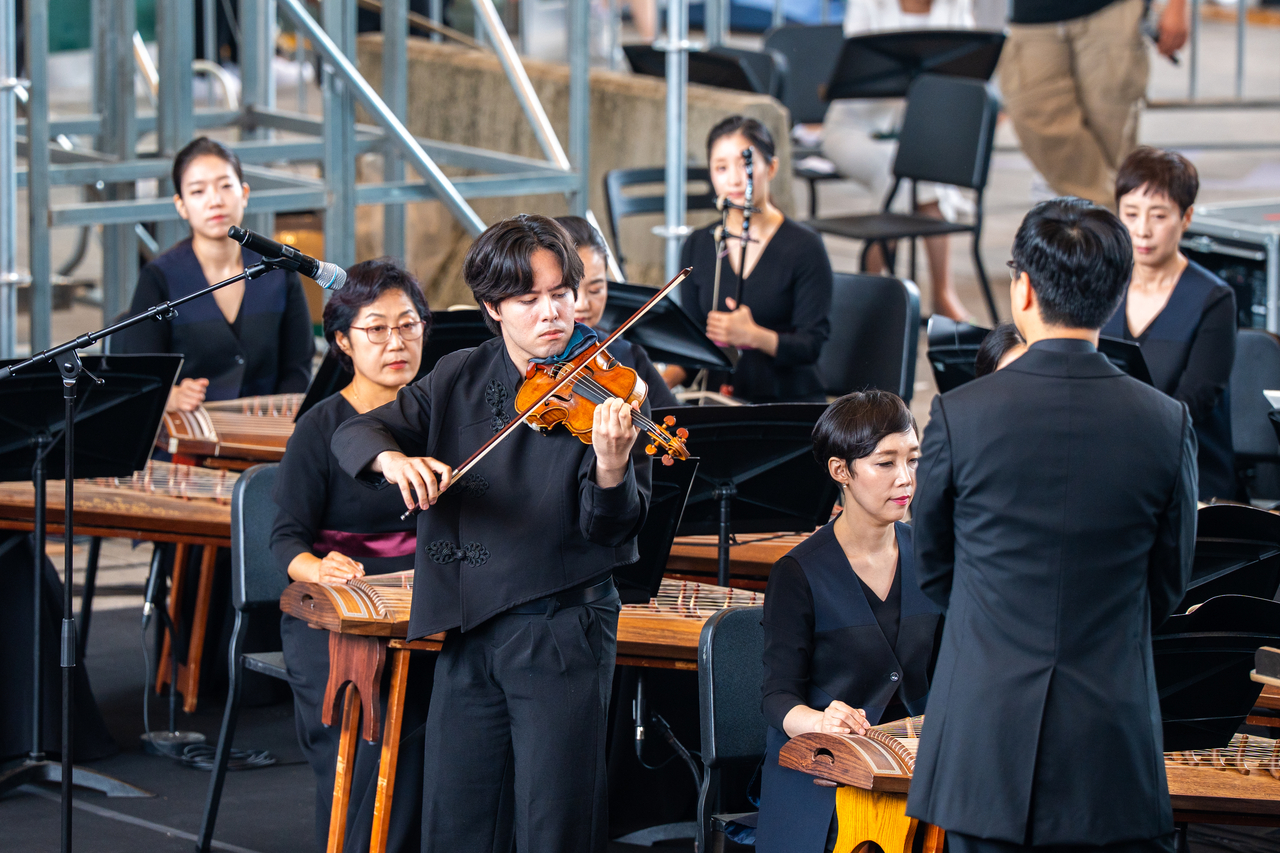
That flexibility, rooted in his multicultural upbringing and open-minded approach to music, was evident last year when he collaborated twice with the KBS Traditional Orchestra, performing the violin alongside Korean traditional instruments such as the haegeum, gayageum and daegeum.
As classical music grapples with relevance and pop continues to globalize at breakneck speed, Waschkau represents a model that no longer sees those worlds as opposites. Born between cultures, he is now building a career between genres — and seeing little reason to separate the two.
"As long as I can do both, I want to do both," he said.
gypark@heraldcorp.com




![[인터뷰] 구글 지도 반출 19년 교착…"막힌 건 안보가 아니라 수익성"](https://wimg.heraldcorp.com/news/cms/2026/02/13/news-p.v1.20260212.a1df6a111ac343629a0e9335485a7a2f_T1.jpeg?type=h&h=240)