
The number of South Koreans who read at least one book over the course of a year has continued to decline, but those in their 20s were the only age group to show a rebound, reflecting the growing popularity of the “text hip” trend, in which reading is seen as in vogue.
According to a report released Friday by the Culture Ministry, the annual reading rate among adults overall stood at 38.5 percent, down from two years earlier despite heightened interest in literature following the Nobel Prize in literature being awarded to South Korean author Han Kang in 2024. In other words, more than 6 out of 10 adults in South Korea did not read a single book in the past year.
However, the report found that adults read an average of 2.4 books per year. Compared with the 2023 survey, the overall reading rate fell by 4.5 percentage points, while the average number of books read dropped by 1.5.
The biennial survey was conducted nationwide from Sept. 1 to Nov. 5, 2025, polling 5,000 adults and 2,400 elementary, middle and high school students.
The annual reading rate refers to the share of people who read or listened to at least one book in the past year, including printed books, e-books and audiobooks. The category excludes textbooks, study guides, exam preparation books, magazines and comics.
People in their 20s were the only group to post an increase. Their reading rate rose to 75.3 percent, up 0.8 percentage points from 2023.
The report said the uptick, though modest, reflects the influence of the “text hip” trend. In recent years, young adults have shown growing interest in reading through activities such as visiting book fairs, participating in outdoor reading gatherings, transcribing passages by hand and exchanging books with others.
Among students, the overall reading rate was 94.6 percent, down 1.2 percentage points from the 2023 survey, but still at a high level.
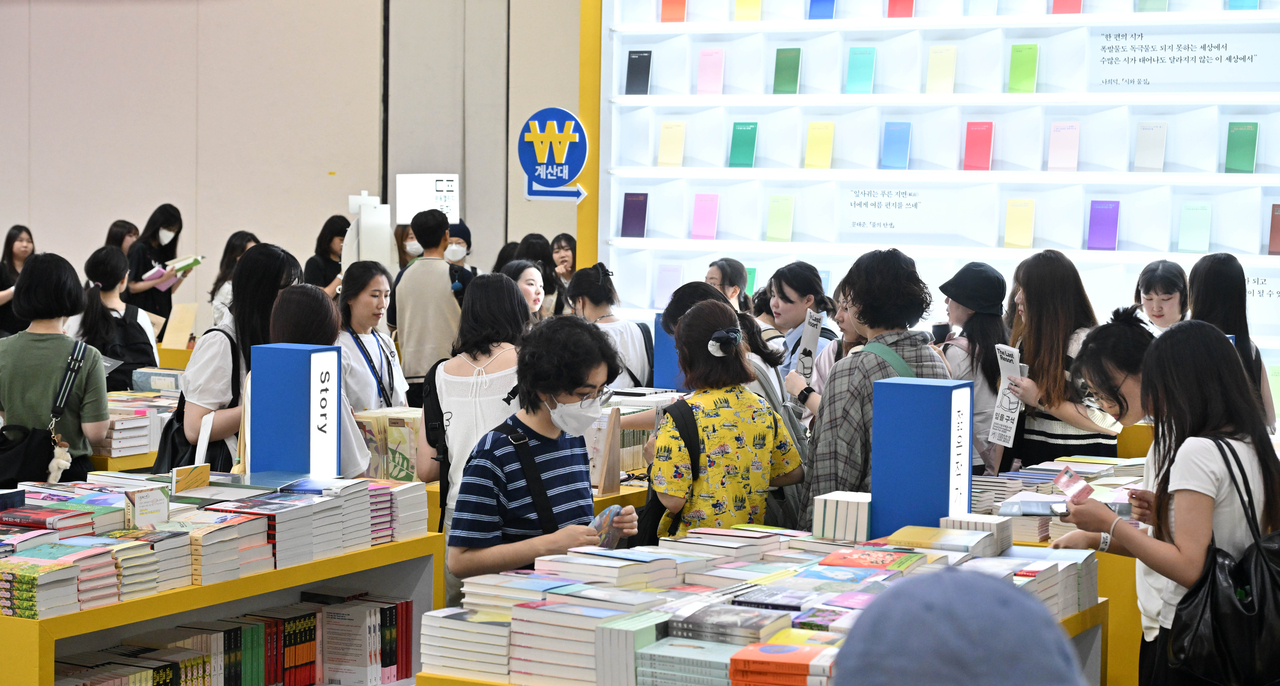
E-books were especially popular among young adults. For those in their 20s, the e-book reading rate reached 59.4 percent, significantly higher than the 45.1 percent recorded for printed books, suggesting a shift toward digital reading among younger generations.
Audiobooks are also gaining traction. Audiobook listening rates rose across all age groups under 60, indicating their emergence as a reading medium.
The largest share of adults, 20.3 percent, said they read because they enjoy it. Another 18.5 percent cited self-improvement.
The ministry said the responses suggest a shift in perceptions about reading. In earlier surveys, the top reason had been acquiring knowledge and information (in 2019 and 2021), followed by emotional growth or comfort (in 2023). The latest results indicate a growing recognition of reading as a source of enjoyment in its own right.
Among students, the most common reason for reading was academic needs, cited by 30 percent, followed by enjoyment at 28.3 percent.
Both adults and students said the biggest barrier to reading was a lack of time due to work or school. Another 24.3 percent of adults and 19.1 percent of students pointed to time spent on other media and content as a major obstacle.
The survey also found persistent gaps in reading habits by age and income. The reading rate among people aged 60 and older was just 14.4 percent, far below the 75.3 percent recorded among those in their 20s.
Income disparities were similarly stark: only 13.4 percent of people earning less than 2 million won ($1,360) per month reported reading at least one book a year, compared to 56.1 percent among those earning more than 5 million won per month.
hwangdh@heraldcorp.com