
As the blockbuster passes 10 million tickets sold, here's what the Sillok actually says

Director Jang Hang-jun's "The King's Warden" has steamrolled through the Korean box office since its Feb. 4 release and has now surpassed the 10 million admission threshold — one only a handful of Korean films clear.
It is a remarkable run for a period drama built around a tragedy every Korean already knows: Danjong, the boy king who ascended the throne at 12, was ousted by his uncle at 15 and died in mountain exile by 17. It is the kind of tragedy that never quite lets go.
The film centers on the largely fictional bond between the exiled king, stripped of his title and demoted to Lord Nosan (Park Ji-hoon), and Um Heung-do (Yoo Hae-jin), the local chief assigned to watch over him.
The whole premise is warmly imagined and emotionally effective. It is also, in substantial ways, a work of fiction built on fragments of history and layers of folk tradition.
There is a useful reference point for all this. The Joseon era (1392-1910) was legendarily meticulous about its record-keeping: the "Joseon wangjo sillok" — commonly just called the Sillok — or "The Veritable Records of the Joseon Dynasty," spans 472 years and 25 rulers and is thought to be the longest continuous documentation of a single dynasty in world history.
Here is what the historical record actually says.
Cheongnyeongpo was nobody's choice — least of all the villagers
A good chunk of the film's early section is played for comedy, centered on Heung-do's scramble to land a lucrative exile assignment for his struggling village.
Upon hearing that some high-status figure is about to be sent from Hanyang (present-day Seoul), he embarks on a lobbying campaign to secure the post. He even makes a personal pitch to Han Myeong-hoe — the powerful politician and kingmaker behind Sejo's rise, played by Yoo Ji-tae — on why his corner of nowhere is ideally suited for political prisoners. He hopes that hosting someone of higher standing will bring goods from the capital.
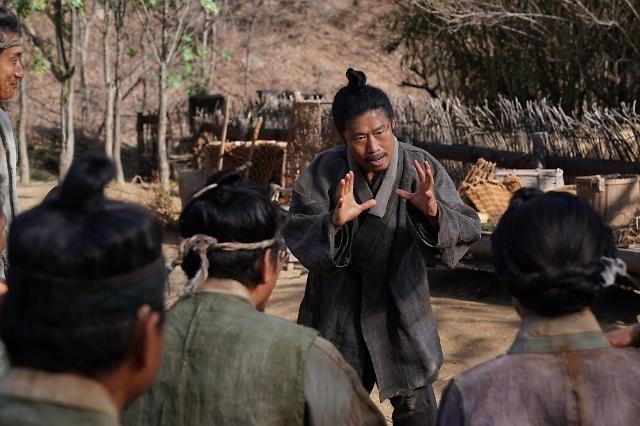
It's an entertaining setup, full of hustle and comedy, but largely fictional. Cheongnyeongpo was selected by Sejo's court out of pure political calculation; the villagers had no say whatsoever.
In June 1457, when one of several loyalist plots to restore Danjong was uncovered, Sejo moved to ship his nephew out of Hanyang to this remote peninsula in Yeongwol in contemporary Gangwon Province. Surrounded on three sides by the Donggang River and hemmed in by cliffs on the fourth, Cheongnyeongpo functioned as a natural prison accessible only by boat.
There is also no record that Han Myeong-hoe ever visited the town himself, let alone staged any of the confrontations the film attributes to him.
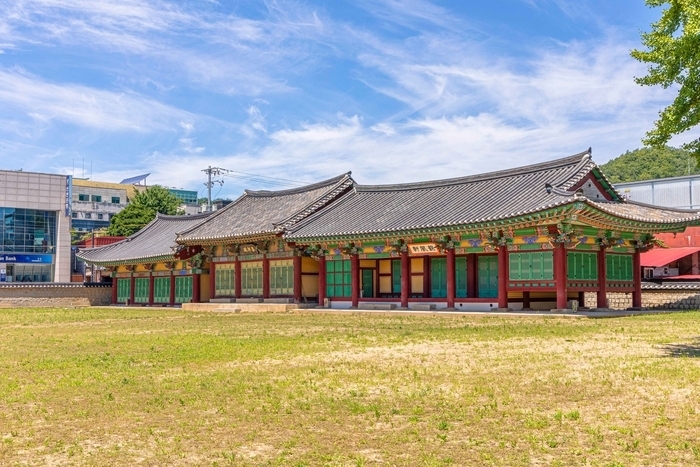
One more detail worth noting is that Danjong didn't spend his entire exile at Cheongnyeongpo. The Sillok records that a flood in the summer of 1457 made the peninsula unsafe to inhabit, forcing the exiled king to relocate to Gwanpungheon, a guesthouse attached to what was then Yeongwol's administrative office, closer to the center of town. That is where he lived in the months that followed until the time of his death.

Gwanpungheon still stands in Yeongwol. It sits right in the middle of the city, surrounded by ordinary streets and buildings, easy to walk past without knowing what happened there.
Um Heung-do was no peasant chief, and his bond with Danjong is pure invention
Yoo Hae-jin's performance as Heung-do is the engine of "The King's Warden": savvy and fast-talking in a way that skirts clownish, ultimately arriving somewhere heroic. The historical Um Heung-do, to the extent we know anything about him, looked rather different.
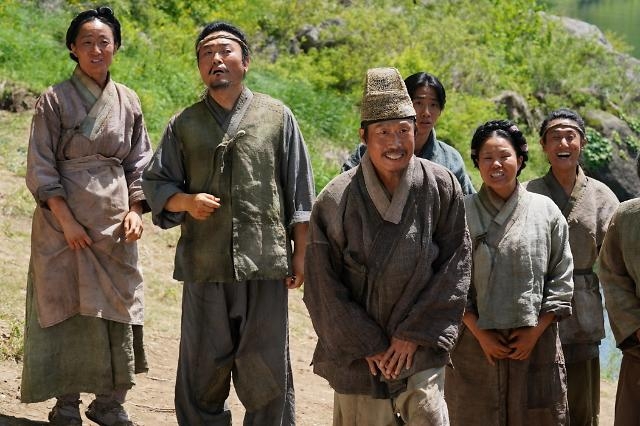
His name appears 22 times in the Sillok, but all of those references come decades after the events in the film. The earliest is from 1516 during King Jungjong's reign, 59 years after Danjong's death.
According to the record, a royal inspector visiting Danjong's gravesite filed a report that reads: "People say that when the time came, the whole town was in a panic, but a county official named Eom Heung-do went, wept over the body, prepared a coffin and gave him a burial."
That entry, brief as it is, was the spark that lit the whole project. "The chronicles mention Eom Heung-do in just two lines," Jang said at a press event ahead of the film's release, describing how the production began. "We had to fill in all those gaps between the words."
Those two lines also establish that Um was no peasant chief. He is identified in the Sillok as a county functionary — an "ajeon," or a local administrative official — and elsewhere as "hojang," the senior-most of those officials, who oversees day-to-day county operations under a centrally appointed magistrate.
In Joseon's caste hierarchy, that title likely meant he belonged in the middle tier, above the peasant class and below the aristocratic "yangban."
More importantly, there is no documentation of any personal relationship between Um and Danjong whatsoever. The friendship, the trust, the loyal-subject-and-his-king dynamic the film builds over two hours — all of it is imagined.
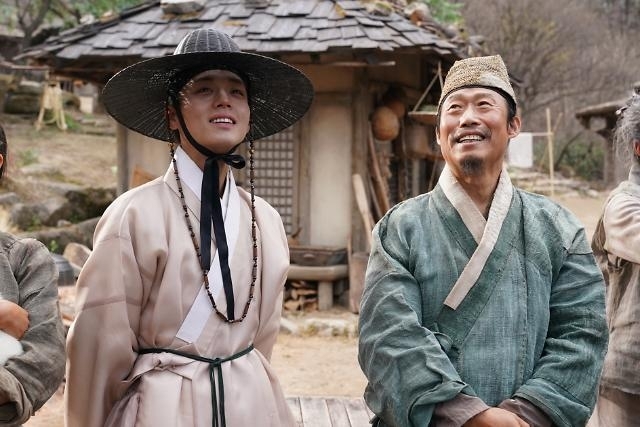
The melodramatic finale, in which Heung-do carries out Danjong's dying wish and helps end his life, may be the film's single biggest departure from the record. What the Sillok shows is that Um risked his life and his family's safety to recover the body. What passed between the two men before that moment is not recorded anywhere.
What followed for Um isn't spelled out in official documents either, though folk history suggests he fled Yeongwol and spent the rest of his life in hiding. Circumstantial evidence, including the fact that his sons appear to have scattered across the peninsula, supports that account in broad strokes.
What is documented is how his name was gradually restored to honor, in step with Danjong's own official rehabilitation over the following centuries. As each successive reign grew more willing to reckon with what had happened to the boy king, Um's act of recovering the body came to be recognized as an exceptional deed.
Across the reigns that followed, Um's standing was formally ranked just below those who had given their lives directly in his service. That recognition was in itself a statement: In a society that regarded the proper burial of the dead as a sacred obligation, recovering a body that the crown had left to rot was seen as an act of extraordinary moral courage.
By the reign of King Gojong, Joseon's second-to-last monarch, he had been awarded a posthumous rank equivalent to a cabinet minister.
Grand Prince Geumseong's plot was real; his interaction with Danjong was not
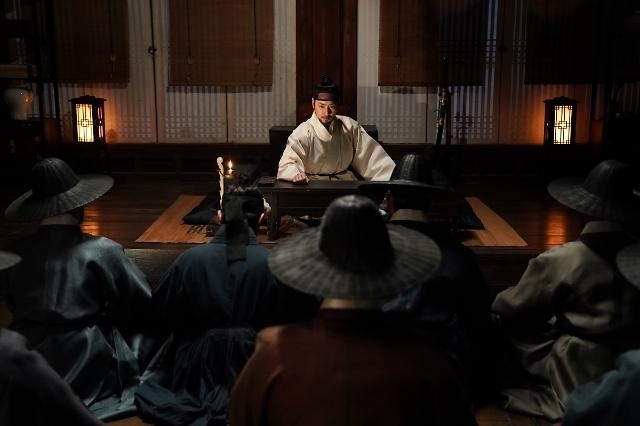
Grand Prince Geumseong (Lee Joon-hyuk), Sejo's younger brother, is the figure who pushes the film's stakes past the point of no return. A royal in his own exile, he organizes a counter-coup to restore Danjong to the throne.
The film depicts the grand prince sending a secret letter to Danjong asking for approval, after which the young king shoots an arrow toward a distant mountain as a signal of assent. The plan falls apart when an informant tips off the authorities, triggering bloodshed all around.
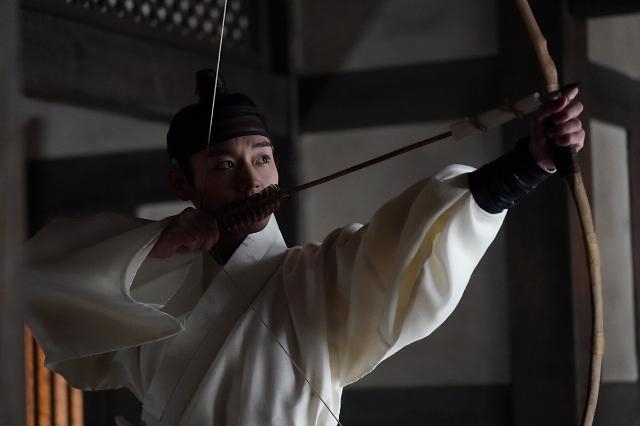
Geumseong was a real figure, and the broad outline holds up. The Sillok confirms he was exiled following the coup by Grand Prince Suyang, later King Sejo, and did organize a conspiracy to put Danjong back on the throne from his place of confinement in Sunhung, now part of North Gyeongsang Province.
What the records don't support is any contact between Geumseong and Danjong during this period. The letter, the arrow, the moment of assent — those are the film's invention.
The one detail drawn straight from legend is Geumseong's final act. Folklore holds that when the order came for him to drink the poison, he refused to bow toward Hanyang — toward King Sejo — as custom required, and instead bowed in the direction of Yeongwol, pledging his loyalty to Danjong to the last.
The film gives Lee Joon-hyuk exactly that moment, and it earns it.
Contradicting records of how Danjong died
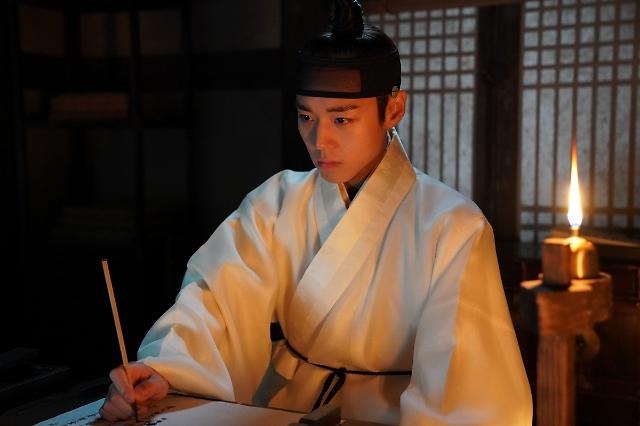
The most persistently contested part of the story is the boy king's death itself. This is where the official record grows genuinely unreliable.
The Sejo Sillok, the closest thing to a contemporaneous account, states that Lord Nosan hanged himself after learning of the failed coup and that he was given a proper funeral. That version has been viewed with deep skepticism, as the chapter was compiled after Sejo's death by officials who served his court, giving them every reason to favor a version of events that cast the usurper favorably.
Later records contradict it almost unanimously. The Seonjo Sillok, compiled more than a century afterward, records simply that poison was sent to Yeongwol. The Sukjong Sillok, which covers the reign that would eventually restore Danjong's royal title, offers a more specific account: The royal envoy faltered when faced with the boy king, at which point a young attendant stepped forward and carried out the killing himself, only to collapse and die immediately after.
The film draws from these later accounts and takes it up a notch. Rather than an attendant, it is Heung-do who helps carry out Danjong's dying wish, rigging a device that delivers the killing blow at the king's own instruction, so that he dies on his own terms rather than the state's.
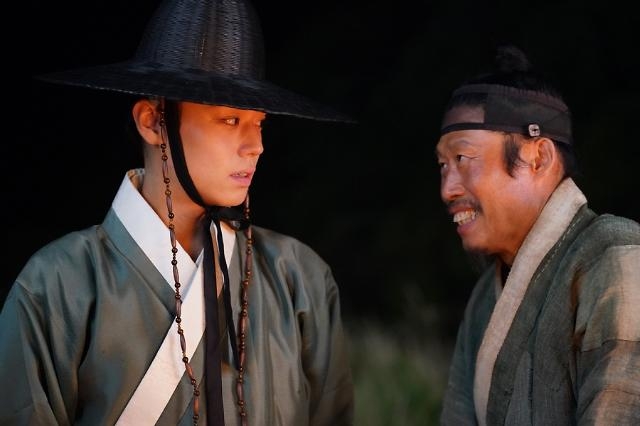
The contraption itself is not supported by any official record, though similar imagery does appear in some folk traditions — perhaps an attempt to preserve some measure of dignity for the boy king in the retelling.
What is almost certainly false is the Sejo Sillok's claim that Sejo himself was mananimous enough to give the deposed king a proper funeral. The Jungjong Sillok records that it was Um Heung-do who secretly gathered and buried the body. When Danjong's tomb was eventually rediscovered under Sukjong's reign, it was small, unmarked and tucked among other graves — about as far from a state funeral as possible.
The records are not just incomplete but actively contradictory, with each era's version of events shaped by the politics of the moment. It was only in 1698, under King Sukjong — 232 years after Danjong's death — that the state officially reinstated his royal title, renamed the relevant Sillok chapter from "Nosangun ilgi" to "Danjong sillok," and formally honored those who had served and protected him.
History, in other words, took a long time to arrive at the version most Koreans know today.
"The King's Warden" gravitates toward the most dramatic version available — one assembled from folklore, later chronicles and substantial imagination, built around two lines of text about a man who buried him in secret.
As fabrications go, it's a generous one. It's also, largely thanks to Yoo Hae-jin's commanding performance, one that has moved a great many people.
moonkihoon@heraldcorp.com