Interview with Choi Byong-hyon on translating 'Chingbirok'
The Institute of East Asian Studies at the University of California, Berkeley has published an expanded edition of the English translation of "Chingbirok," the 1604 chronicle of the Japanese invasions of Korea written by Ryu Songnyong.
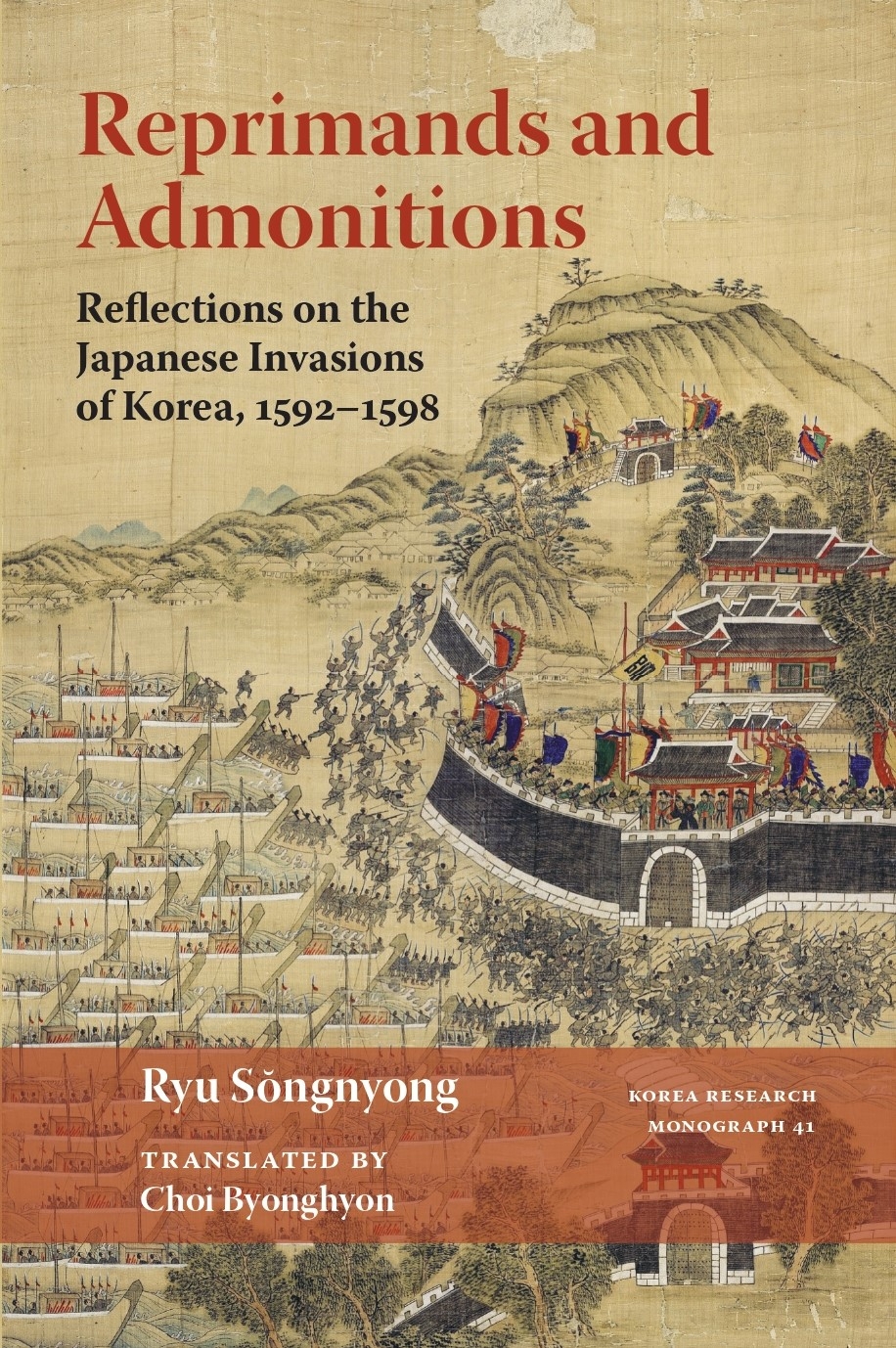
Published in English as "The Book of Corrections" in 2002, the newly revised edition appears under the title "Reprimands and Admonitions: Reflections on the Japanese Invasions of Korea, 1592-1598."
The Korea Herald spoke with translator Choi Byong-hyon about the significance of the new edition, the enduring relevance of the Imjin War (1592-1598) and the task of carrying a Confucian statesman's voice across four centuries and two languages.
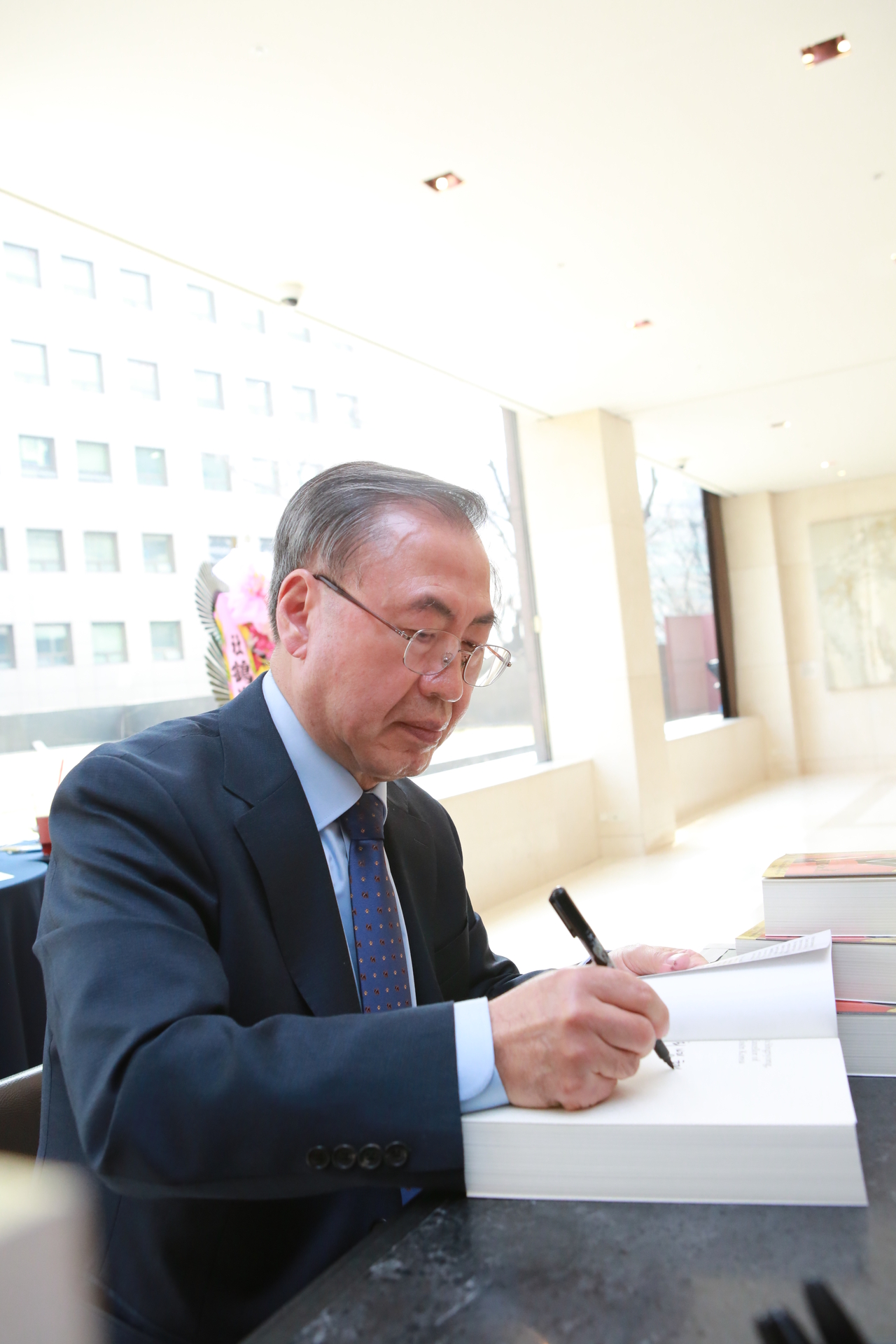
Choi is widely regarded as one of the foremost translators of premodern Korean historical texts. A scholar of English literature by training, Choi has devoted much of his academic career to bringing Korea's classical works into global circulation through careful and authoritative English translations.
His major publications include the first complete English translations of "Chingbirok" (2002), "Admonitions on Governing the People" (2010), "The Annals of King T'aejo" (2014) and "A Korean Scholar's Rude Awakening in Qing China" (2019). In 2022, the Institute of East Asian Studies at the University of California, Berkeley published his full-length biography, "Ryu Songnyong, Chancellor of Choson Korea."
Through these works, Choi has played a foundational role in introducing Korean political thought, historiography and intellectual traditions to an international readership, significantly advancing the global study of Korea's history.
Q: More than two decades have passed since the first English translation of 'Chingbirok.' Why did you feel the need for an expanded edition?
When "The Book of Corrections" appeared in 2002, my primary goal was to introduce the text to an English-speaking readership. At that time, "Chingbirok" was virtually unknown outside Korea. I focused on accuracy and accessibility.
Over the years, however, I realized that the text deserved a fuller contextualization. My subsequent translations — "Admonitions on Governing the People," "The Annals of King T'aejo" and others — deepened my understanding of Choson (Joseon) political language and historiography. With that experience, I revisited "Chingbirok" and saw areas where nuance could be sharpened, annotations expanded and the moral architecture of the work more clearly articulated.
This edition is not merely revised; it is rethought.
Q: The new title, 'Reprimands and Admonitions,' is striking. Why the change?
The original Korean title, "Chingbirok," literally suggests "a record for warning and correction." But that phrase can sound somewhat neutral in English.
Ryu Songnyong was not simply recording events; he was admonishing — himself, his colleagues and future generations. His writing carries both introspection and moral urgency. The new title seeks to capture that dual movement: reprimand as self-examination, admonition as instruction to posterity.
It is a book written in the aftermath of catastrophe, asking: How did we fail? And how can we prevent such failure again?
Q: For readers unfamiliar with Korean history, what makes 'Chingbirok' so important?
The Imjin War (1592-1598) was one of the most devastating conflicts in East Asian history. It involved not only Korea and Japan but also Ming China. Entire regions were destroyed; populations were displaced; cultural treasures were lost.
Yet Chingbirok is not a triumphant war chronicle. It is not written to celebrate victory. Rather, it is an exercise in moral accounting. Ryu Songnyong, who served as chief state councilor during the war, reflects on factional strife, administrative failures and his own shortcomings.
Few statesmen in world history have left behind such a candid record of crisis management combined with self-criticism. In that sense, the book transcends national history. It belongs to the global tradition of reflective political writing.
Q: Do you believe the work speaks to contemporary readers?
Very much so.
History does not repeat itself in identical forms, but patterns of human behavior recur. Questions of leadership, responsibility, factionalism and national cohesion remain as urgent today as they were four centuries ago. In that sense, "Chingbirok" speaks beyond its immediate historical moment.
Consider East Asia today — Korea, Japan and China — nations once entangled in the Imjin War. Rivalry, competition, historical memory and political tension continue to shape their relationships. The geopolitical configuration has changed, but the underlying dynamics of power and mistrust have not disappeared.
Let us also recall the foreign exchange crisis of 1997. At the time, ordinary citizens did not fully understand what the crisis was or why it had occurred. There was confusion, blame and fear. Four hundred years earlier, during the Imjin War, many Koreans did not know who Hideyoshi was or why he had launched his invasion. In both cases, the people experienced the shock of a national catastrophe whose origins seemed distant and obscure. The parallel is striking.
The Imjin War took place in Korea, but the failure of leadership that contributed to it is not uniquely Korean. Such failures can occur anywhere. A crisis born of misjudgment, factional conflict or complacency is always possible. In that sense, "Chingbirok" is both local and universal in its significance.
Although the events it records occurred 400 years ago, the conditions that made them possible — human ambition, political division and the fragility of governance — remain present today. The crisis of the Imjin War is therefore both temporal and timeless.
That is why "Chingbirok" still matters. It is not merely a record of the past; it is a mirror held up to the present — and perhaps a warning for the future.
Q: What do you hope readers will take away from this expanded edition?
Readers of the new expanded edition of "Chingbirok," "Reprimands and Admonitions," will notice the inclusion of "Nokhuchapki," a postscript not previously available in the English edition. This section is a collection of miscellaneous records that served as the base materials for the main text of "Chingbirok." In a sense, it offers the "behind-the-scenes" story of the work — notes, fragments and reflections that illuminate the process by which Ryu Songnyong shaped his historical account.
I felt that including this postscript would allow readers to glimpse more directly the author's inner thoughts and the concrete circumstances of the war he experienced. It reveals not only events but also hesitation, concern and personal struggle. For that reason, it may be even more revealing than the polished main narrative.
Above all, I hope readers will encounter not merely a historical document but a human voice.
Ryu Songnyong did not write to glorify himself. He wrote to warn future generations. If readers close the book with a deeper awareness of leadership, responsibility and the cost of internal division, then the translation has fulfilled its purpose.
Four centuries ago, a statesman reflected on national disaster. Today, his reflections continue to resonate. That continuity is the quiet power of history.
Q: I heard that 'Chingbirok,' since you translated it into English, has been taught in classrooms across the world. Is that true?
Yes, that is indeed what I have been told, and I am deeply grateful for it.
According to Sixiang Wang, the history professor at University of California, Los Angeles who contributed the foreword to the recent edition of "Chingbirok," he first encountered my English translation during his sophomore year as an undergraduate. He later told me that the book left a lasting impression on him, and that he has continued to teach it to his own students ever since. To hear that a scholar first read the work as a student and then carried it into his own classroom as a professor is, for a translator, a particularly meaningful affirmation.
Likewise, Kenneth Swope, professor of history at the United States Naval Academy and one of the discussants at the recent AAS (Association for Asian Studies) conference in Vancouver, selected my earlier translation, "The Book of Corrections," as the first among his "top ten" books. Given his distinguished scholarship on East Asian military history, such recognition is especially humbling.
Over the years, I have received messages from colleagues in various countries informing me that "Chingbirok' has been adopted in courses on East Asian history, war and memory, political thought and comparative historiography. While I do not possess comprehensive statistics, the consistent feedback suggests that the book has indeed found a place in classrooms across the world.
For me, this is not merely a matter of personal satisfaction. It signifies that a 16th-century Korean voice — Ryu Songnyong — has entered into global intellectual conversation. That, perhaps, is the most meaningful outcome of the long labor of translation.
Q: I understand you will be attending the annual conference of the Association for Asian Studies in Vancouver this March. Why are you participating?
Yes, I have been invited to participate in the annual conference of the Association for Asian Studies, which will be held in Vancouver, British Columbia, from March 12-15. I was invited to serve as a discussant for a session devoted to "Chingbirok," especially in light of the publication of the expanded edition of my translation.
The title of the session is "The East Asian War of 1592-1598 in Korean and World History: Lessons From Ryu Songnyong's 'Chingbirok' ('Reprimands and Admonitions')." It will take place at the Vancouver Convention Centre on March 14. For an hour and a half, five scholars of Korean Studies from different parts of the world — including myself — will examine the historical and global significance of the Imjin War and Ryu Songnyong's reflections.
I consider this particularly meaningful. For a long time, Korean classical texts were rarely discussed in broader global historical conversations. The fact that "Chingbirok" is now the focus of an international academic session suggests that our historical experience and intellectual tradition are increasingly recognized within world scholarship.
In that sense, the session is not only about a 16th-century war. It represents the moment when a Korean classic and a Korean historical figure step onto the wider stage of global academic discourse.
Profile
Choi Byong-hyon is a distinguished scholar and translator who began his academic career in English literature before dedicating himself to the translation of premodern Korean classics. He received his M.A. and Ph.D. in English literature from Columbia University and the City University of New York.
A former professor of English and American literature with more than 20 years of teaching experience, Choi taught at Honam University, the University of Maryland Global Campus in Seoul and the University of California, Irvine, where he served as a Fulbright scholar.
In addition to his scholarly work, he is an accomplished novelist and poet. He has received numerous awards and honors, including the 1st Hyeonjingeon Literary Award (1988), the 6th Korean Literature Translation Award (2003), the 11th Tasan Academic Award (2010) and the Humanities Award from South Korea's National Academy of Sciences (2016).
hwangdh@heraldcorp.com