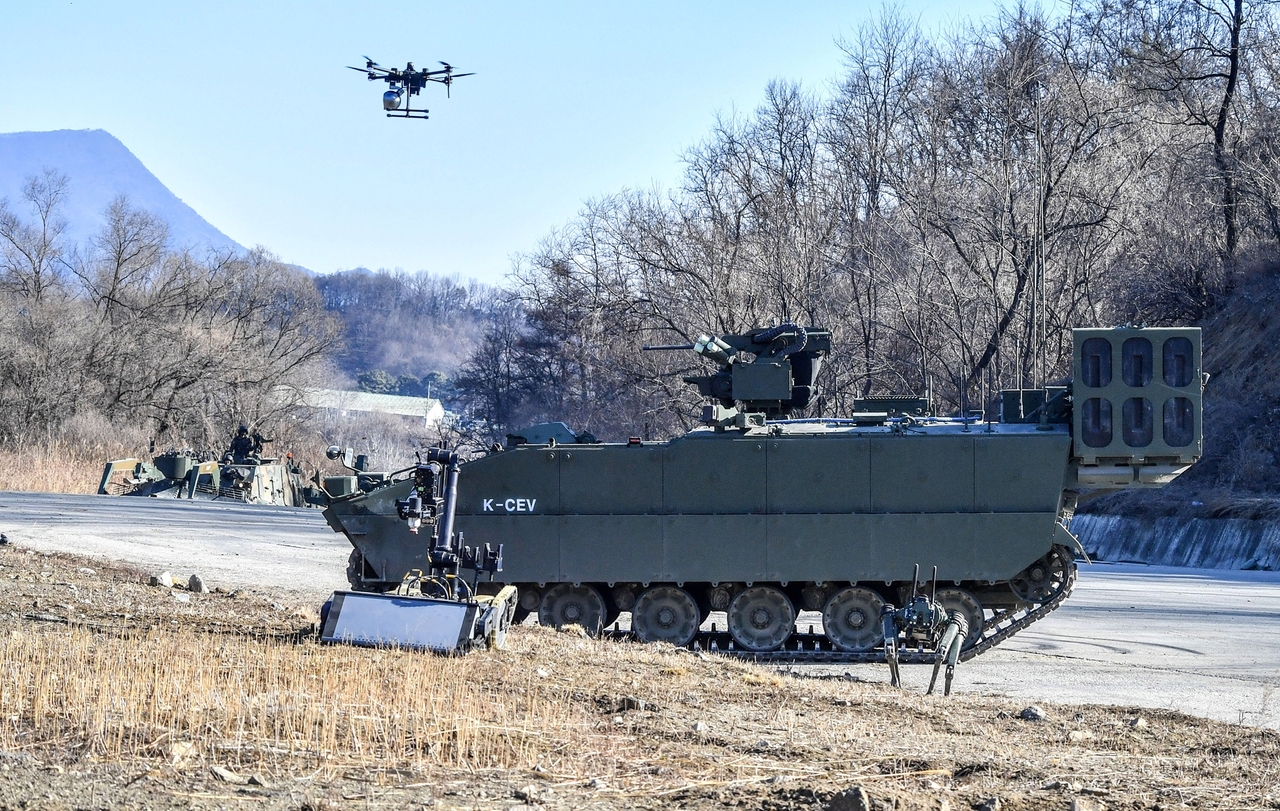
Recent wars have elevated the smallest machines into strategic actors. In Ukraine and the Middle East, inexpensive drones now stalk armor, spot artillery and decide battles before generals react. Speed, not scale, has become decisive.
최근 전쟁을 통해 초소형 기계들이 전략적인 요소로 부상했다. 우크라이나와 중동에서 저가형 드론은 이제 장갑차를 추적하고 대포를 찾아내며 지휘관이 반응하기도 전에 전투를 좌우한다. 규모가 아니라 속도가 결정적인 역할을 하게 되었다.
Against that backdrop, South Korea is considering a counterintuitive move: dismantling its Drone Operations Command scarcely two years after creating it.
그러한 상황에서 한국은 창설된지 2년여에 지나지 않은 드론작전사령부를 해체하려는 반직관적인 조치를 고려중이다.
The proposal comes from the Special Advisory Committee on Future Strategy, convened after former President Yoon Suk Yeol’s failed martial law declaration of Dec. 3, 2024. Its argument is austere. The Drone Command, formed in September 2023 after North Korean unmanned aircraft breached Seoul’s airspace, duplicates functions already held by the Army, Navy, Air Force and Marine Corps.
윤석열 전 대통령이 2024년 12월 3일 계엄령을 선포했다 실패한 후 소집된 미래전략에 관한 특별자문위원회가 내놓은 제안이다. 위원회의 주장은 간단하다. 2023년 9월 북한의 무인기가 서울의 상공을 침입한 이후 창설된 드론사령부가 육해공군 및 해병대 각군과 그 기능이 중복된다는 것이다.
Drones, the committee argues, should resemble standard infantry weapons, embedded across units rather than housed in a standalone headquarters. Operational control should disperse, leaving behind a smaller body to shape doctrine and requirements.
드론은 일반적인 보병용 무기와 유사하게 독립적인 본부에 모아두는 것이 아니라 각 제대 내에서 운용되어야 한다고 동 위원회는 주장한다. 교리 및 기본 요건을 정립하는 좀더 작은 규모의 조직을 남기고 운용권은 각 군에 분산시켜야 한다는 것이다.
The case for efficiency is not frivolous. South Korea’s armed forces have long wrestled with overlap and blurred authority. Jointness is no longer optional, particularly as Seoul prepares for a future transfer of wartime operational control.
효율성의 근거는 사소하지 않다. 한국군은 오랜 기간 중복된 임무와 애매한 지휘권을 두고 씨름해왔다. 합동하는 것은 더이상 선택지가 아니다. 특히 한국 정부가 전시작전통제권을 전환할 계획을 세우고 있기에 더욱 그러하다.
The same panel has proposed creating a Joint Operations Command, borrowing from the US model that separates operational command from strategic guidance. In theory, fewer commands could mean clearer lines of authority.
상기 위원회는 합동작전사령부 창설을 제안했다. 미국의 모델을 차용해 작전 지휘와 전술적 보좌를 분리하자는 것이다. 이론상으로 지휘부가 적을수록 명령계통은 더 확실해질 수 있다.
Yet this recommendation cannot escape its political shadow. The Drone Command has become entangled in allegations tied to the Yoon administration. Prosecutors argue that in October 2024, drones were flown toward Pyongyang on orders originating with Yoon, allegedly to manufacture a crisis ahead of the martial law declaration. The case remains before the courts, but it has sharpened calls to dismantle institutions associated with that episode.
그러나 이 권고는 정치의 영향에서 벗어나지 못한다. 드론사령부는 윤석열 정권과 연관된 주장들에 얽혀졌다. 2024년 10월 윤 전 대통령으로부터 내려온 지시에 따라 계엄선포 전 위기를 조성하기 위해 북한에 무인기를 투입했다는 것이 검찰의 주장이다. 아직 법원의 판결이 내려지지는 않았으나 이 주장으로 해당 작전 관련 조직들을 폐지해야한다는 목소리는 더 커졌다.
Here, the logic falters. Accountability demands investigation, prosecution and legal reform. It does not require amputating capability. The advisory committee itself appears to recognize this distinction. It has recommended codifying a soldier’s right to refuse unlawful orders; this acknowledges that the core failure lay in command judgment, not in the mere existence of a drone unit.
여기에서 논리는 힘을 잃는다. 책임소재를 밝히기 위해서는 수사, 기소, 법제 개혁이 필요하다. 역량을 훼손할 필요는 없다. 자문회도 이 구분을 인지하고 있는 것으로 보인다. 위법한 명령을 거부할 군인의 권리를 명시할 것을 권고해 단순히 드론 부대의 존재가 아니라 지휘권자의 판단에 문제의 핵심이 있었음을 인정하는 것이다.
The security environment, meanwhile, continues to harden. North Korea treats drones as central to its asymmetric strategy. Kim Jong-un has prioritized suicide drones and AI-enabled unmanned systems. Since 2014, North Korean drones have crossed into South Korean airspace roughly ten times, including flights over sensitive government areas.
한편 안보환경은 계속해서 경직되고 있다. 북한에서 드론은 불균형적인 전술상 중심이 되는 무기다. 김정은 국무위원장은 자폭 드론과 인공지능이 탑재된 무인시스템을 우선 과제로 삼아왔다. 2014년 이후 북한의 무인기는 대한민국 영공에 약 열차례 침입했고 민감한 정부 시설 상공을 비행하기도 했다.
The 2022 incursion exposed how fragmented detection and response had become, which prompted the creation of a centralized drone command in the first place.
2022년의 침입은 탐지 및 대응의 단편화 수준을 드러냈고 당초 이에 따라 일원화된 드론 사령부의 창설이 추진되었다.
Critics of disbandment warn that scattering responsibility back to individual services risks reviving those gaps. Drone warfare today extends well beyond small-unit improvisation. It demands integrated air defense, intelligence fusion and coordinated retaliation. They argue that without a clear coordinator, doctrine fragments and response slows.
폐지를 반대하는 이들은 각 군에 책임을 분산시키면 그 빈틈이 다시 생겨날 위험이 있다고 경고한다. 작금의 드론전은 소규모 부대의 실시간 대응으로는 역부족이다. 통합된 공중 방어, 정보 공유, 조직화된 보복 대응이 필요하다. 분명한 합동 조직이 없다면 교리는 단절되고 대응은 늦어질 것이라는 것이 그들의 주장이다.
The broader reform agenda makes the contrast sharper. While the Drone Command faces elimination, the same blueprint calls for establishing a Space Command and strengthening strategic deterrence structures. Those initiatives acknowledge how warfare is expanding across domains.
개혁 의제 전반을 살펴보면 그 대비는 좀더 눈에 띈다. 드론사령부가 폐지를 앞둔 반면 해당안은 우주사령부 설립과 전략적인 전쟁 억지 구조 강화를 권한다. 그 계획들은 전쟁이 육해공 구분을 넘어서고 있다는 것을 인정하는 것이다.
By contrast, drones, the most battle-tested innovation of recent conflicts, are treated as a managerial inconvenience.
반면 최근 분쟁들에서 가장 실전상 효용이 검증된 신무기인 드론은 관리상의 골칫덩이로 취급받고 있다.
Reform should subtract only after it secures continuity. If the Drone Command disappears, the Lee Jae Myung administration must first show how air defense, reconnaissance and joint drone operations will function without interruption. Capability cannot be rebuilt at leisure.
개혁은 지속성이 확보된 후에 덜어내는 작업을 해야한다. 만약 드론사령부가 해체된다면 이재명 정부는 공중 방어, 정찰, 공동 드론 운용이 매끄럽게 작동할 수 있는지를 먼저 보여주어야 한다. 역량은 느긋하게 다시 쌓아갈 수 있는 것이 아니다.
Military reform ultimately answers a simple question: Does it prepare the force for the next war, or merely tidy the wreckage of the last one? Technology may spread downward to squads and platoons. Strategy still requires a center.
군 개혁은 결국 한가지 질문에 답하는 것이다. 개혁을 통해 군을 다음 전쟁에 대비시킬 것인가 아니면 지난 개혁의 잔재 청산에 그칠 것인가? 기술은 분대와 소대들로 퍼져 내려갈 수 있다. 전술에는 여전히 중심이 필요하다.
Streamlining an organization chart is easy; mastering the threat environment is not.
조직도를 간소화하는 것은 쉽지만 위협 환경을 제어하는 것은 그렇지 않다.
artillery 대포, 포병부대
counterintuitive 반직관적인
dismantle 해체하다
convene 소집하다
embed 파견하다, 내장하다
frivolous 사소하다
entangle 얽어매다
amputate 자르다
incursion 급습
disbandment 해산
improvisation 즉석에서 하는 것
retaliation 보복
deterrence 전쟁 억제
reconnaissance 정찰
khnews@heraldcorp.com