Along Korea’s East Sea coast, Uljin offers travelers simple early-spring pleasure: fresh crab, sweeping seascapes and the quiet rhythm of a fishing town
ULJIN, North Gyeongsang Province — Early spring arrives quietly along Korea’s East Sea. The wind still carries a trace of winter, fishing boats return to port with the season’s prized catch, and seaside towns begin to stir after the colder months. In Uljin, that seasonal rhythm revolves around one thing: crab.
Although the annual Uljin Snow Crab and Red Snow Crab Festival recently wrapped up in Hupo Port, the town’s seafood culture continues well beyond the event itself. Visitors arriving after the crowds have gone will find something even more appealing — the chance to experience the harbor at its everyday pace.
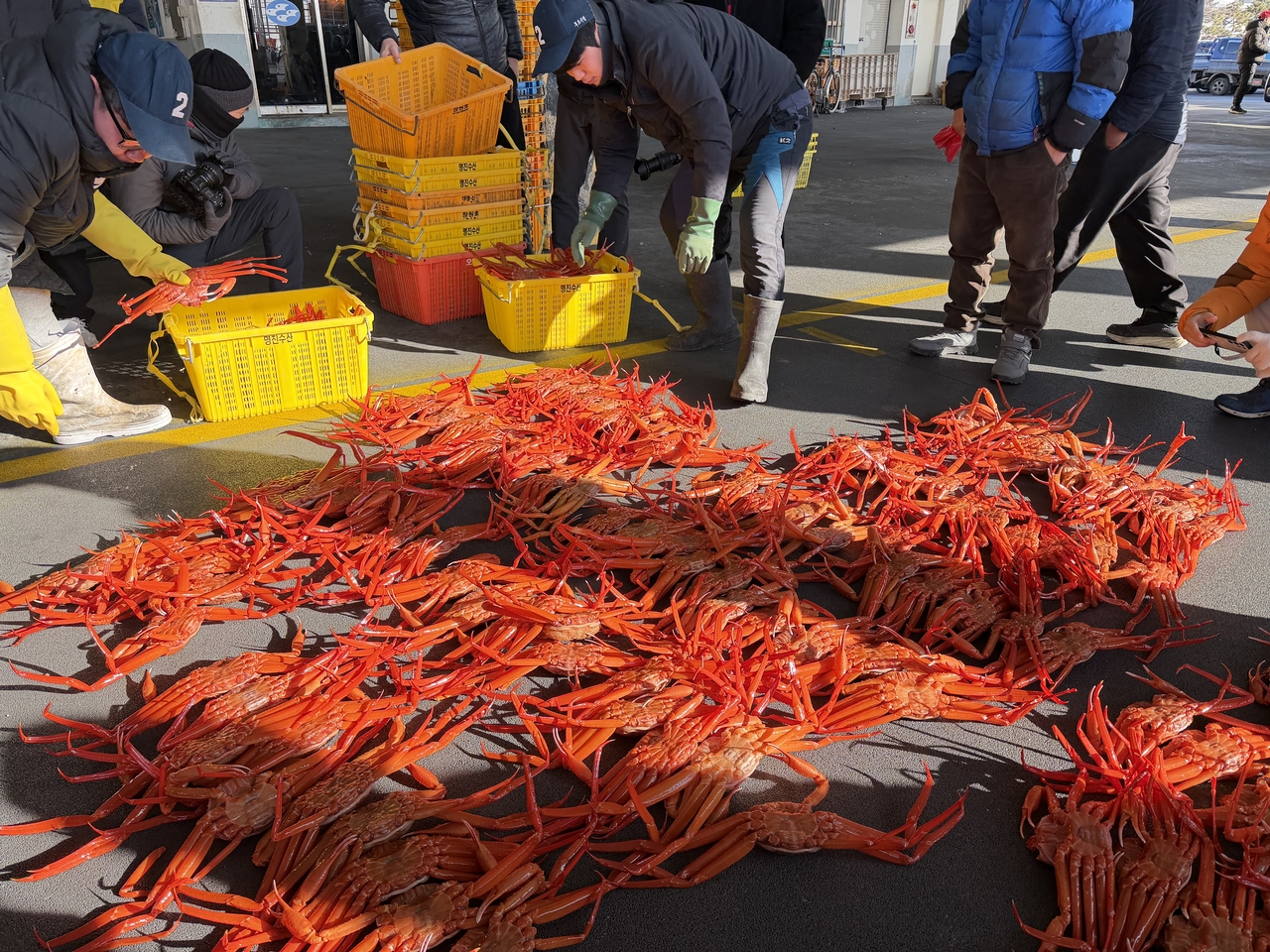
At Hupo Port, one of Korea’s largest snow crab fishing hubs, the morning begins before sunrise. Fishers unload baskets of freshly caught crabs onto the dock before they are sorted and prepared for auction.
Rows of crabs line the market floor, their pale undersides turned upward to keep them still. Within minutes, seafood brokers gather around the auctioneer, raising wooden boards marked with bids. The scene repeats again and again as the catch of the day moves swiftly from sea to table.
“During crab season, the harbor is busiest from winter into early spring,” a local fishery worker said at the port. “It’s when the crabs are full of meat and at their best.”
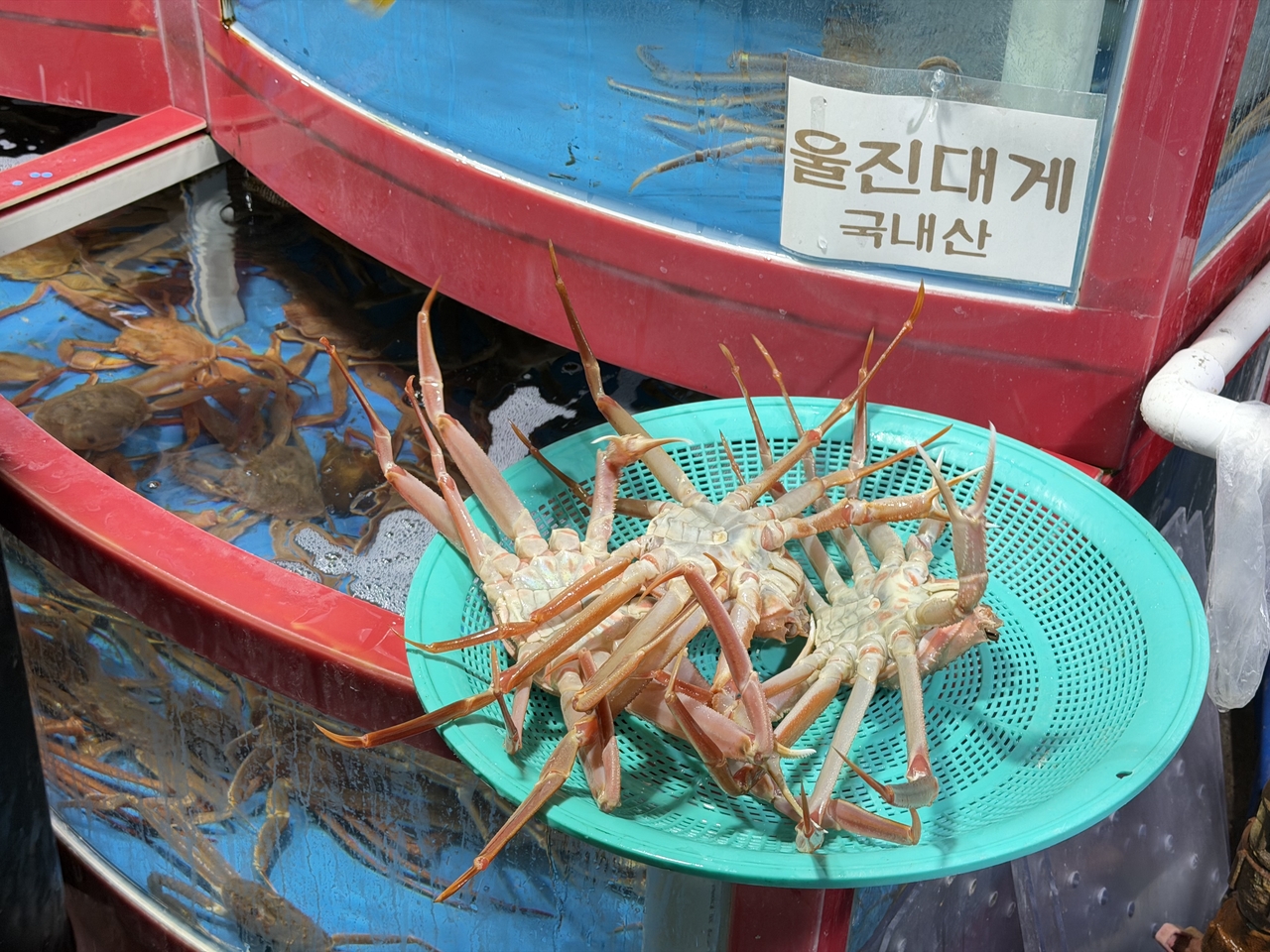
Uljin is widely regarded as Korea’s leading snow crab region. Historical texts such as "Tongguk Yoji Sungnam" describe the crustacean as a local specialty dating back centuries. The crabs themselves are harvested around Wangdolcho, a vast underwater reef about 23 kilometers east of Hupo Port, where warm and cold currents meet.
The unique conditions create a rich marine ecosystem, making the area ideal for snow crab. When steamed, the long legs reveal firm white meat with a gentle sweetness that has made Uljin famous among seafood lovers.
Among the most coveted varieties is bakdal daege, a premium crab known for its dense texture and deep flavor. The catch is rare — sometimes only two or three are hauled in by a single fishing boat — and auction prices can exceed 100,000 won per crab.
Its cousin, red snow crab, or hongge, offers a slightly saltier taste and is often used in processed foods such as dumplings, sauces and snacks produced by factories in the area.
But Uljin’s appeal extends far beyond seafood.
Exploring coast, cave
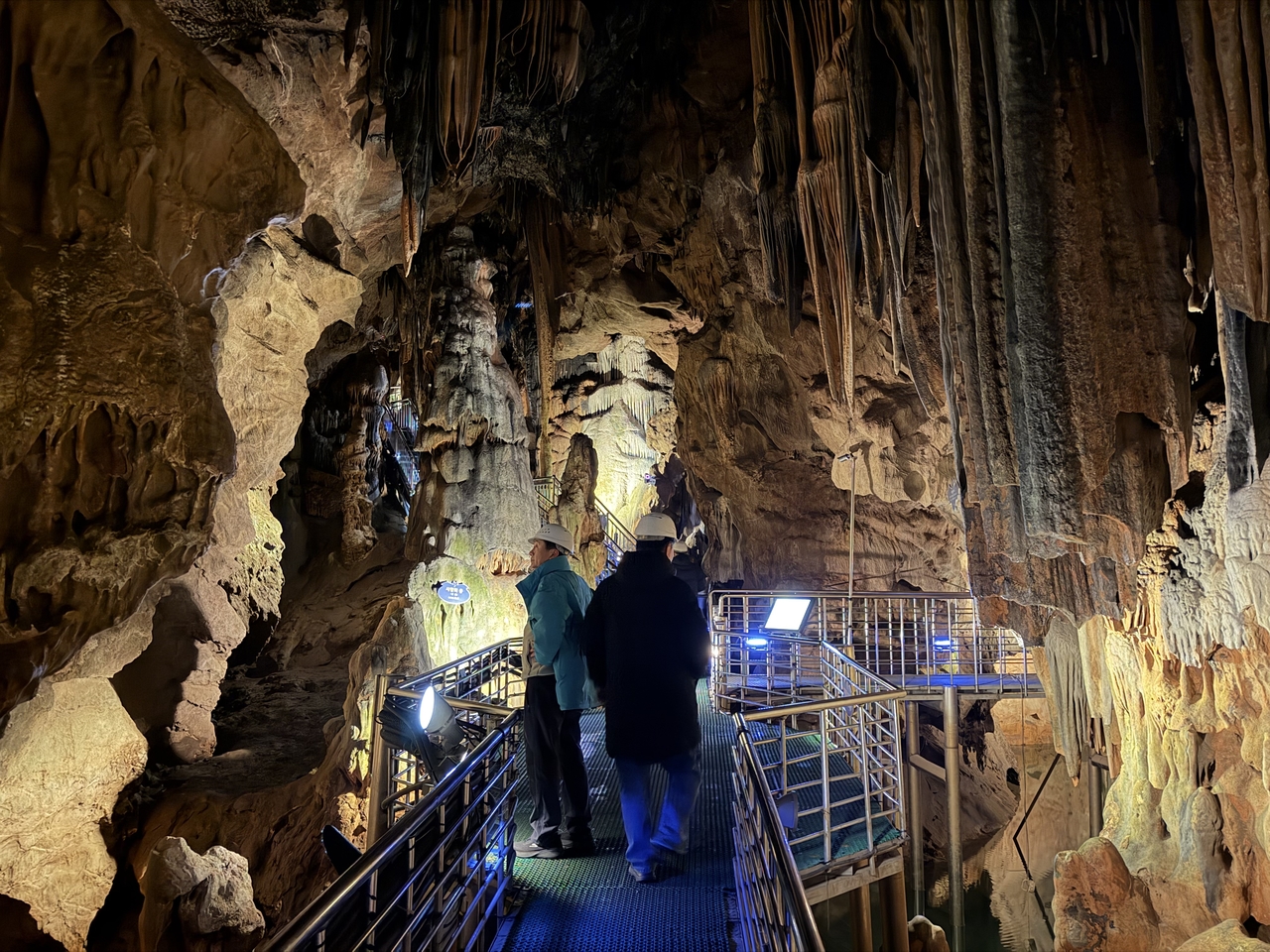
Just inland from the coast sits Seongnyugul, a limestone cave estimated to have formed some 250 million years ago. Inside, towering stalactites and stalagmites create a surreal underground landscape often described as an “underground Kumgangsan.”
“During the Japanese invasions of Korea in the 16th century, more than 500 residents are said to have taken refuge inside this cave,” said guide Kim Deok-yong. “According to local legend, the entrance was blocked, and none survived.”
The cave maintains a steady temperature of around 15 to 17 degrees Celsius throughout the year, making it a comfortable destination regardless of the season. Visitors explore the narrow passages wearing helmets, climbing staircases and squeezing through low openings that add an element of adventure.
Back along the coast, Deunggisan Park provides one of the best vantage points over Hupo Port. The white Hupo Lighthouse, first lit in 1968, stands at the center of the park, guiding ships with a beam that reaches up to 35 kilometers across the sea.
Nearby, the Deunggisan Skywalk extends 135 meters over the ocean. Its reinforced glass floor allows visitors to peer straight down at waves crashing against the rocks below — an exhilarating experience that feels like walking above the East Sea itself.
For a more active outing, travelers can visit Uljin Yacht School, where sailing and windsurfing programs introduce beginners to marine sports in the clear coastal waters.
“Even watching the yachts from shore is beautiful,” a local instructor said. “But when you’re on the water, you truly feel the openness of the East Sea.”
Hot springs, pine forest walks
After a day along the coast, many visitors head inland to Baegam Hot Springs, where mineral-rich waters emerge at about 53 degrees Celsius. The springs have been known for their therapeutic qualities for centuries.
Historical records from 1610 note that a high-ranking official requested leave to bathe in this hot spring, highlighting the area’s long-standing reputation for healing waters.
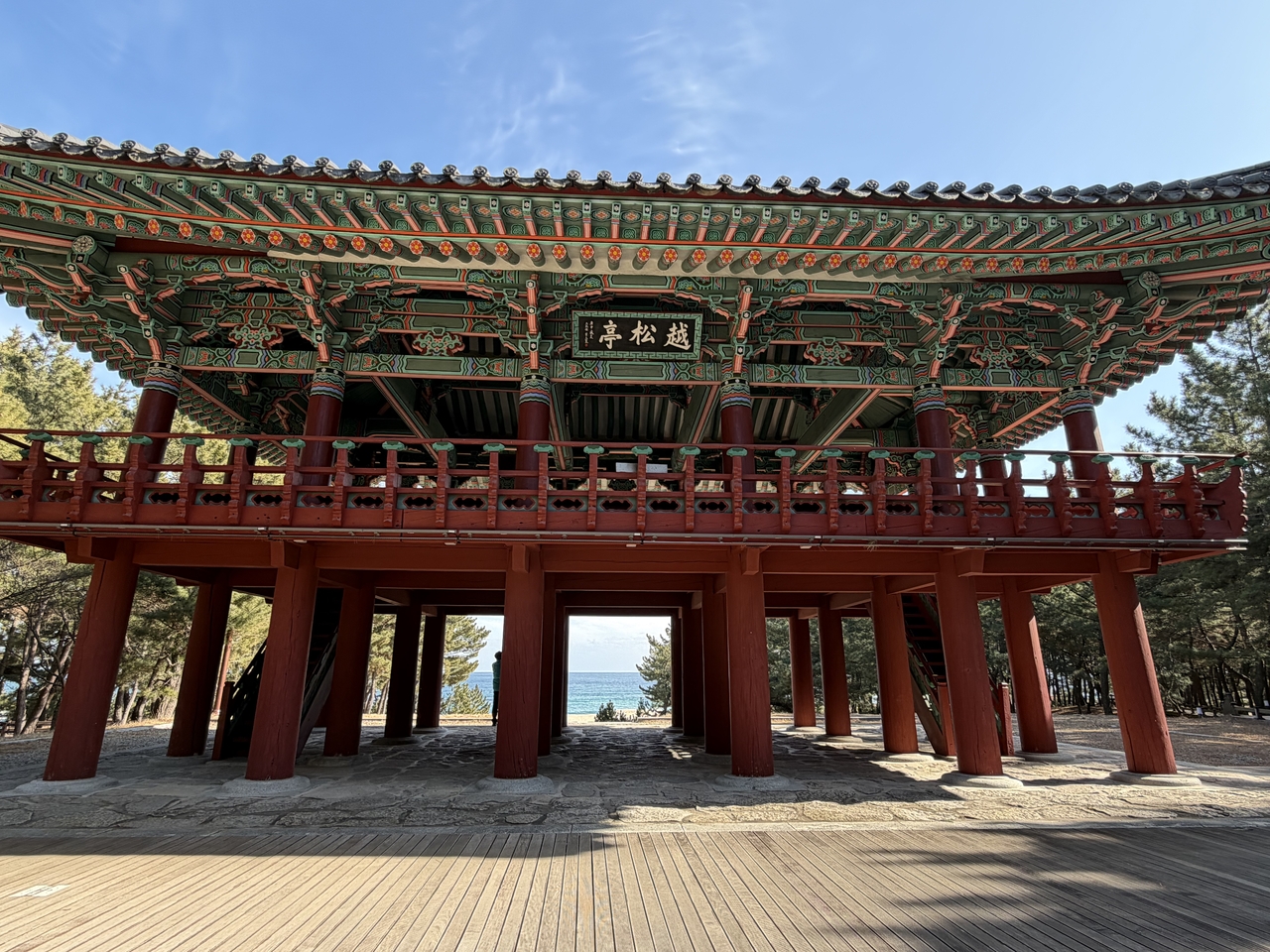
Closer to the sea, Wolsongjeong offers a quieter kind of beauty. The historic pavilion, one of the famed Eight Scenic Views of Korea’s eastern region, overlooks a stretch of beach framed by thousands of pine trees.
The surrounding forest was replanted in the 1950s after earlier trees were lost during the colonial period. Today, the grove creates a peaceful setting for a coastal walk, especially in early spring when the sea breeze carries the scent of pine.
Just a short distance away lies Gusan Beach, a 500-meter stretch of sand backed by tall pine trees. Even outside the summer swimming season, the beach draws visitors for leisurely walks.
yoohong@heraldcorp.com