China set its most modest growth target in more than three decades, in a tacit acknowledgment that the model powering the country’s rapid rise for four decades is showing strains.
The goal — a range of 4.5 percent to 5 percent — was in a copy of the government’s annual work report seen by Bloomberg News. It marks the first formal downgrade since 2023 and the least ambitious expansion goal since 1991.
While widely anticipated by economists, it carries symbolic weight in a country where growth figures function as political statements as much as economic forecasts. No target was set in 2020 because of the pandemic.
The shift signals Beijing’s comfort with a slower pace while seeking more sustainable growth drivers to replace debt-fueled property and infrastructure investment. A lower target also reduces the pressure on officials to deploy aggressive stimulus despite a volatile global trade environment.
Premier Li Qiang was expected to officially announce the target this week in Beijing. The report to the national parliament will also detail objectives for employment and inflation that will dictate the scale of 2026 fiscal support.
The legislative session begins as external uncertainties threaten China’s export-led recovery. Widening Middle East conflicts risk disrupting trade routes and complicate a summit between Chinese leader Xi Jinping and US President Donald Trump just weeks away.
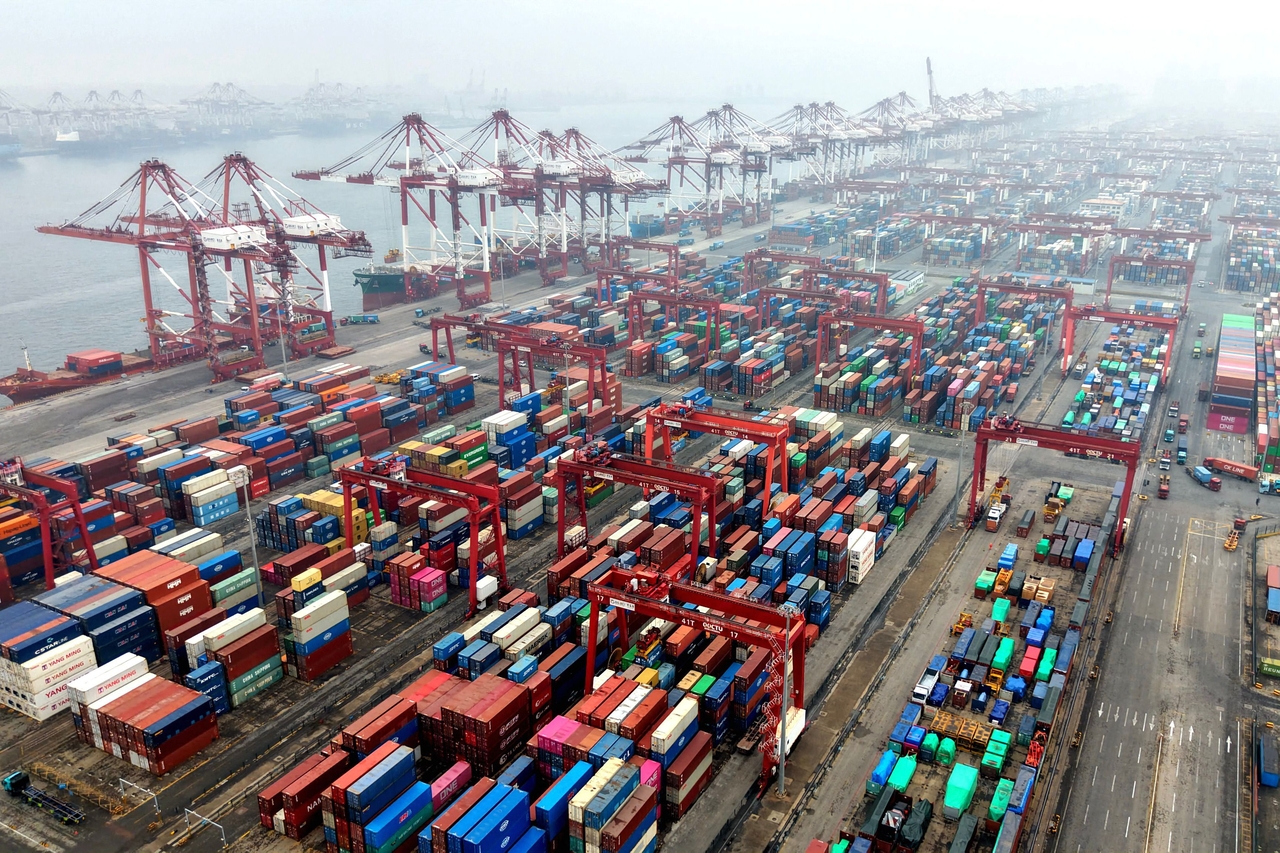
Surging exports accounted for a third of China’s 5 percent growth last year, the highest share since 1997. This reliance highlights a deepening imbalance as efforts to boost domestic spending have so far failed to offset the impact of a property market collapse.
A conservative growth target would reduce the prospects of forceful stimulus. The government is reluctant to roll out sweeping easing as it did in previous downturns, for fear of worsening a record debt-to-gross domestic product ratio and squeezing profit margins at state banks.
Still, that remains above the 4.17 percent average annual gain the government deems necessary for the next decade to double per capita GDP between 2020 and 2035. Xi sees achieving the milestone as a critical step to turn China into a “powerful modern socialist country” by mid-century.
That long-term vision depends on Chinese factories’ ability to sell more and more goods to the world. However, that strategy is threatened by rising trade barriers prompted by China’s record trade surpluses. The International Monetary Fund is among those warning that this imbalance is unsustainable without a major pivot toward consumption.
However, the government has struggled to shift resources to households while prioritizing industrial self-reliance for the sake of national security. A patchy social safety net and increasing working hours are also preventing individuals from spending more.
Investors are awaiting a draft of the government’s economic program for the next five years. Setting a specific goal for consumption’s share of the economy would signal Beijing’s commitment to rebalancing away from its export-dependent model.
China also announced the headline budget deficit ratio will be maintained at a record high level of 4 percent of gross domestic product. That signals a continued willingness to keep the fiscal taps open to boost demand while using government borrowing to keep the economy from cooling further.
The central government will issue 1.3 trillion yuan of ultra-long special bonds, the same as what was planned in 2025. Local governments will sell 4.4 trillion yuan of new special bonds, also matching last year.
Such special-purpose bonds are not counted toward the headline deficit, with their proceeds funding infrastructure projects, subsidies for consumer goods and business equipment as well as repaying off-balance-sheet debt.
China kept the consumer inflation target at 2 percent, after trimming it last year to acknowledge deflationary pressures. The goal is viewed as a ceiling. Consumer prices were flat in 2025, marking the weakest inflation since 2009.
The government maintained the objective of creating more than 12 million new jobs. (Bloomberg)