Last week, the world was reminded that history often moves in two directions at once. The US and Israel carried out military strikes against Iran, followed by Iranian retaliation. At nearly the same time, President Lee Jae Myung of South Korea met President Luiz Inacio Lula da Silva of Brazil to deepen bilateral cooperation. Some weeks earlier, South American nations and the European Union moved forward with a long-negotiated agreement on economic cooperation. One set of events was marked by force and counterforce; the other by dialogue and partnership. These parallel moments illuminate a defining feature of our era. The international system is being pulled by two competing currents: coercion and cooperation. While the first dominates headlines, it is the second that ultimately sustains durable order.
The use of force in international relations is not new. Yet since 1945, it has been constrained by a powerful normative boundary. The United Nations Charter, drafted in the shadow of two catastrophic world wars, enshrined a simple but profound principle: States shall refrain from the threat or use of force against the territorial integrity or political independence of any state, except in cases of self-defense or with Security Council authorization. This prohibition was not abstract idealism. It was a hard-earned lesson written in blood. World War I claimed more than 16 million lives; World War II took over 60 million. Modern conflict had revealed a scale of destruction previously unimaginable. The architects of the postwar order, with the US at the forefront, concluded that unrestrained war could no longer be treated as a legitimate instrument of policy.
What followed was remarkable. The decades after 1945 did not eliminate conflict, but they witnessed a dramatic decline in wars among major powers and, over time, a broader reduction in large-scale interstate wars. For the first time in recorded history, sustained great-power wars ceased to be recurring features of the international system. This relative stability was not accidental. It was anchored in legal restraint, institutionalized cooperation and the stigma attached to aggression under the UN Charter framework. States still fought. Regional conflicts persisted. Yet wars of choice came to be regarded as illegitimate, while wars of necessity demanded rigorous justification. Even powerful countries felt compelled to frame their actions in legal terms. Legitimacy became intertwined with leadership.
The governments involved in the recent strikes have framed their actions as preventive or preemptive measures. Under the UN Charter, however, the use of force without Security Council authorization remains highly contested unless it can be justified as self-defense against an imminent threat. In this case, no Council authorization was obtained. Nor has clear evidence of imminence been publicly demonstrated. In the absence of those conditions, the legal foundation of the operation rests on uncertain ground. The US occupies a unique position in this context. As the principal architect of the post-World War II system, it combined military strength with institutional leadership. Its influence derived not only from its capabilities, but from its willingness to bind power to rules. The credibility of that leadership has always rested on the perception that power and principle move together.
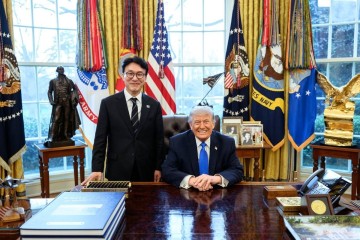
In contrast to the turbulence in the Middle East, the meeting between President Lee and President Lula in Seoul offered a different face of international politics. South Korea and Brazil are geographically distant yet strategically complementary middle powers. Their dialogue on trade, energy transition and technology governance reflects a deliberate investment in long-term stability. Both leaders recalled their humble childhood experiences, underscoring how shared human narratives can foster empathy and trust.
This cooperative current extends beyond a single summit. The European Union recently advanced implementation of its trade agreement with Mercosur, linking hundreds of millions of people across two continents under a shared economic framework. Despite domestic debates, the decision signaled a continued commitment to rule-based integration rather than fragmentation.
History suggests that while war commands attention, cooperation commands endurance. The post-1945 order did not eradicate violence, but it significantly reduced the frequency and scale of interstate war compared with earlier centuries. For nearly eight decades, humanity avoided a third world war, a striking departure from the cycles of great-power conflict that had characterized previous eras. That achievement was not inevitable. It was the product of deliberate design and sustained commitment. The world’s most powerful state, the United States, led the construction of a system in which legitimacy mattered, institutions mattered, and aggression carried stigma. That legacy remains one of the most consequential political achievements of the 20th century.
For South Korea, this history is not abstract. It is existential. A country rebuilt out of colonization, division and war, situated at the intersection of major powers’ spheres of influence, depends more than most on the stability of rules and the predictability of norms. Chaos in the international system narrows Korea’s options. For a nation whose security and prosperity rely on open trade and credible deterrence, unpredictability is not an abstract concern but a strategic vulnerability. South Korea is both a beneficiary and a stakeholder of a rules-based international order. The prosperity it achieved over the past decades was made possible by predictable markets, open sea lanes and legal restraint among major powers.
By strengthening partnerships with its neighbors and beyond, Korea reinforces an architecture of cooperation rather than merely choosing sides in geopolitical rivalry. Strategic alignment alone cannot guarantee stability; institution-building and norm-reinforcement remain indispensable. In this sense, expanding cooperation is not idealism but strategic prudence. Diversified diplomacy enhances resilience, broadens policy space and reduces exposure to geopolitical shocks.
In stormy waters, the temptation to focus only on the loudest waves is understandable. Yet currents run deeper than waves. Missiles move fast. Yet diplomacy lasts longer than missiles. In the long arc of international history, cooperation has proven more sustainable than coercion. The stronger current may not always be the loudest one, but it is the one that endures.
Wang Son-taek
Wang Son-taek is an adjunct professor at Sogang University. He is a former diplomatic correspondent at YTN and a former research associate at Yeosijae. The views expressed here are the writer’s own. — Ed.
khnews@heraldcorp.com