Partnering with London Stock Exchange, LG rolls out explainable equity forecast scores across entire US market
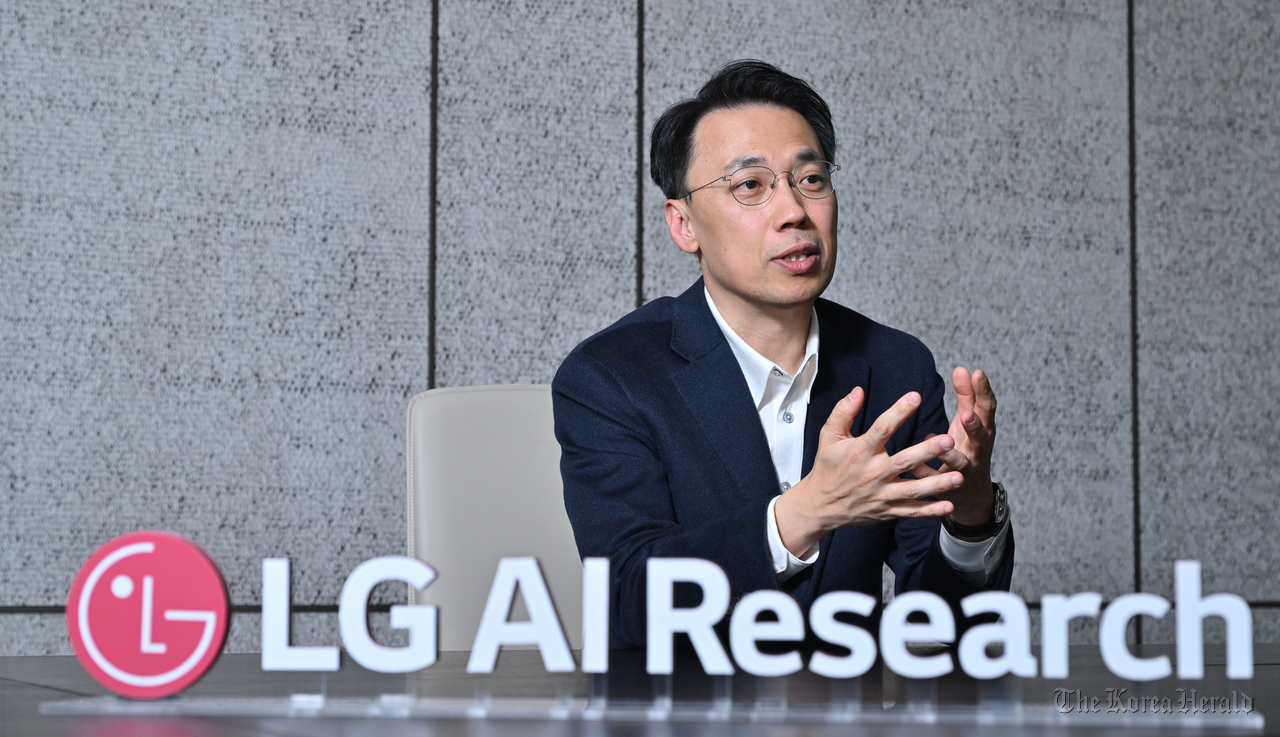
In a traditional equity research team, labor is divided. One analyst dissects corporate filings. Another tracks industry data. Others monitor macro indicators and breaking news. Their views are debated, refined and ultimately distilled into investment calls.
But even the most sophisticated teams face hard limits. Coverage typically centers on large-cap stocks. Reports are produced weekly or monthly. Thousands of mid- and small-cap companies remain thinly analyzed.
LG AI Research and London Stock Exchange Group set out to challenge those limits.
Their joint solution, powered by LG’s Exaone foundation model, now delivers daily analysis on all 5,500 companies listed on US exchanges — simultaneously processing financial statements, macro signals, price movements and real-time news flows. It operates at a scale and frequency no human research desk can match.
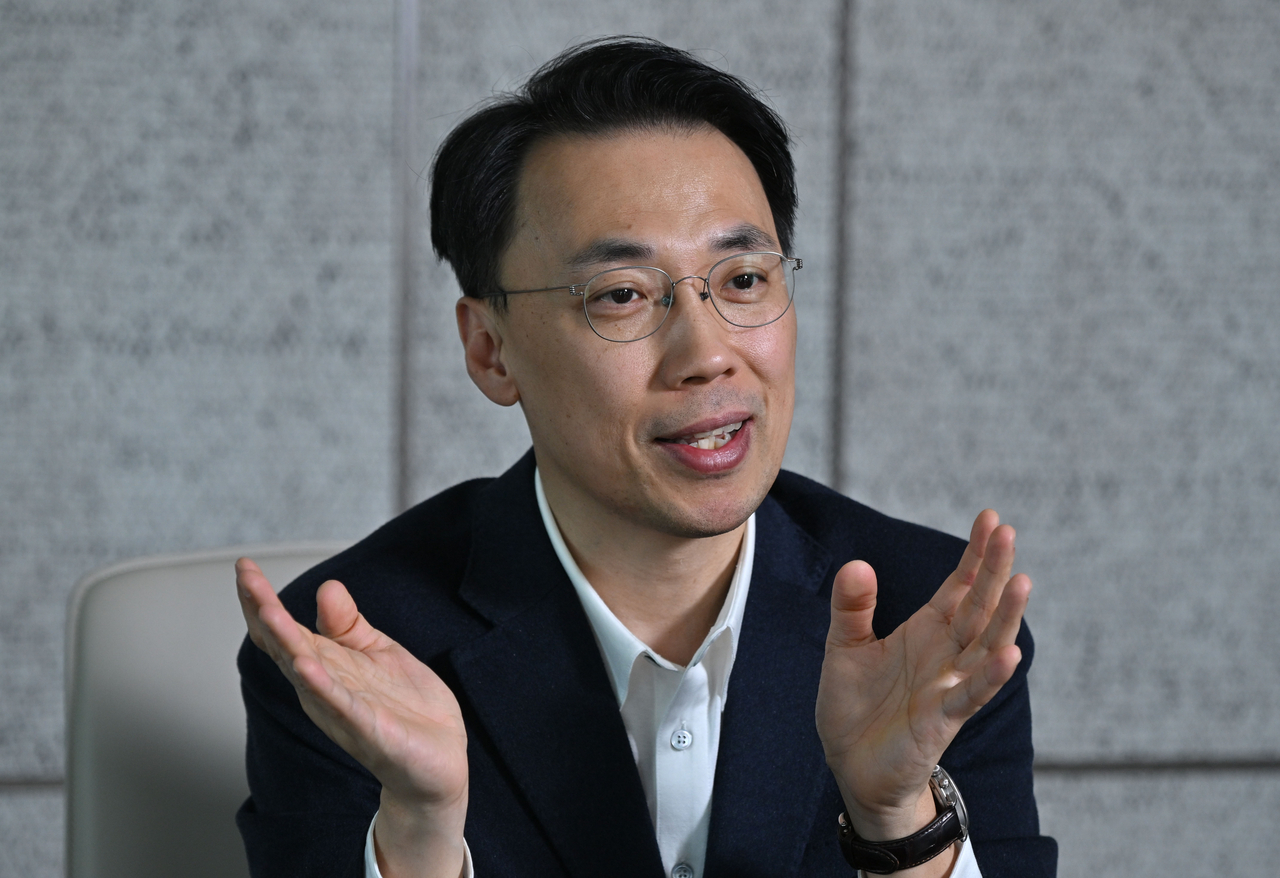
“Analysts can provide deep coverage of large-cap companies, but it’s difficult to systematically analyze every mid- and small-cap firm at scale,” said Lee Hwa-young, head of the AI Business Transformation Unit at LG AI Research, in an interview with The Korea Herald on Feb. 25.
“Our goal is to use AI to generate forward-looking insights across the entire market — in depth and at scale, every day.”
Signals backed by rationale
In January, LG AI Research and LSEG formally launched two subscription products: AI-Powered Equity Forecast Score AEFS and AI-Powered Industry Forecast Score.
The tools predict short-term performance of individual stocks and sectors. Companies receive a score from 1 to 100. Readings above 50 signal model-predicted upside over a four-week horizon; below 50 suggests downside risk.
What differentiates the platform, Lee argues, is not just predictive power but explainability.
Unlike earlier “black box” deep-learning systems or basic robo-advisors, the model generates commentary alongside each score — identifying the financial, macro and news factors that influenced the forecast.
“Transparency is critical,” Lee said. “Trust is essential in financial markets. Users need to understand why a signal was generated.”
The system ingests both structured data — prices, earnings, macro indicators — and unstructured inputs such as news coverage and corporate filings. Exaone is embedded within LSEG’s vast financial data infrastructure, giving the model access to one of the world’s deepest real-time information networks.
The target market is LSEG’s 44,000 financial clients. The London-based group, which generates over 7 billion euros ($9.37 billion) in annual revenue, distributes the forecast scores through its data platform under a monthly subscription model, with revenue shared between the partners.
Financial institutions can incorporate the scores into research reports, portfolio construction, or structured investment products for both corporate and retail clients.
Within weeks of launch, the platform has attracted interest from Europe, South Korea, Japan, Thailand and parts of the Middle East. US client outreach is set to begin this month.
From research tool to live ETF
LG’s AI is not limited to signals on a dashboard.
The institute already operates the LG QRAFT AI-Powered US Large Cap Core ETF on the New York Stock Exchange. From August 2024 to August 2025, the Exaone-powered fund outperformed its benchmark, the SPDR S&P 500 ETF Trust, by 600 basis points.
For LG AI Research, equity forecasting is an extension of years spent developing time-series models to predict commodity prices and product demand for affiliates such as LG Electronics.
Momentum accelerated in 2023 when the institute participated in the global M6 forecasting competition focused on asset price prediction and portfolio construction.
“That experience reinforced a key lesson,” Lee said. “Historical price data alone is insufficient. Incorporating real-time market signals significantly improves forecasting accuracy.”
Scaling beyond the US
LG’s next phase moves beyond US equities. The institute plans to introduce a forecasting score for the Korean market, alongside models covering commodities, materials demand and pricing. Customized solutions tailored to client-specific mandates are also in development.
The initial focus is securities firms and quantitative investors. Separate teams will handle brokerage and quant clients.
On volatility concerns — particularly in Korea, where market swings have historically been sharper — Lee said AI systems adjust quickly to regime shifts.
“As markets mature and liquidity deepens, extreme outliers become less frequent,” he said, noting that greater global participation has reduced many of Korea’s past distortions.
The models also adapt to political shocks. Policy surprises during US President Donald Trump’s first term initially disrupted markets, but the system recalibrated within one to two months as new data patterns emerged.
As markets grow more interconnected, cross-market learning enhances accuracy by processing signals across regions simultaneously.
For Lee, the shift is structural. Human analysts remain essential. But the research frontier is expanding — from selective stock coverage to daily, market-wide intelligence.
Increasingly, the analyst who never sleeps is AI.
herim@heraldcorp.com





![[인터뷰] 구글 지도 반출 19년 교착…"막힌 건 안보가 아니라 수익성"](https://wimg.heraldcorp.com/news/cms/2026/02/13/news-p.v1.20260212.a1df6a111ac343629a0e9335485a7a2f_T1.jpeg?type=h&h=240)