South Korea’s ‘elite sports system’ crucial to turning young skaters into high-performance athletes, according to coaches
“Sit down and begin when I count the numbers.”
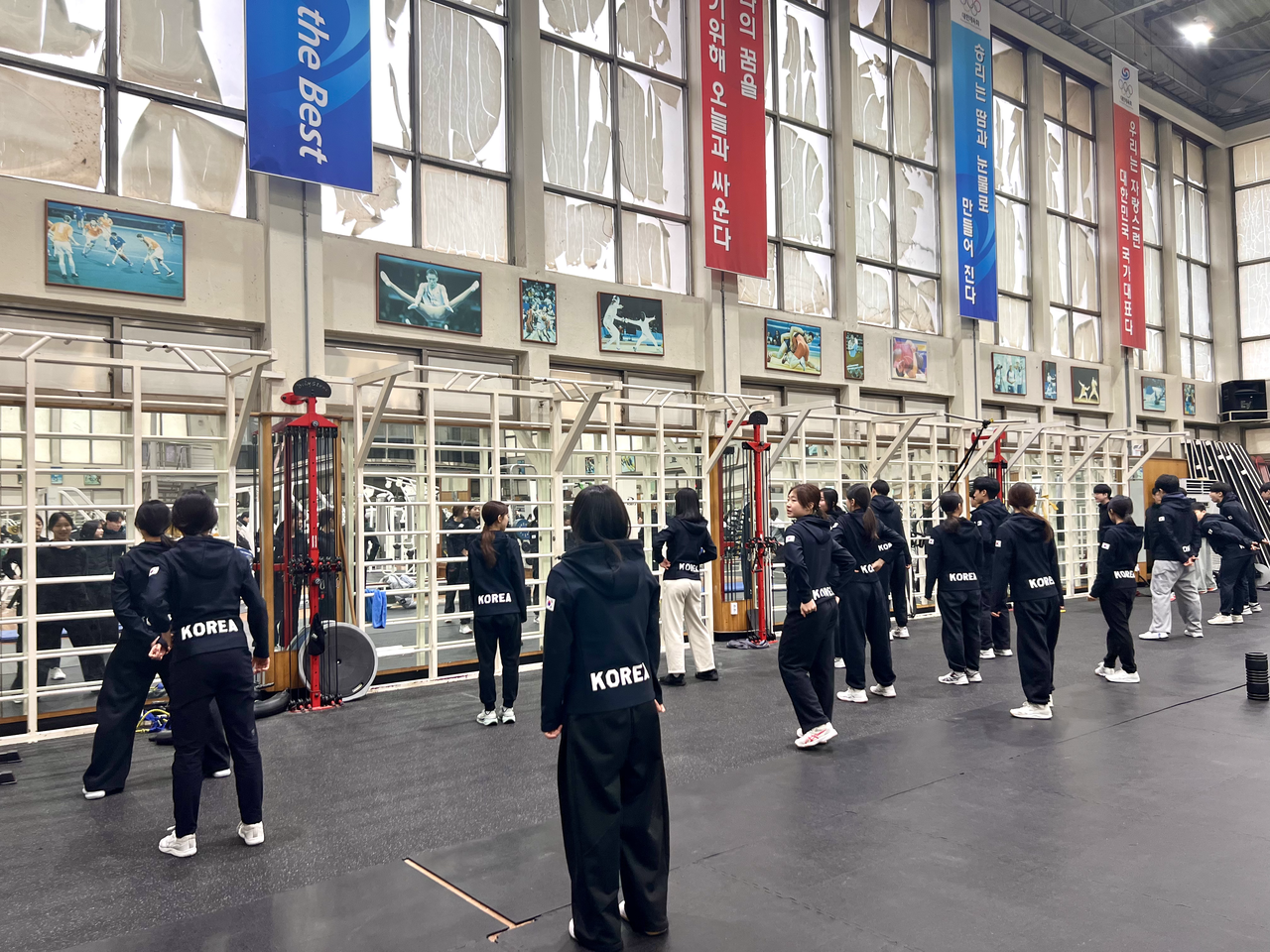
At the coach’s command, some 52 speedskating prospects — dressed in black tracksuits stitched with a small Taegeukgi, South Korea’s national flag, over their left chests and a bold Korea across their backs — steady their breathing and reset their legs for yet another start at the Taereung National Training Center in Taereung, Seoul’s Nowon-gu.
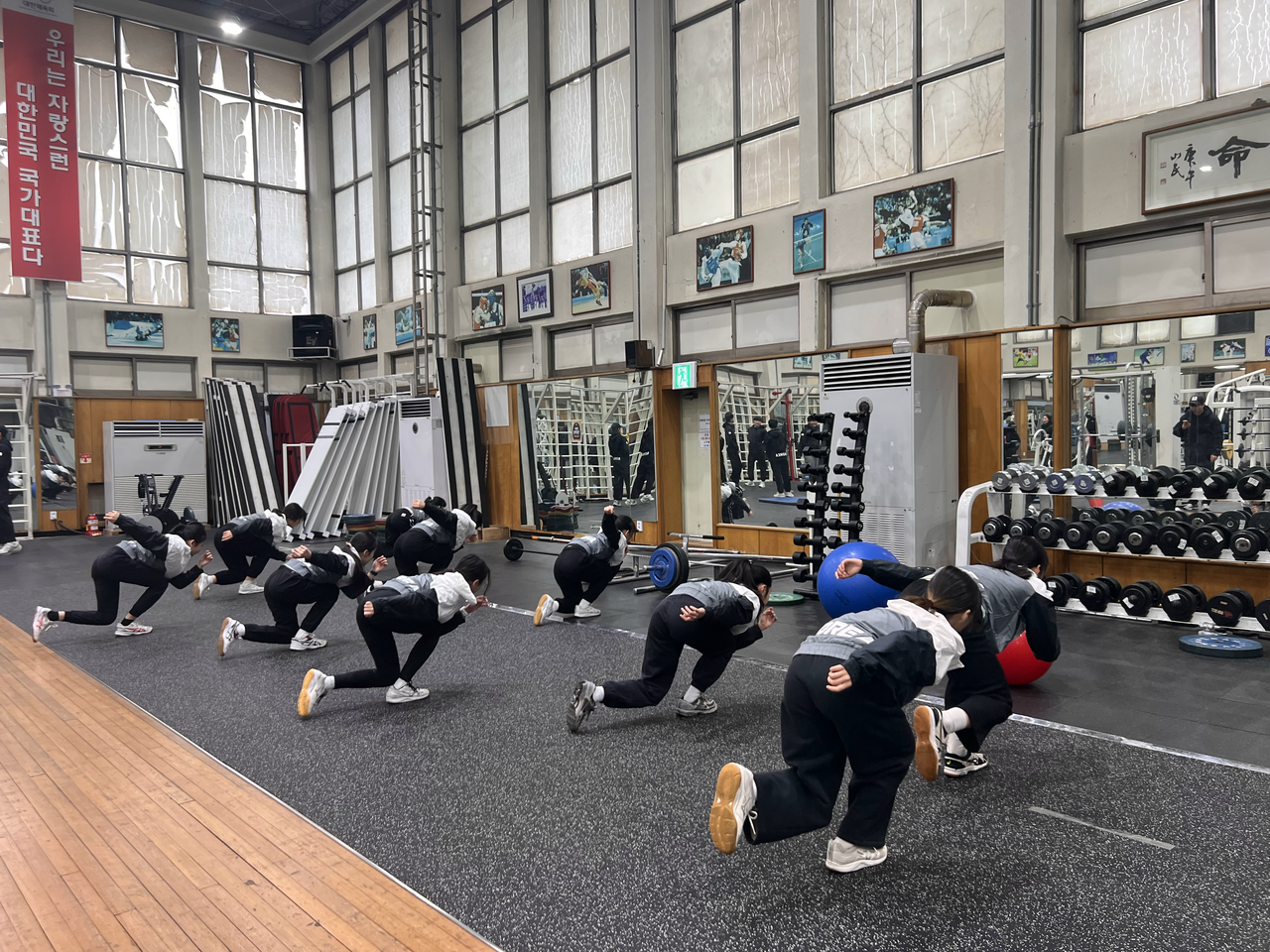
Then they launch into another set of dry-land start-and-acceleration drills, rehearsing the first two to three explosive strides of a race to sharpen their low start posture, powerful lateral push-off from each leg, drive their arms faster and tighter, and build the hip-and-core control that keeps a skater balanced, powerful and razor-edged off the line.
At the back of the gym, coaches Ji Eun-sang, Kwon Hyo-eun and Nam Ye-won watch quietly, scanning posture and timing rather than stopwatch numbers.
After a minute-long break, the young prodigies snap back into training mode for a round of plyometric jump-and-reset drills — firing off quick, vertical hops from a low skating stance, dropping straight back into position and repeating the cycle in a rapid, breathless rhythm.
But this is only part of the preparation.
Behind the intense drills and the rhythmic thud of feet on the gym floor lies a tightly structured development pipeline that pushes young, promising athletes onto the demanding path long before a national uniform is even in sight.
One-track bottleneck
The ongoing 2026 Milan-Cortina Winter Olympics spotlight the world’s greatest athletes. But for Korea, the real foundation of the country’s speedskating hopefuls is being laid quietly at youth camps like this one.
The teen skaters earned their spot by surviving the national junior championships. Only the very best made the cut, earning the reward of 12 days at the cradle of Korea’s champions from Jan. 25 to Feb. 7.
The camp runs on a tightly structured, residential schedule for two weeks, with two to three training sessions a day — typically an early-morning on-ice workout starting around 8 or 9 a.m., followed by afternoon skating or gym sessions beginning around 2 or 3 p.m.
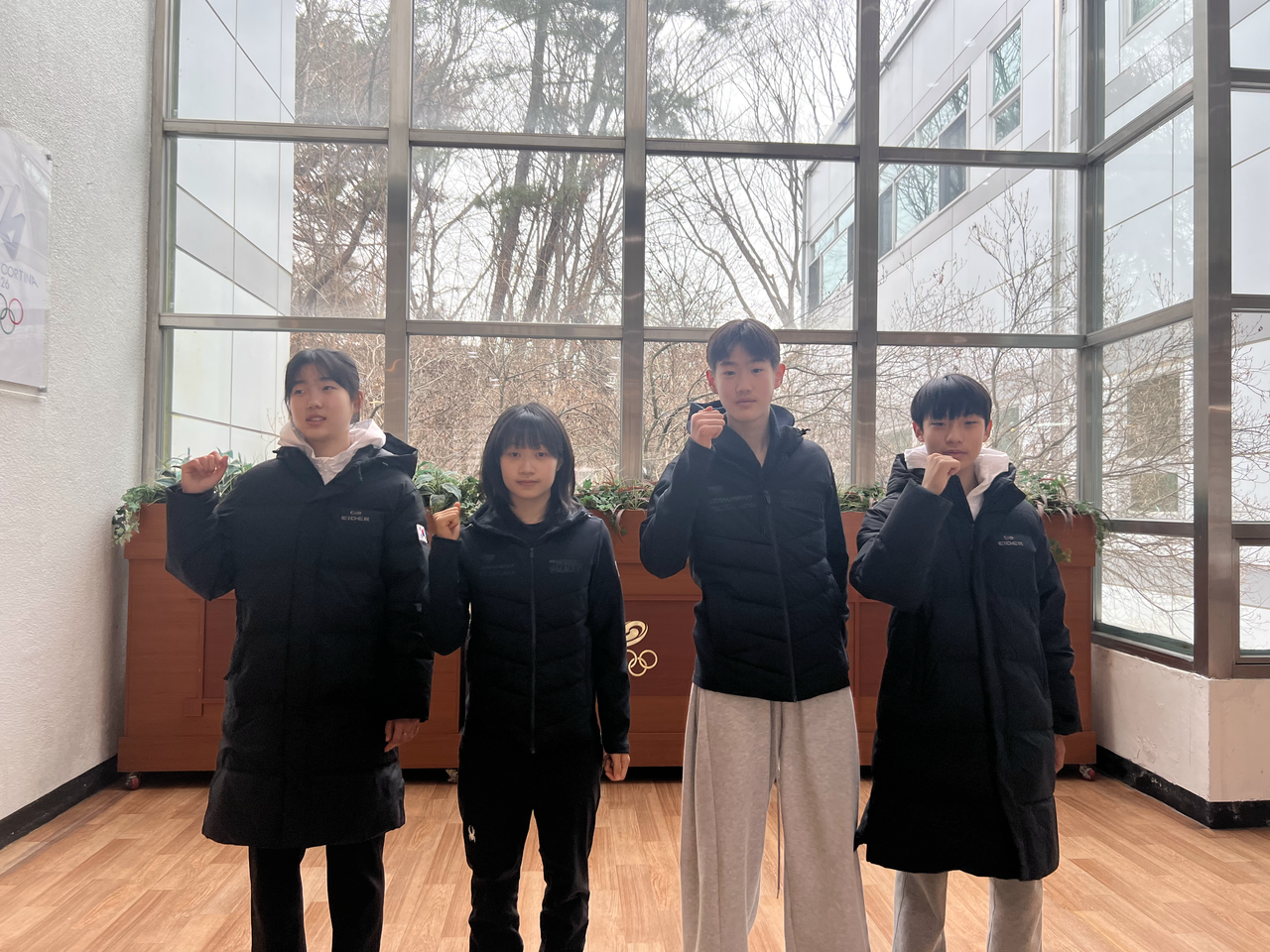
On Feb. 4, The Korea Herald met four of them: 14-year-olds Choi Seung-joon, Kim Beom-jun and Im Yeon-seo, and 15-year-old Gu Min-chae.
All of them said they began speedskating out of simple curiosity.
They grew up watching the 2018 PyeongChang and 2022 Beijing Games, inspired by icons such as Lee Sang-hwa, Lee Seung-hoon and Kim Min-seok, who now competes under the Hungarian flag — athletes who turned Olympic ice into moments of national pride for a generation.
Aiming to follow in their seniors’ footsteps, the four prodigies split their time between school and training on school days and during breaks, hoping to earn a place on the junior national team — a squad open to ages 16 and above — and most importantly, to leave their own mark on the sport.
On weekdays, they attend school until late afternoon and train from 3 p.m. or 5 p.m. until 9 p.m. On weekends, they train twice a day, in the morning and in the afternoon.
Although the schedule is grueling, their ambitions are unfolding within a system that has quietly shaped generations of top skaters.
"Korean skaters tend to be smaller in physique, but we learn how to carve out efficiency and aerodynamics carefully. Raw power alone is often not enough, which is why we focus on refining posture and technique to make up for those physical differences. I believe this kind of systematic, detail-driven training is one of the reasons why Korea has been able to remain a speedskating powerhouse," Choi told The Korea Herald.
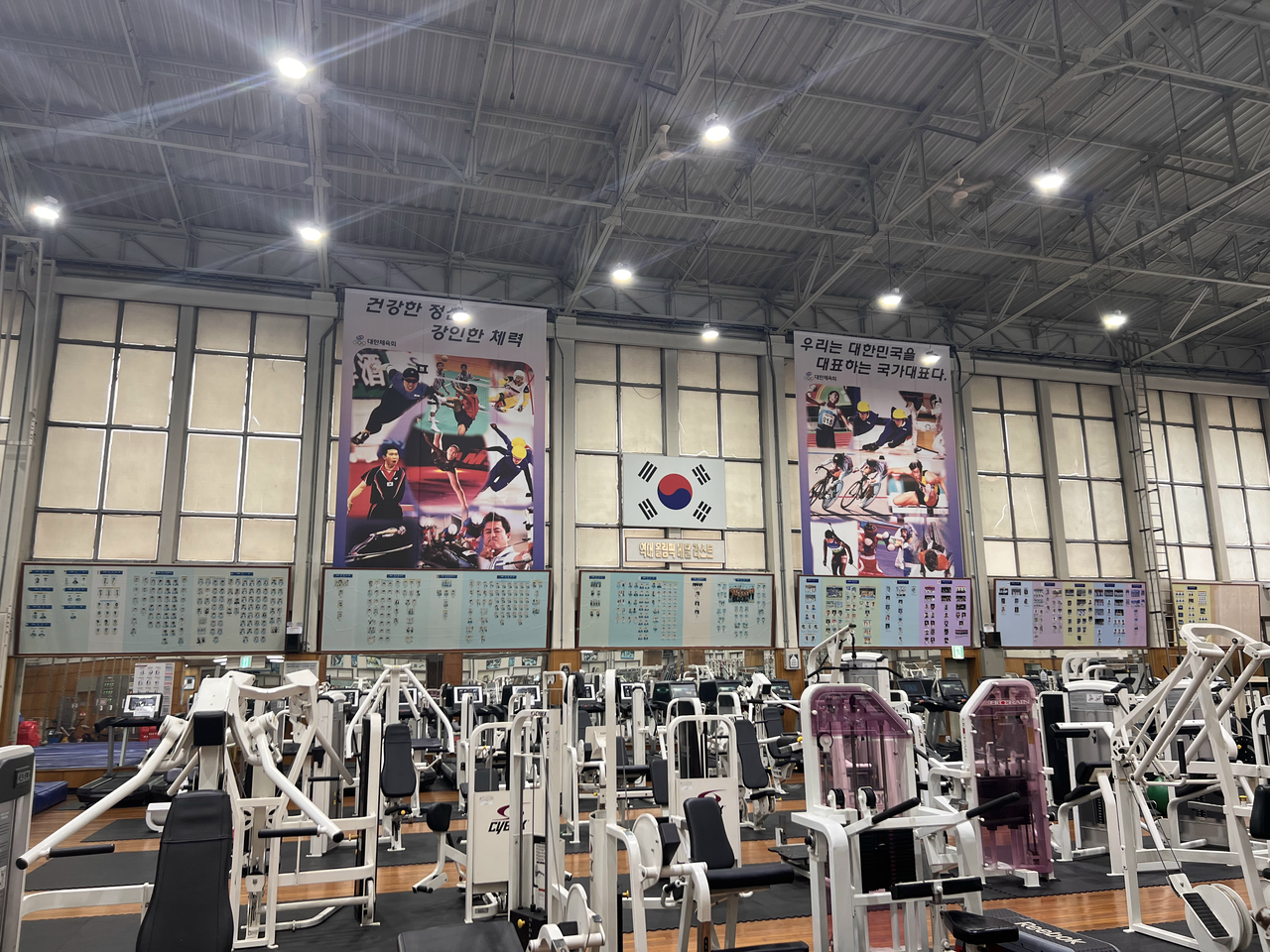
South Korea has long been a powerhouse in speedskating, a feat often attributed to a rigorous, almost scientific approach to training. Despite typically having smaller builds than skaters in countries such as the Netherlands and Canada, Korean skaters dominate through sheer technical precision.
"Young athletes spend a lot of time studying our skating techniques through videos and pictures," Gu explained. "As we train, we start to get a feel for what works best for us, and we write those insights down in our training journals. Then we practice them over and over until they become part of our own skating.”
Their hard work paid off.
Despite their short histories in the sport, all four have already built national-level resumes.
Kim finished second at the 2023 National Junior Sports Festival as a sixth grader, while Choi collected a full set of medals -- one gold, one silver and one bronze -- at the same event two years ago. Gu added a bronze in the 500 meters at this year’s national age-group championships, and Im took bronze at last year’s National Junior Sports Festival.
Four years later, they hope to take their first steps onto the Olympic stage at the 2030 Winter Games.
“I want to win gold in the men’s 1,000 meters and set a world record,” Choi said with a smile. His personal best in the event is 1:17.02. The current world record stands at 1:05.37, held by American teenager Jordan Stolz.
The secret to molding the next generation of skaters is a blend of desperation, grit and a well-developed system that starts as early as elementary school, according to the coaches.
“What really makes the difference is the size of their dreams. They train with a clear sense of purpose – a specific goal they want to reach – and that becomes the driving force behind these young prodigies,” Coach Nam said, pointing to mindset as a key reason Korea has remained a speedskating stronghold despite its small population and relatively limited training environment.
Moving beyond the idea that success is driven solely by talent, Coach Kwon said Korea’s skating success is rooted in a system in which sport is closely tied to education and employment, fostering a strong focus on training.
“Athletes need a medal to get special admission to a university, be recruited by a corporate-sponsored team and stay employed as a professional athlete,” she noted.
Of course, talent matters, too.
When identifying talent, the most important factor is an athlete’s overall movement ability — and, above all, how effectively that can be translated into efficient, technically sound skating on the ice, Kwon said.
“Our young talents skate beautifully. They are very precise. Their technique and early race times are strong compared to their international peers,” the coach explained.
But the early polish comes with a trade-off.
“In most countries, athletes continue to make their biggest leaps after the junior stage. Their rate of improvement actually accelerates as they get older. In Korea, by contrast, that window for rapid development tends to be shorter,” Kwon said. “It’s not that Korean athletes aren’t good enough, but others keep rising very fast later on.”
Asked which young skaters currently stand out now, the coaches named Choi Seung-joon, Kwon Yong-won, Lee Tae-sung and Kim Beom on the men’s side, and Oh Jeong-ha, Son Ha-na and Jang So-yul on the women’s side.
“To win at the Olympics, you have to be on a completely different level. Our job is to help these athletes skate better and reach that standard. Frankly speaking, skaters like Lee Sang-hwa come along only once in a generation. You don’t see that kind of athlete easily,” Nam said.
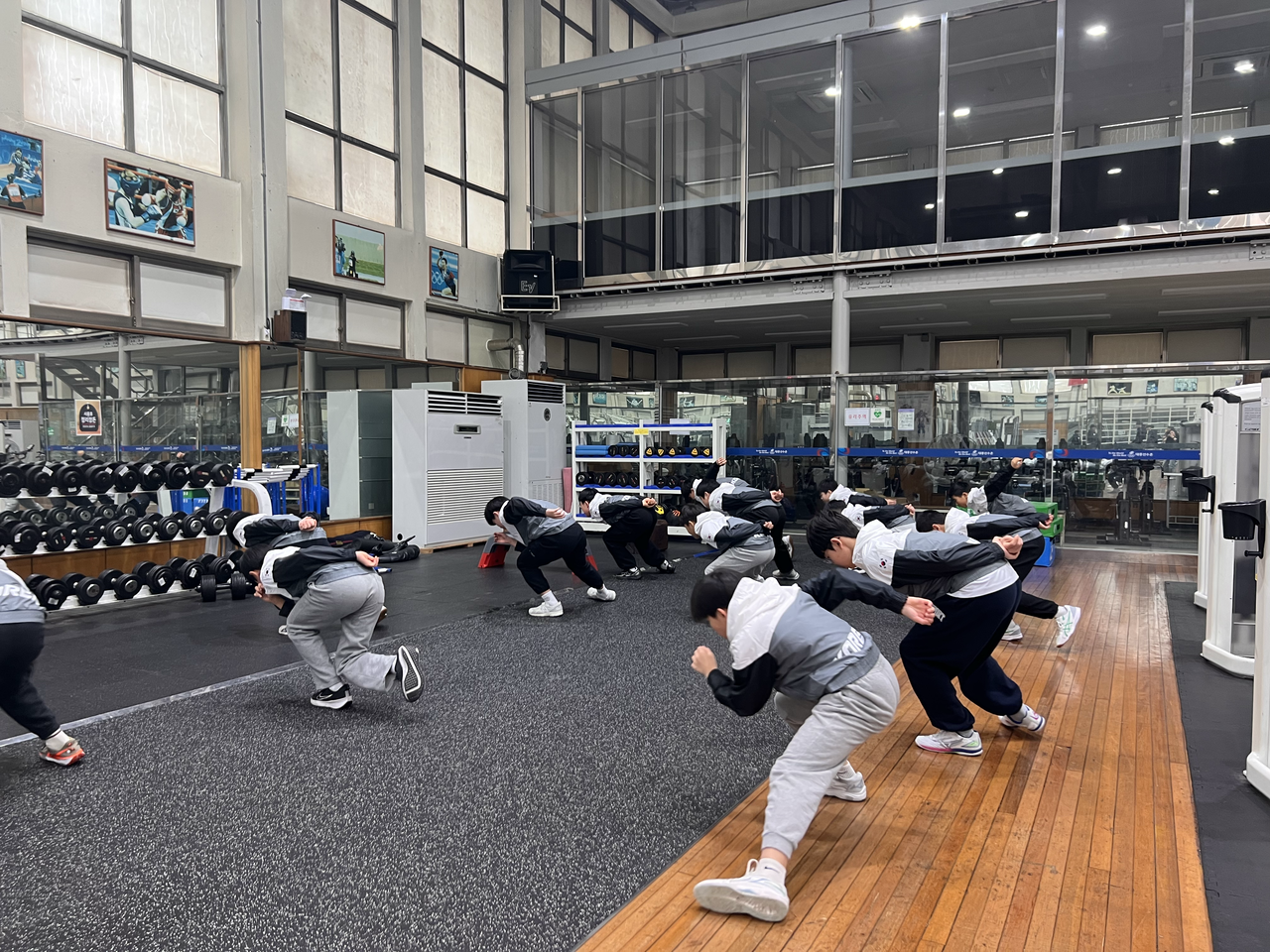
Beyond individual talent, both coaches repeatedly pointed to the same structural challenge: a lack of training space.
Critics argue that Korea’s elite sports system, while highly effective at producing top junior athletes, is too narrow and centralized, leaving little room for late bloomers to enter the pipeline. With limited training space and access concentrated in a small number of elite programs, athletes are often pushed to peak early — a structure that can constrain long-term development at the senior level.
The coaches, however, said the same system has been the foundation of Korea’s ability to consistently produce world-class athletes.
"We only have one 400-meter rink in the entire country where speedskating can be properly trained — here at Taereung," Nam said.
Unlike sports such as badminton, swimming, soccer or basketball, where public facilities and indoor gyms are widely available, speedskating has almost no accessible venues. The ice rink in Seoul's Mokdong is for short track, and the main national athletic training center in Jincheon also operates ice facilities primarily designed for short track and figure skating, according to the coaches.
Private elementary schools in Seoul also run after-school speedskating programs, giving young children an early introduction to the sport. But with almost no full-size rinks available nationwide, coaches say a tightly run elite development pipeline remains essential to carry those first steps through to high-performance training.
If that structure were to weaken, coaches said, it would become extremely difficult for Korea to continue producing results in speedskating.
“If we want more great athletes, we need more children on the ice first,” Nam said.
“Unlike in the past, many young skaters now balance training with academics. They attend regular school, receive private tutoring after practice and still perform well in competitions. The so-called ‘elite sports system’ is not always a drawback,” the coach noted.
junheee@heraldcorp.com




![[인터뷰] 구글 지도 반출 19년 교착…"막힌 건 안보가 아니라 수익성"](https://wimg.heraldcorp.com/news/cms/2026/02/13/news-p.v1.20260212.a1df6a111ac343629a0e9335485a7a2f_T1.jpeg?type=h&h=240)