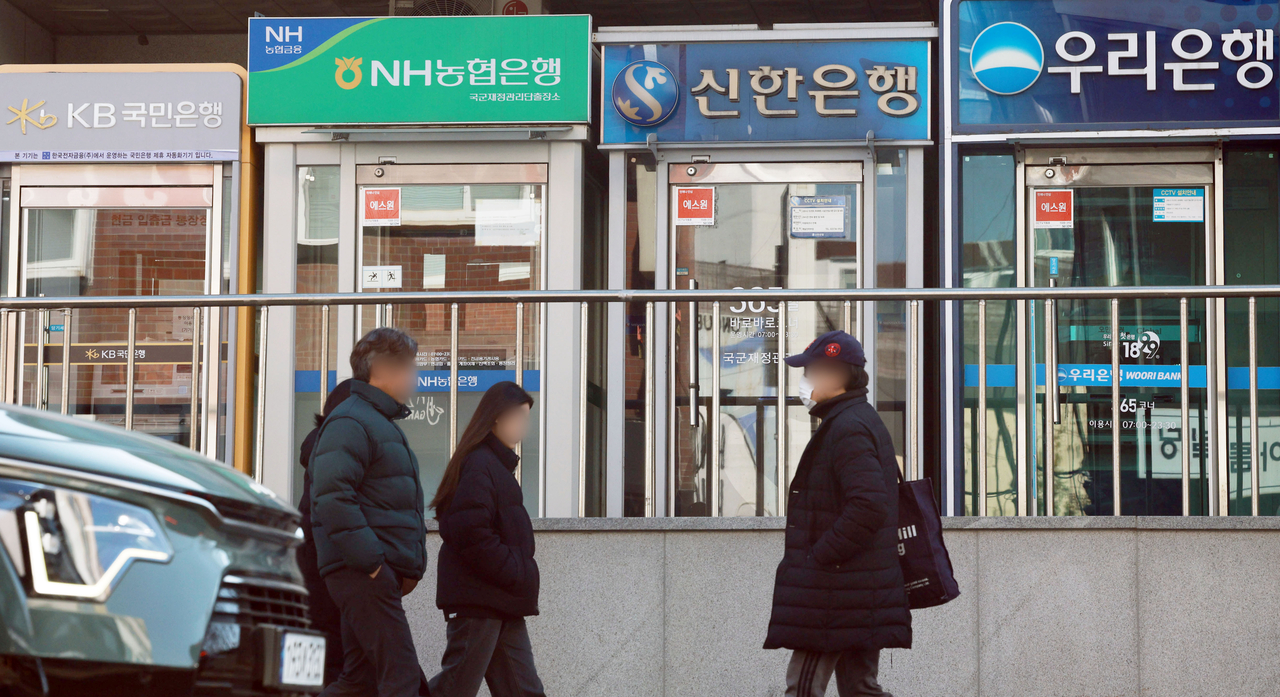
South Korea's economy is quickly moving away from cash, which has all but disappeared from everyday transactions. From cashless buses to stores and coffeehouses that only accept card or mobile payments, the shift is becoming hard to miss.
A Bank of Korea report in December showed that Koreans used cash for only 17.4 percent of their monthly expenditures last year, down from 21.6 percent in 2021.
For foreign nationals staying in the country long-term, opening an account at a local bank can significantly ease daily life.
Anyone with an eligible visa can do so with relative ease, as long as they provide the required documents, including a residence card, previously known as the alien registration card.
Some banks now even allow verification through mobile residence cards and their own mobile applications, reducing the need for in-person visits.
However, if you are opening an account for the first time, it is advisable to visit a local branch in person to make inquiries about banking in Korea.
Having a bank account is typically possible for those with visas allowing stay of at least three months, as those with short-term visas, such as the C-3 visa, are not issued a residence card.
Visit the closest branch of a major bank with your passport, residence card, proof of residence, papers proving the purpose of financial transactions — such as salary deposit, business funding or other purposes. If the account is to receive wages, you need proof of employment, income and other documents that may vary depending on which bank you decide to use.
Make sure that your name is spelled the same way on your passport, residence card and bank account. Note that some banks may put withdrawal, deposit and transfer limits in place depending on your residential status, projected financial transactions in Korea, and country of origin.
Most foreign students, for example, open what's called a restricted or limited bank account ("hando gyejwa"), which puts a cap on daily transactions. The limit can be lifted when one provides financial transaction purposes of the account, so check with your bank to see the exact conditions.
Foreign nationals can also access online-based Toss Bank services through the bank's mobile application; as of 2022, Toss Bank has permitted foreigners to remotely open a bank account.
Since last year, the Korean government has been issuing mobile residence cards, which can be used in place of the physical card. Since the mobile card's launch in March, transactions such as opening a new account were made possible at six banks — Shinhan Bank, Hana Bank, iM Bank, BNK Busan Bank, Jeonbuk Bank and Jeju Bank. This has since expanded to include other major banks.
Some of the largest banks in Korea have mobile applications for foreigners, such as Shinan's SOL Global and Woori Bank's Woori Global Banking, as well as the English version of Kookmin Bank's KB Star Banking.