A son who could never live up to his parents' expectations ended up murdering them in 2000
"I understand why he did it."
The words came from Lee Gi-seok, the older brother of a man accused of killing his parents, during a police interrogation. The statement stunned investigators. The victims — Lee’s mother and father — had been discovered on May 24, 2000, dismembered and stuffed into garbage bags. The suspect in custody was their younger son, Lee Eun-seok.
From the outside, the Lee brothers appeared to be well brought up, from an unremarkable, even enviable, family. Both of their parents had strong academic backgrounds and provided for the sons, with the father holding a stable, well-paying job. The younger son, then-23-year-old Lee Eun-seok, was enrolled at Korea University, one of the top schools in the country.
But the investigation revealed the ugly truth about the Lees: Years of intense academic pressure from overbearing parents, deep-seated hostility between the mother and father, and sustained physical and emotional abuse inflicted on both sons from a very young age.
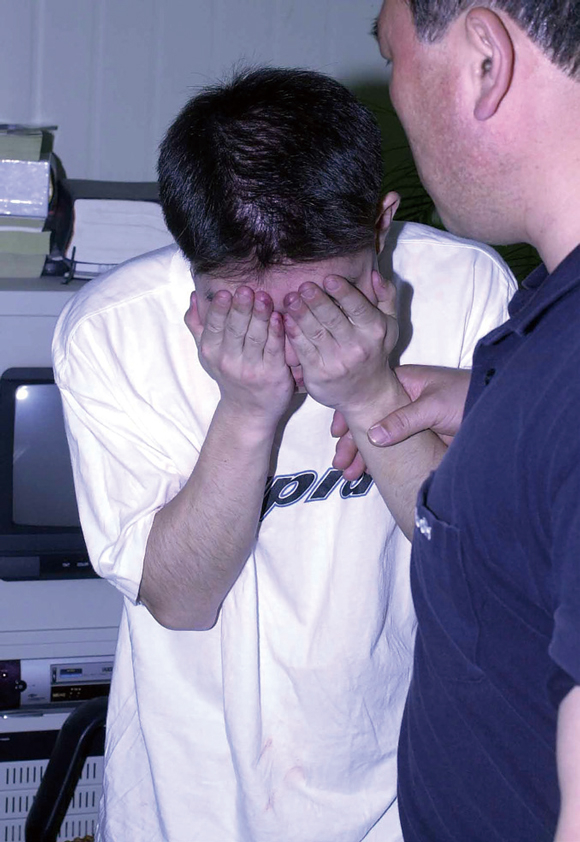
A son who could never live up to expectations
Lee Eun-seok was born on Aug. 29, 1976, as the youngest of the two children in the family. They lived in an apartment building in Gwacheon, just south of Seoul, a typical middle-class neighborhood.
His father, a graduate of the Korea Naval Academy, served as a lieutenant colonel in the Marines before taking an executive position at a major company. His mother, surnamed Hwang, was a homemaker who graduated from Ewha Womans University, long regarded as South Korea’s premier institution for women’s higher education. She was a devout Christian.
Hwang reportedly chose to marry her husband in part because she believed in his prospects for success. In the 1970s, military leaders occupied the pinnacle of power in South Korea. President Park Chung-hee, a former Army general, ruled as a dictator, and the two presidents who followed him in the 1980s were also former generals. Hwang believed the man she married was well positioned to rise to a senior post in the military and wield significant influence.
To her apparent disappointment, however, her husband never rose to the rank of general, retiring as a lieutenant colonel. By then, their marriage had long soured. The couple lived in separate rooms, and their conflicts routinely dragged on for two to three months at a time, according to testimonies from their sons.
A note written by Hwang in November 1999 said, "That man (her husband) is a wolf in a sheep's mask, a friend of Satan, an evil karma."
Having given up on her husband, Hwang was said to have redirected her expectations toward their sons' success, sometimes obsessively.
Lee's father disciplined his sons in a military-like manner. He made little effort in his sons' upbringing, but was overly critical and often subjected them to physical punishment.
Both of their sons, investigators later learned, were subjected to years of harsh discipline and alleged abuse, but the younger, more obedient son became the primary target.
The abuse reported by the media included: beating him for not being able to tie his shoelace in kindergarten, throwing a chopstick at him for taking too much time to eat, shoving food up his throat because he wouldn’t eat quickly, and slapping him in the face for not properly taking a memo.
All this happened before Lee went to middle school.
With both parents deceased, most of these accounts, drawn primarily from statements by the sons, one of whom was their killer, were difficult to verify.
"My mother looked down on me. Unlike my brother, I had no talent besides studying, so I was always getting reprimanded. She told me to go die, or get out of the house. ... My father looked at me like a dog," Lee said in a 2000 interview.
As he got older, the parents pressured him to do well in school. Although he received awards at school that it was never enough. They would beat him up and force him to kneel, pray and repent his sins.
"My parents always compared me to my brother, and berated me by comparing me with other kids," Lee said in a written statement.
At school, he became withdrawn and depressed, making him a target of bullying. He was called demeaning nicknames and experienced suicidal thoughts. After his arrest, Lee referred to one of his former bullies and said he had wanted to stab him to death.
When Lee was admitted to Korea University, an achievement many would envy, his parents’ response was, "We don't need a dumb son like you. You're a failure,” because he had not gained entry to Seoul National University, the nation's very top school.
Like other Korean men, Lee enlisted to fulfill his mandatory military service. He later described his time in the barracks as a fond memory, even though he said he was looked down on by his subordinates as well.
"The only time I could get positive recognition for what I did was when I was in the military," he stated, a testament to the brutal abuse he had to endure at home.
"My parents never celebrated my birthday. They never visited me in the military. They never gave me praise or recognition. I came to wonder if they were even my parents."
By the time he was discharged from the military, his older brother had moved out of the family home into a house purchased by their parents, with a loan taken out in his name. In May, 2000, after Lee helped his brother move, the family came home and his parents berated him again.
This was the last straw, and Lee thought his pain would only end if his parents died.
Lee finally snaps
This is what Lee said had happened.
As his parents were lambasting him, Lee finally confronted his parents in a tear-stricken confession about his feelings.
It seemingly had zero effect. His father told him, "A guy like you can't make it in the world." His mother denied his accusations: "I never did such things. Why are you bringing this up now? Is this a way to treat your parents? Go to a mental hospital."
He isolated himself inside his room for six days, only coming out to eat when his parents were not home. It was later found that the mother prepared food for him during this time, and the father was writing a long letter, but most of the content sought to justify their own actions.
On May 21, he came out of his room, downed an entire bottle of his father's favorite whiskey, and murdered his mother with a hammer.
The psychological shock of killing his own mother led to him walking back and forth in front of the room for four hours. It was ultimately the fear of his father finding out that led him to kill his father, too.
Lee said he never had a specific plan, and chopping up the body was not an act of revenge.
"I wanted to make it like it didn't happen. ... I wasn't myself. Seeing blood covering my body in the mirror didn't make me scared. I was an animal."
He put the body parts in garbage bags and threw them away, and they were found three days later on May 24.
When police came to his door, he said, "They went out three days ago to church. I was about to call my brother and report them as missing."
He was taken to the police for questioning, and a search of the home found the victims' blood, while examination of the garbage bags uncovered Lee's fingerprints. After three hours of denying the crime in inconsistent testimonies, he ultimately confessed to the murders.
'Was it so hard to say sorry?'
It was reported that Lee, shortly after confessing to the crime, said, "I had no choice. Was it so hard (for my parents) to say sorry?" as he expressed regret for committing the murders.
As the investigation progressed, the nation gradually came to view his statements not merely as post-crime rationalizations, but in the context of alleged family dysfunction and long-term abuse.
Lee's own older brother responded with compassion toward him, as he quit his job and sought help from the Catholic Church in Korea, which aided him in pleading Lee's case.
On Dec. 1, 2000, Lee was convicted of murder and sentenced to death. The evidence was damning, and he had clear intent to kill both his parents.
But an appellate trial on April 18, 2001 reduced the sentence to life in prison. "The psychological evaluation shows that (the defendant) was suffering extreme depression, anxiety, a sense of being victimized and despair," the court said in its ruling, and the sentence was confirmed by the Supreme Court on July 20 of that year.
"If our parents had given us just the level of affection given toward subordinates at work, this would not have happened," the older brother told the court. Lee's high school classmates testified that his body was always covered in bruises, adding credibility to his claim of domestic abuse.
Lee Hoon-gu, now a retired professor of psychology at Yonsei University, published a book called, "Was It So Hard to Say Sorry?" in 2001 about the incident. According to the book, Lee wrote in his diary in middle school, "Am I a servant of Satan, or a piece of garbage that shouldn't have been born? I'm hopeless, like my mom said. How can I succeed?"
The diary shows that his self-esteem was all but destroyed. He encountered people who were nice to him at a church camp, and thought to himself that they were just pitying him and quietly looking down on him.
Despite the repressed rage and pain, Lee had never shown outward signs of violence to anyone he knew until he launched the fatal attack on his abusers.
"I could've forgiven it all if I just heard my parents say they were sorry," he told the court during the trial. Perhaps the tragedy could have been avoided if his parents had reached out to him during his outburst, just days before the incident.
Today, Lee Eun-seok remains behind bars, serving a life sentence, a quarter-century after the crime.