Almost two decades after killing, investigators finally figured out clue that captivated public was irrelevant to 2005 murders in Seoul's Sinjeong-dong
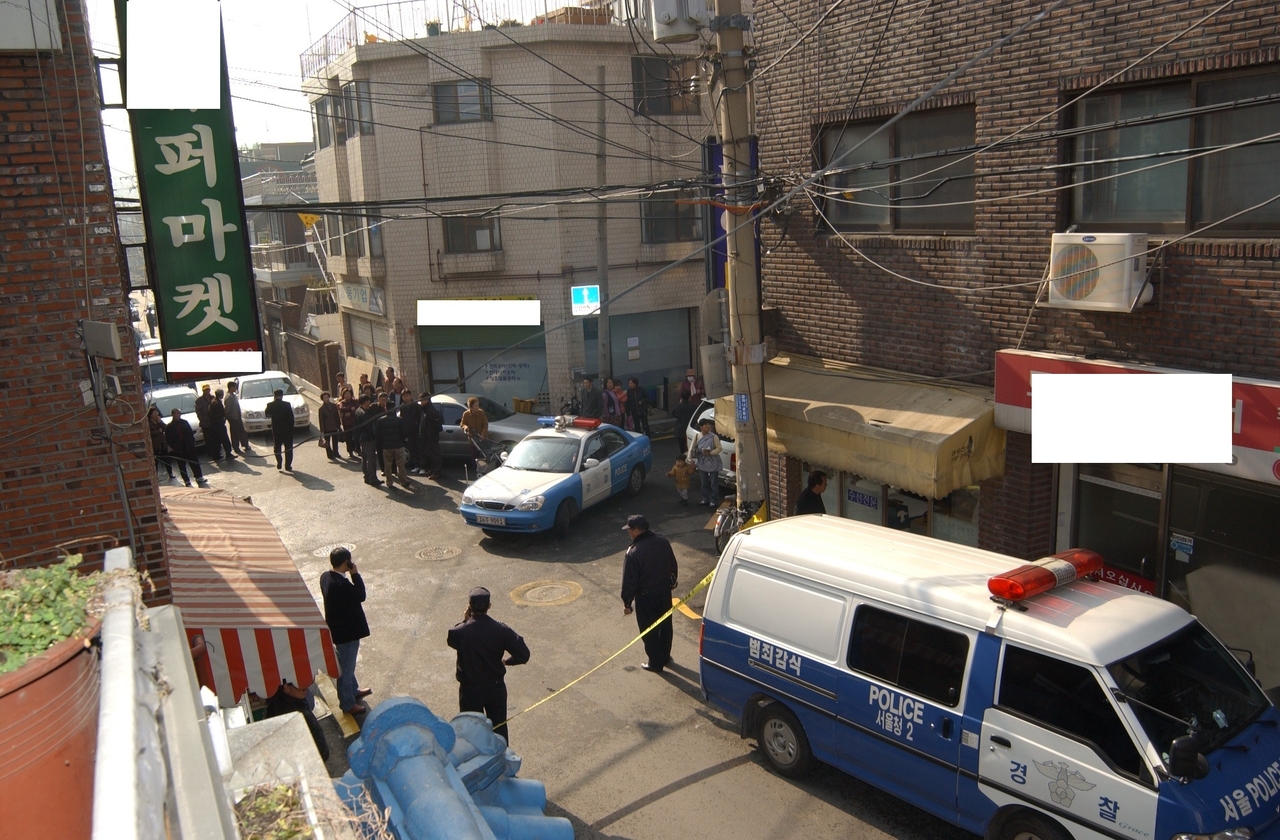
On Nov. 21, South Korean investigators finally identified the man behind two long-unsolved murders in Seoul’s Sinjeong-dong, a case popularly known as the “Mashimaro murder.”
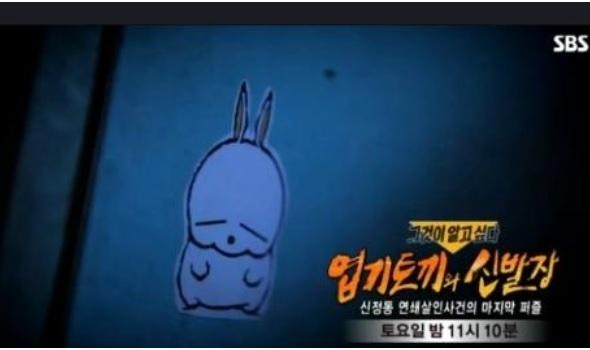
The nickname came from the widely told account of a woman long believed to be the sole survivor, who recalled seeing a sticker of Mashimaro, a cute, bunnylike character, while hiding from her kidnapper.
But here’s the twist: Police now say the survivor’s story and the detail that gave the case its nickname had nothing to do with the actual killer. The attempted abduction that helped make this case so infamous had apparently been committed by someone else.
So what finally broke the case open? Who did what? And which crimes have actually been solved?
Before we dive into the breakthrough 20 years in the making, let’s go back to where it all began, early in the summer of 2005, when a woman’s body was found beside a roadside garbage can, wrapped inside rice sacks.
Two murders
It was June 2005. Smartphones were not yet available and YouTube was still in its infancy. Ordinary people making videos was uncommon, while trend-setters talked about it as an exciting new thing known as “user-created content,” or UCC. It was still very much the era of television and traditional broadcasting.
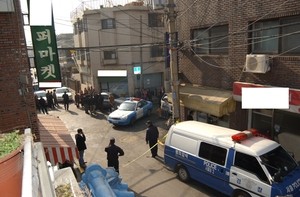
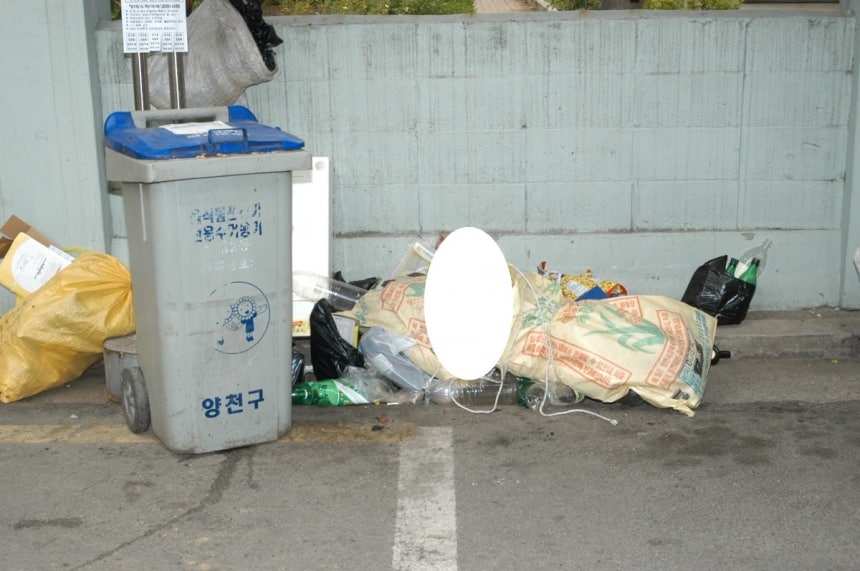
On June 7, in the ordinary Seoul neighborhood of Sinjeong-dong of Yangcheon-gu, a public official in charge of managing illegal waste spotted what appeared to be a hand protruding from a roadside trash pile.
At first, he assumed it was a mannequin — until he noticed the hand felt different. Realizing it was a real body, he immediately called the police.
Here is what the early investigation uncovered.
A day earlier, the victim, a 26-year-old office worker, had been on her way to a clinic to treat a cold. Somewhere along the route, she was abducted and killed. Her body was discovered the next day behind Sinmok Elementary School on an empty lot frequently used for illegal dumping. She was tied up with rope and covered with two yellow rice sacks.
“One rice sack was pulled over her from the head down to the waist, and the other was wrapped from the legs upward, while her legs were bent, almost as if the killer was trying to make her look less like a person,” a police officer who worked the case later recalled.
An autopsy showed that she had been strangled.
Her underwear had been partially pulled down and left hanging on her body. Investigators found two types of sanitary pads and a rolled piece of tissue located at her genital area. They also noted bite marks on her chest, raising the possibility of sexual assault, though a semen test came back negative.
Six months later, on Nov. 20, another woman in her 40s was found in a similar state at a roadside dumping site — her body wrapped inside an outdoor picnic mat, tied with rope and covered with a large plastic bag.
Her family said she had gone missing after going out to visit her parents. The last confirmed sighting of her came from security camera footage at Sinjeong Station.
Like the first victim, she had been strangled. She also had signs of assault, including bleeding in the abdomen.
Forensic experts also added that similarities between the two murders strongly suggested a single perpetrator.
“The similarities are striking. Both victims had bleeding in the retroperitoneum, the area near the back. If these crimes were unrelated, the overlap would be too great. It is very likely one person committed both murders,” said Yoo Sung-ho, a forensic medicine professor at Seoul National University.
Despite the overlaps, investigators at the time failed to hone in on a suspect.
The Mashimaro sticker
A decade later, in 2015, the two murders in Sinjeong-dong were suddenly thrust back into the public spotlight when SBS program “Unanswered Questions” revisited the crimes and connected them to an attempted abduction that occurred in the same neighborhood.
The kidnapping case featured in the program took place on May 31, 2006, around six months after the second murder.
A woman was abducted near Sinjeong Station and dragged into the semibasement of a small building. She escaped by slipping through a slightly open door, hiding upstairs and then running out when she had the chance.
She later told police she had seen not only her attacker, but someone who appeared to be an accomplice.
She also reported seeing a saw, piles of rope on the floor and, most memorably, a sticker of the Mashimaro character on an old shoe cabinet near where she hid.
She described the attacker as about 175 centimeters tall, lean but muscular, in his early 30s, with dark, tattoolike eyebrows. No similar attacks were reported in Sinjeong-dong after this incident.
The episode was so impactful that it became one of the show’s most memorable installments, while the detail of the bunny sticker soon became inseparable from the public’s memory of the Sinjeong-dong murders.
Over the years, various YouTube videos and a further investigation by SBS in 2020 kept the case alive in the public consciousness.
Breakthrough in 2025
Fast-forward to November 2025, police announced that they had identified the Sinjeong-dong serial killer: A man surnamed Jeong.
This was made possible by a cold-case team formed in 2016 that reopened the investigation.
Police reexamined similar incidents near Sinjeong Station, reviewed old tips and requested new analysis of evidence from the National Forensic Service. That reanalysis revealed matching DNA on the underwear and ropes from the first two killings, confirming they had been committed by the same person.
Investigators then focused on a key detail.
Sand found on both victims led them to screen 230,000 people, including employees of construction sites in western Seoul and residents who had moved in or out of Sinjeong-dong in 2005. Officers traveled nationwide, collecting and comparing DNA from 1,514 people.
When no living suspect matched the evidence, police expanded the pool to include deceased individuals.
From a list of 56 people, they homed in on a man in his 60s who had worked as a building manager in Sinjeong-dong at the time of the murders.
Their breakthrough came from a binder stored at the Yangcheon Police Station. Inside it, they found records showing the man had been convicted of rape causing injury shortly after the murders, leading investigators to consider him a highly probable suspect.
However, he died in 2015 and was cremated, which made obtaining his DNA difficult.
Police then searched 40 medical facilities in southern Gyeonggi Province where he had received treatment while alive. One hospital still had a biological sample.
The National Forensic Service tested it and the result was decisive. The DNA matched the evidence from the murders.
The killer had finally been identified.
Investigators concluded that the victims were women who had visited the building where Jeong worked. He abducted them, took them to the basement storage room, sexually assaulted them, strangled them and then disposed of their bodies nearby using rope, rice sacks and plastic sheets.
They based this on the evidence during his conviction for another attack, in February 2006, just three months after the two murders.
Having killed twice, he struck again, abducting another woman before taking her into the same basement and attempting to sexually assault her using the same method. He was caught in the act and arrested at the scene.
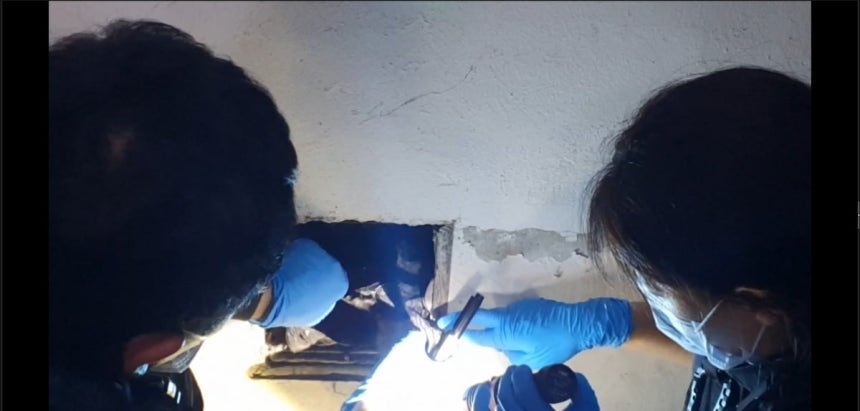
Police confirmed that the infamous 2006 “Mashimaro” abduction case, long believed to be part of the same series, had nothing to do with the two murders. At the time of the attack, Jeong was already in prison.
A police official commented, “Because the location and timing were similar, there was confusion, but the two cases were not committed by the same person.”
Because the killer is deceased, the case was formally closed without indictment.
“We will continue to investigate long-term cold cases with a sense of duty and the determination to track down killers even beyond the grave, whether they are alive or not,” said Shin Jae-moon, head of the police team that announced the recent finding on Nov. 21.
“We offer our deepest condolences and sympathy to the families who trusted us and waited all these years.”
What still remains unsolved
Public attention on crimes can sometimes be a force for good, keeping cold cases alive, pressuring authorities to keep investigating and helping new leads surface. But the Sinjeong-dong case showed how widespread interest can also spiral out of control when speculation outpaces facts.
And it was not just the Mashimaro character that suffered from a wrongful association with the murders — there was also a man who ended up being falsely accused.
This happened after SBS aired a follow-up episode on the Sinjeong-dong murders in January 2020. The broadcast strongly implied that a certain man could be the killer and even included an interview with him.
However, police later clarified, “By the time the program aired, we had already ruled him out as a suspect. Because the investigation was still active, we could not give detailed reasons, but based on the evidence and his verified movements, we concluded he could not have been the perpetrator.”
Even so, online suspicion continued.
The man became a target on Digital Prison, a controversial website that illegally publishes the personal information of people it claims are sex offenders or pedophiles. His name, photo and home address were exposed.
Strangers began showing up at the man's home to confront him about the case, with some even posting videos of those encounters on YouTube.
The harassment did not stop there. Posts proliferated on internet forums asserting that he was the killer — mocking him, condemning him and cursing him.
Residents in his neighborhood also became frightened after hearing the torrent of rumors.
While the public fixated on a cartoon sticker and an innocent man, the true perpetrator had slipped by unnoticed for years and lived out his life without facing justice for the two lives he took, having already died some five years earlier. The case serves as a reminder that attention alone does not always bring justice.
And the suspect responsible for the attempted abduction — the real Mashimaro case — is still waiting to be solved.